Gray film, green hydrogen express
Hydrogen is a clean fuel: when it burns, it produces only water. But to extract it from water, you need to break the strong bond between hydrogen and oxygen. This is usually done with platinum, an expensive metal. Molybdenum disulfide (MoS2), a cheap mineral similar to graphite, could replace platinum if prepared correctly.
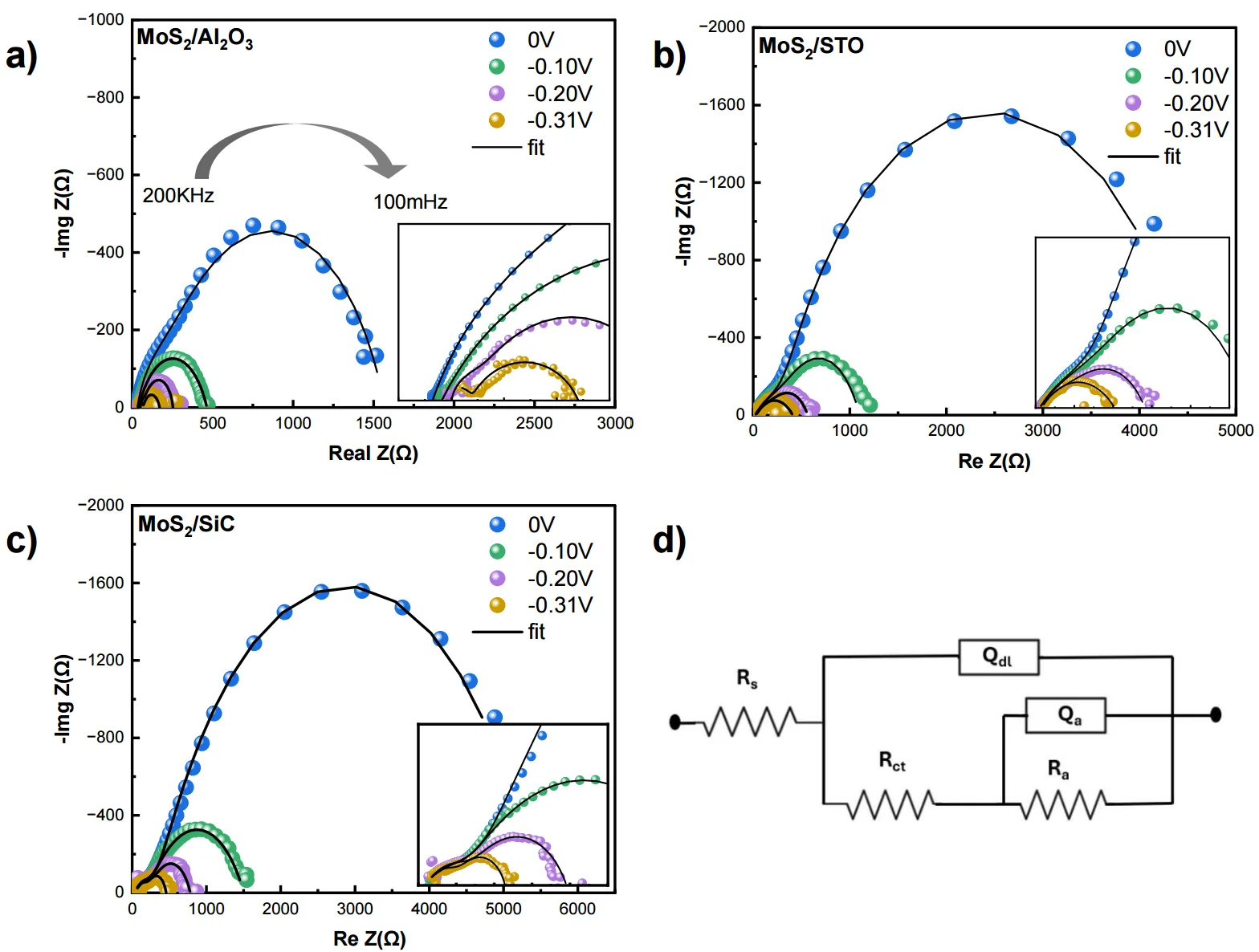
Researchers sputtered MoS2 as thin films onto three different substrates: aluminum oxide (Al2O3), silicon carbide (SiC), and strontium titanate (STO). They then measured how well the films split water. It turned out that on aluminum oxide, the film solidifies into a rare but highly active form (the so-called 1T phase), which transfers electric charge better and has a larger active surface area. As a result, hydrogen evolves faster on it.
This result shows that by choosing the substrate, you can control the structure of the catalyst and make it more efficient without adding expensive metals. In the future, such films could help reduce the cost of hydrogen production for clean energy.
Molybdenum disulfide is the same material used to make dry lubricant for bicycle chains. And now it might help produce the fuel of the future.
In Jules Verne's novel 'The Mysterious Island', the characters dream that one day water will be used as fuel. Molybdenum disulfide is a step toward that dream.