Platinum film generates terahertz pulse on its own express
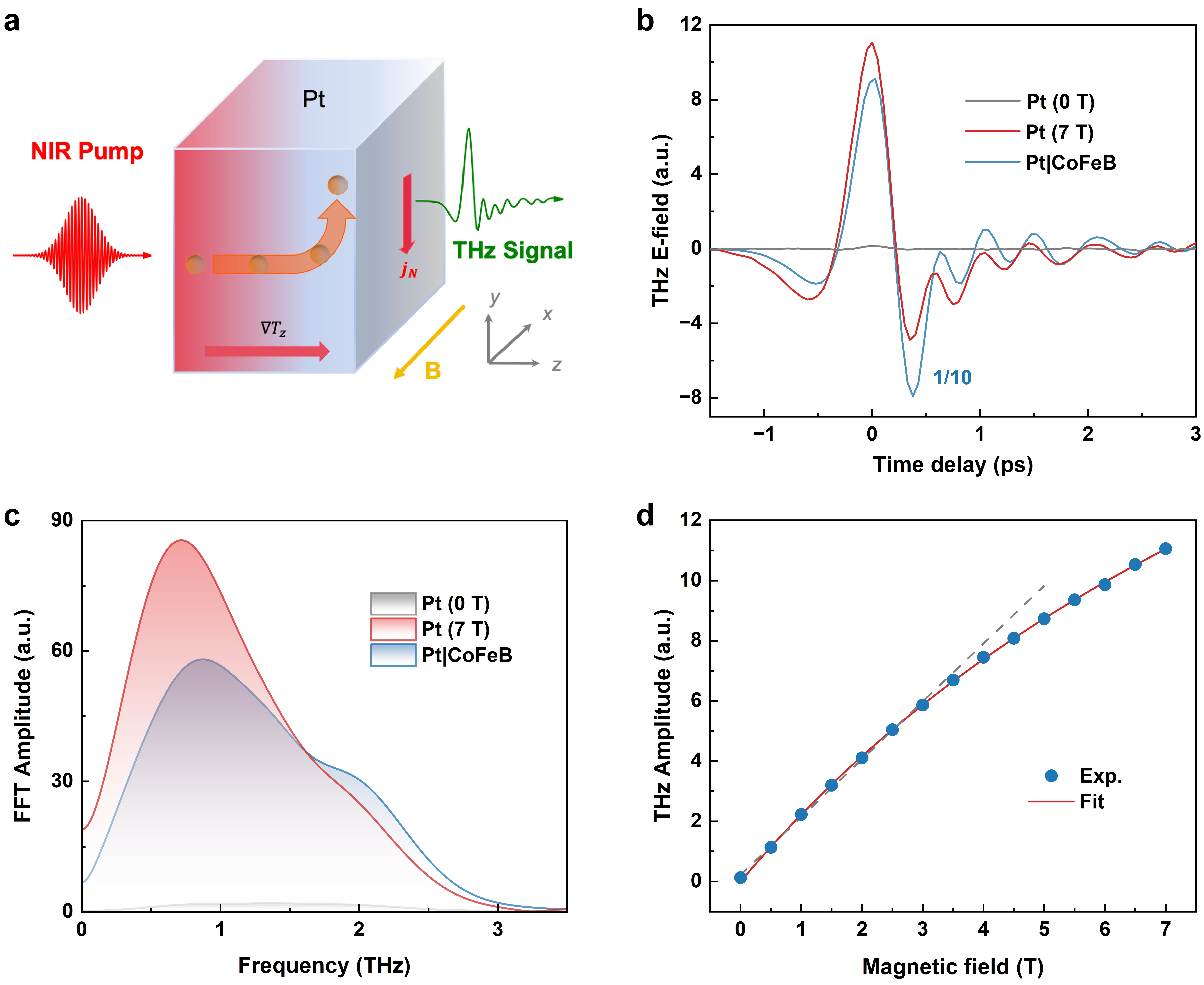
Usually, to generate terahertz waves (light between microwaves and infrared), researchers build a sandwich of different metals. One layer acts as the source, another as the receiver of charges. In such designs, platinum was assigned the role of a simple conductor. But it turns out it can work alone.
When a thin platinum film is cooled to very low temperatures and a magnetic field is switched on, a short laser pulse creates a sharp heat gradient in it. Heat, like water flowing downhill, rushes from the hot spot to the cold one. Along the way, it drags charges, and they start moving across the film. This motion is what generates the terahertz light flash.
Surprisingly, a single platinum film produces a signal as strong as multilayer reference samples. If you make the film thinner or add impurities that hinder heat propagation, the effect becomes even more pronounced. Heat stays longer in the right place, and more charges get deflected.
Thus, platinum transforms from a modest helper into an independent source of terahertz waves. And the effect itself, the rapid conversion of heat into a transverse current, may work in other materials as well, paving the way for simple and inexpensive devices.
Terahertz waves pass through clothing, paper, and plastic, but not through metal or water. That's why they are used in security scanners and for inspecting works of art.
In the TV series 'Star Trek', medical scanners work on principles similar to terahertz imaging: they see through materials without damaging them.