A Microscope That Sees Both Speed and Place express
Fireflies flash in a dark forest: you see each flash, but not the flight. A quantum gas microscope can show individual cold atoms, like those fireflies. But until now, it couldn't tell you how fast they're moving.
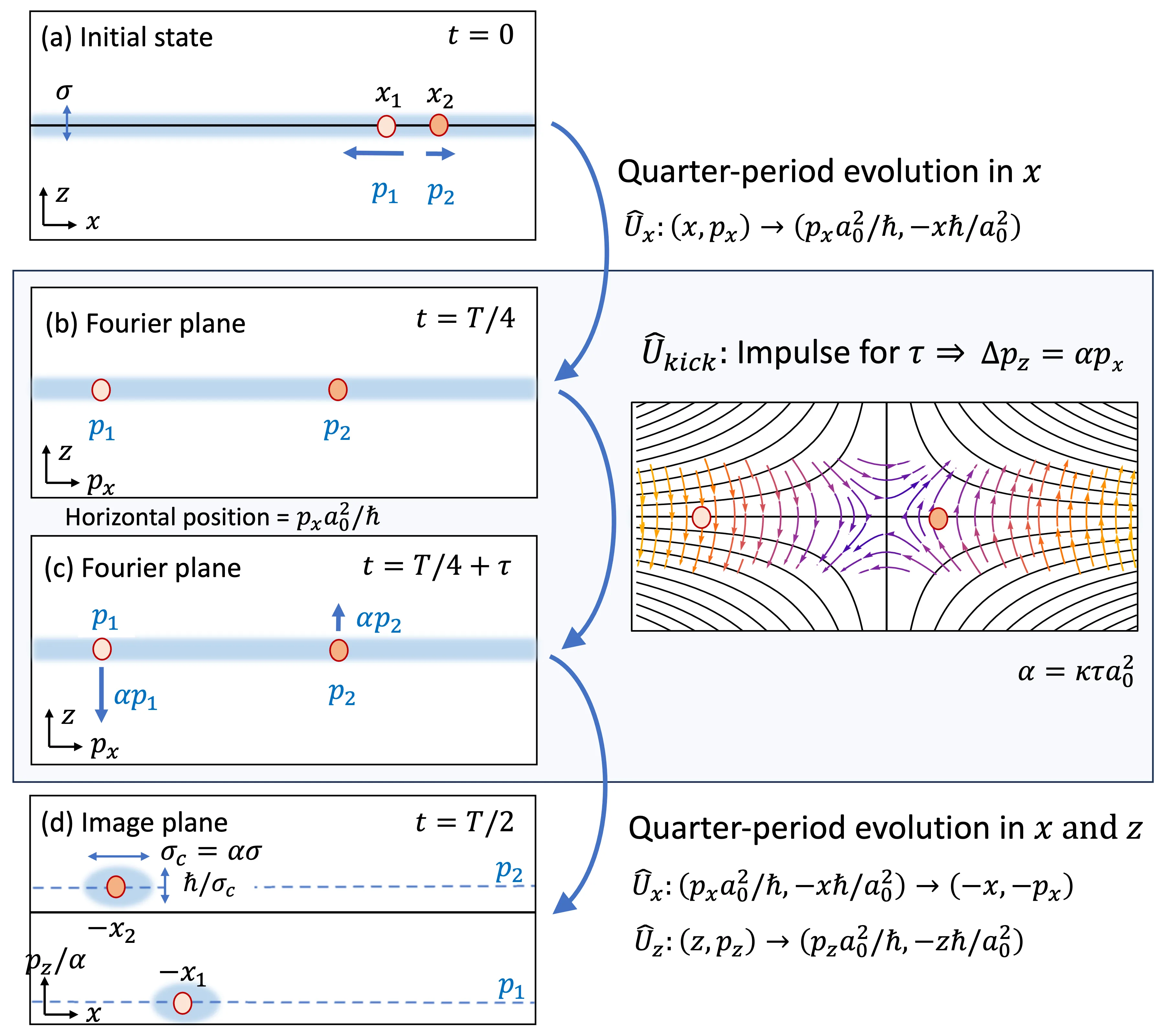
Now scientists have found a way to fix that. They propose illuminating the atoms in a special way so that they cast a kind of 'shadow' on neighboring auxiliary particles. From that shadow, you can reconstruct not only the atom's position but also its momentum: that is, the direction and speed of its motion. It's like reading the ripples on water to figure out where a fish swam and how quickly.
The authors propose two operating modes for such a microscope. In the first, 'soft' mode, the instrument measures both position and momentum at once, but with limited accuracy: the uncertainty is split evenly between them. In the second, 'averaged' mode, the instrument shows very precisely how atoms move on average at different points in space, but it doesn't track each atom individually.
This approach opens up new possibilities for studying quantum states of cold atoms. For example, you could see how vortices are born and die in a superfluid gas, or how density waves propagate. It's a step toward understanding the most subtle properties of matter at ultra-low temperatures.
At ultra-low temperatures, atoms behave like waves, and their position can be 'smeared out' over the whole cloud, like sound in an empty hall.