A Micromaser from a Microwave Circuit express
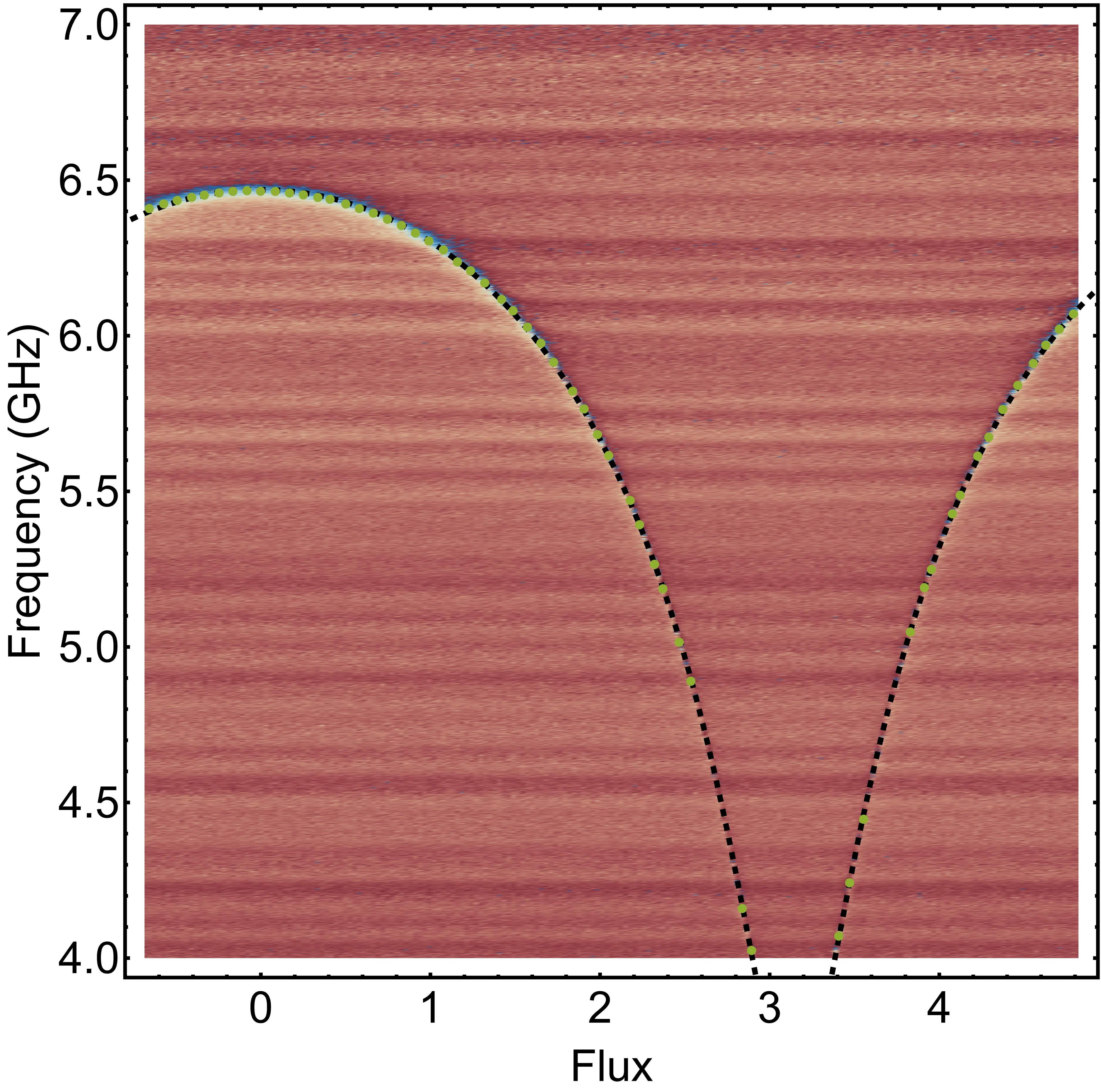
A regular laser is a light amplifier in which atoms, after receiving energy, collectively emit waves of a single frequency. A maser does the same thing, but for microwaves — the invisible radiation that heats food in a microwave oven and carries signals in phones. In this new work, physicists built a maser not from gas or crystal, but from a superconducting electrical circuit, where an artificial element with several energy levels stands in for a real atom.
Such a device is called a micromaser because it is tiny and works with individual portions of microwave radiation. The authors tuned the circuit so that the artificial atom is first pumped with energy from an external microwave tone, then releases it to the wave, amplifying it. This is like a swing: if you push it in rhythm, it swings higher and higher.
The main value of the experiment lies in the platform's flexibility. Superconducting circuits allow precise control over how many energy levels the artificial atom has, how it couples to the field, and how quickly it loses energy. Thus, one can reproduce different regimes of maser physics and study them under controlled conditions. This might help better understand how quantum amplifiers behave and how to build more sensitive microwave detectors.
Original abstract
as written by the authors arXiv:2604.05105
We demonstrate a circuit QED analog of an atomic micromaser that utilizes an artificial, multi level atom, pumped into a population-inverted state by a microwave tone, as the gain medium. Our demonstration is enabled by the flexibility of the circuit QED platform, which allowed us to precisely engineer the level-structure, coupling, and dissipation of the micromaser components. Our device shows rich physics and perhaps points to ways to use the recent developments in the domain of microwave quantum circuits to probe the domain of maser physics.
The first maser used a beam of ammonia molecules and was so accurate that it was called an "atomic clock"—it helped test Einstein's theory of relativity.