One Galaxy, Two Telescopes: How to Separate Physics from Distortions express
If you photograph the same mountain with a film camera and a modern smartphone, you get different images: colors are brighter in one, details are blurrier in the other. The same goes for telescopes: each instrument sees the sky in its own way, adding its own distortions to the true light of galaxies, like a filter through which we look.
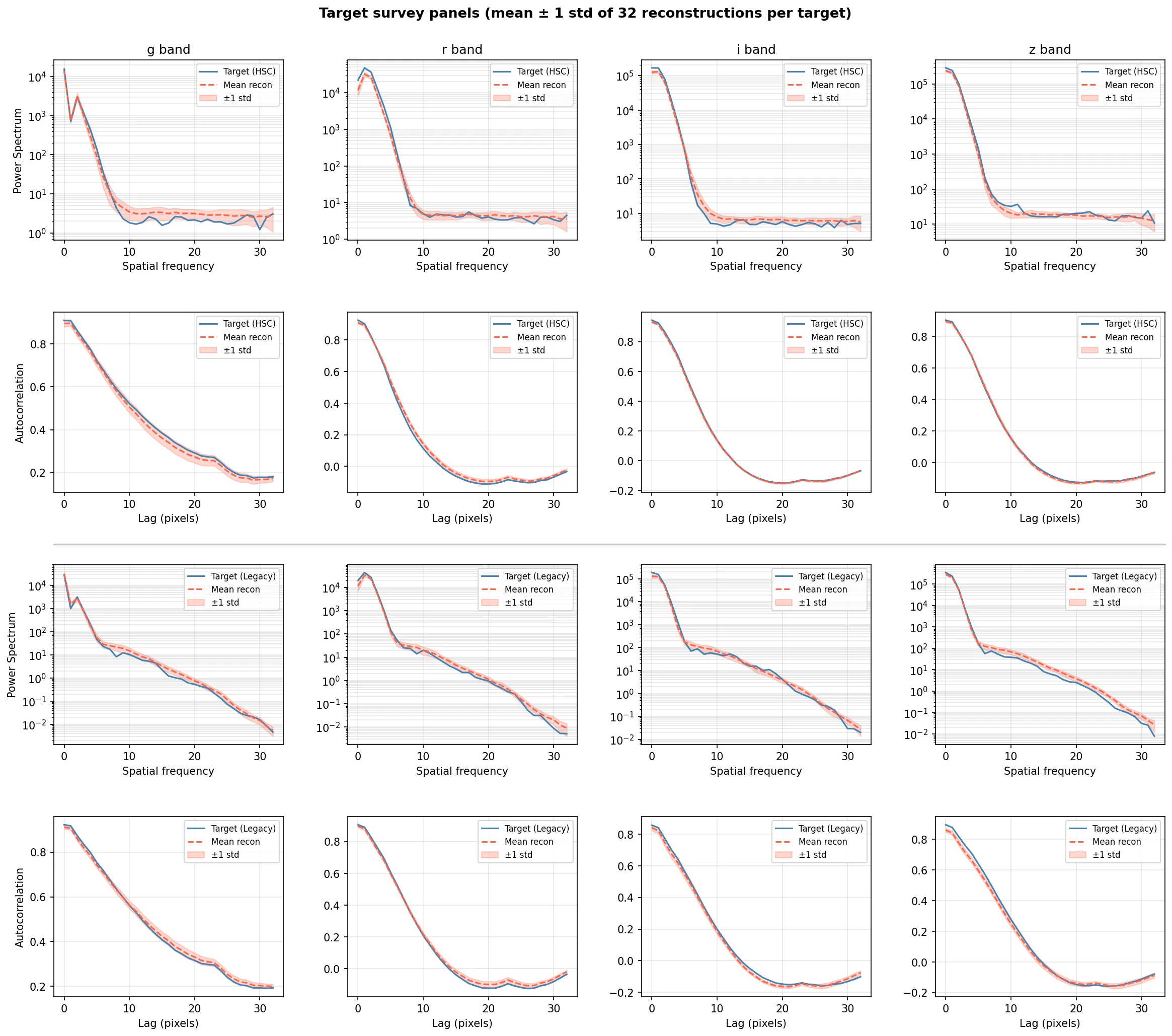
This new work offers a way to remove that 'filter.' The scientists collected pairs of images of the same galaxies taken by two large sky surveys: DESI Legacy Imaging Survey and Hyper Suprime-Cam. The neural network was trained as follows: it receives two images and must reconstruct one from the other, but taking into account that the cameras are different. During training, the network itself finds what is common to the two images (that is the real galaxy) and what differs (that is the distortion of a particular telescope).
As a result, the neural network outputs a 'clean' representation of the galaxy — without the noise and distortions of a specific instrument. This allows, for example, searching for similar galaxies in the archives of different telescopes without fear that their similarity is spoiled by different cameras. This approach is useful not only for astronomy: it provides a general recipe for training neural networks on data from different instruments — from medical scanners to sensors in cars.
Both telescopes whose data the scientists used are on Earth, but one of them (Hyper Suprime-Cam) is installed in Hawaii, while the other (DESI Legacy) scans the sky from an observatory in Arizona. The distance between them is about 4,800 km, but they see the same galaxies.