Astrophysical signal detection is the art of pulling faint, meaningful patterns out of noisy cosmic data. Modern observatories record torrents of information — from fast radio bursts (FRBs) to stellar oscillations and gravitational waves — but the signals are often buried under instrumental noise, atmospheric interference, or the overwhelming brightness of a host star. Neural networks have become indispensable for this task because they can learn to recognize subtle signatures that traditional algorithms might miss, such as the characteristic 'ringing' of a neutron star or the faint wobble of a star caused by an orbiting planet.
History
The application of neural networks to astrophysical signal detection gained traction in the 2010s, driven by the availability of large labeled datasets from surveys like Kepler and the need for rapid processing of gravitational-wave candidates. No single inventor; it emerged from the broader deep-learning revolution applied to astronomy.
How it works
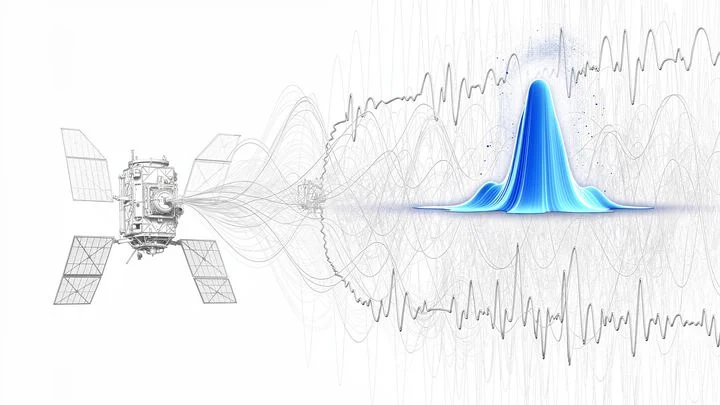
A neural network is trained on labeled examples — simulated or previously confirmed signals mixed with realistic noise — to map raw time-series or image data to a probability that a signal is present. Once trained, the network scans new data in real time, flagging candidate events for human follow-up. For instance, to detect stellar oscillations (asteroseismology), the network learns the frequency patterns of pressure waves traveling through a star's interior, separating them from the star's own turbulent surface noise. In gravitational-wave astronomy, networks can filter out glitches caused by terrestrial vibrations, isolating the brief chirp of a merger event.
In practice
Used in pipelines for LIGO/Virgo gravitational-wave alerts, exoplanet transit searches (e.g., in TESS data), and classification of FRBs — enabling faster follow-up observations by telescopes worldwide.
Fun fact
Neural networks can detect the subtle 'starquakes' of a distant star with an accuracy that sometimes exceeds human expert analysis, even when the star's oscillations are only a few parts per million in brightness.
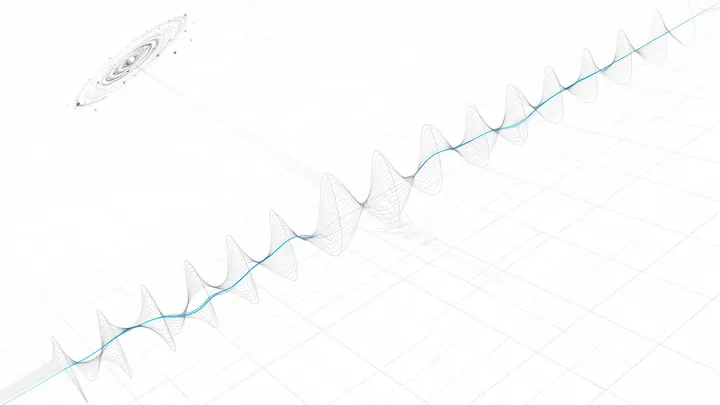
At the end of a massive star's life, its core collapses in a fraction of a second, giving birth to a supernova flash. This cataclysm shakes spacetime itself, emitting gravitational waves — ripples that race across the Universe.
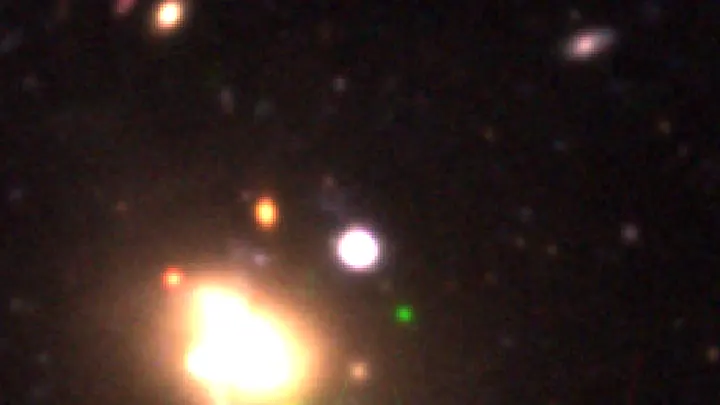
Two hundred million stars. In the heart of the Galaxy, where the future survey by the Nancy Grace Roman telescope will aim, about 250 times during its mission the light of one of them will flicker at an invisible touch.
An artist makes a quick charcoal sketch, and the face in the portrait is already recognizable. Astrophysicists face a similar challenge: the spectrum of a star is its individual portrait, revealing temperature, composition, and gravity.
Neutron stars are the last clumps of visible matter before collapsing into a black hole. In their interiors, matter is squeezed to trillion-fold densities. Here, nuclear forces and gravity weave into an exotic substance inaccessible to any earthly particle accelerator.
The gamma sky, captured by the Fermi telescope, is a grand symphony of thousands of sources. Here, the rhythmic pulsations of pulsars, the powerful chords of active galactic nuclei, but most of all — unidentified objects, whose part remains a mystery.
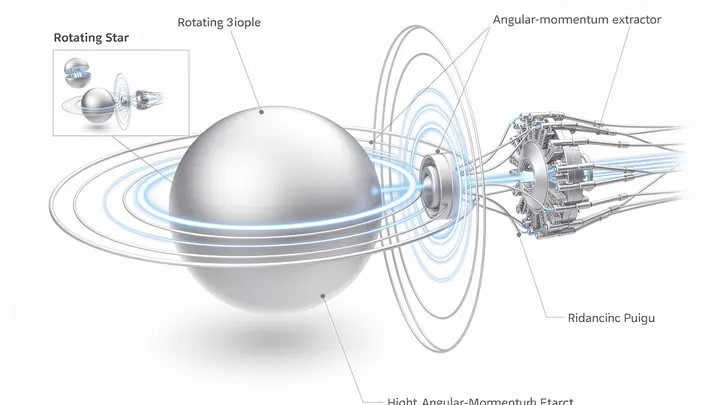
For decades, SETI has hunted for Dyson spheres — hypothetical shells that capture a star's light stars and re-radiate it in the infrared. But the cosmos remains silent. Perhaps an alien intelligence operates more elegantly: instead of collecting light, it tames the rotation of a sun, like a giant flywheel.
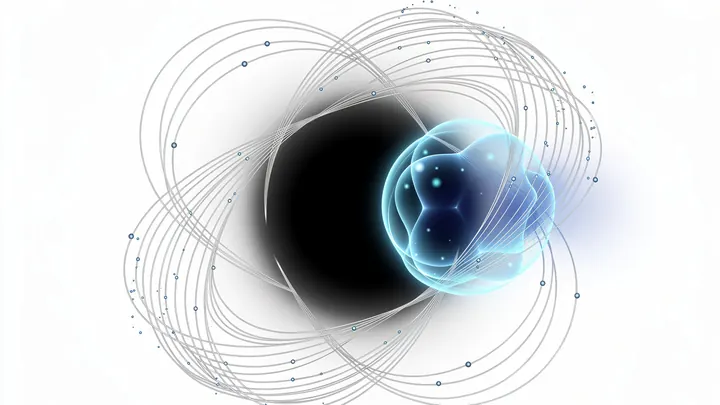
A black hole is not a frozen void, but a living magnetic engine. Its 'heart'—the accretion disk, pulsates: inhale, matter spirals into the funnel, exhale — magnetic reconnection tears the field lines, and plasma shoots away from the horizon.
Somewhere deep in space, a radio beacon flashes for a fraction of a second, and then goes dark. Such signals are called fast radio bursts. They come from other galaxies and last from microseconds to milliseconds.
The universe is a vast orchestra playing the score of expansion. Galaxies race apart to the beat of inaudible music of dark energy. But here's the trouble: the conductor's baton held by Edwin Hubble, Adam Riess, and Vera Rubin sets two incompatible tempos.
When two neutron stars, compressed to the size of a city, approach in their final dance, the spacetime around them comes alive, emitting gravitational waves.
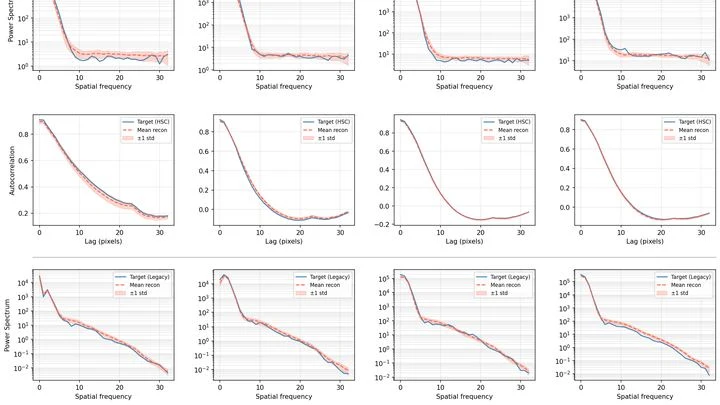
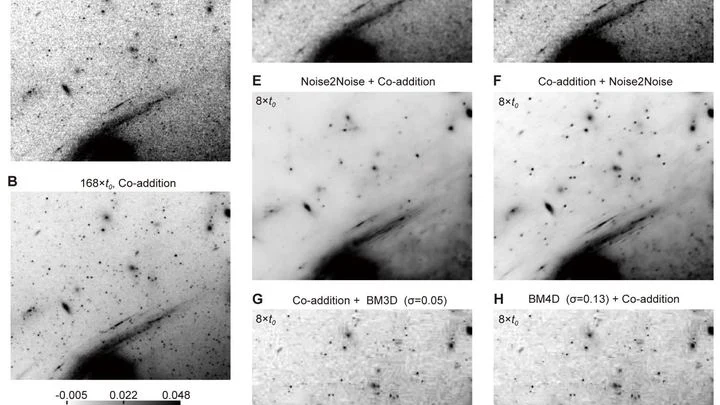
Any light measurement runs into a fundamental limit: photons hit the camera sensor unevenly. This natural ripple (shot noise) blurs fine details, like trying to pick out a quiet instrument in an orchestra through the noise of the hall.
Searching for extraterrestrial signals is like trying to hear a whisper at a roaring stadium. The Green Bank Telescope listened to 70,000 stars, but 100 million bursts turned out to be earthly noise — from phones, satellites, microwave ovens.
If you photograph the same mountain with a film camera and a modern smartphone, you get different images: colors are brighter in one, details are blurrier in the other. The same goes for telescopes: each instrument sees the sky in its own way, adding its own distortions to the true light of galaxies, like a filter through which we look.
To spot a dim star above a brightly lit city, astronomers subtract one image from another — removing the glare of streetlights. They do the same with living neurons: their faint flashes drown in noise, but if you subtract everything unchanging, only they remain.
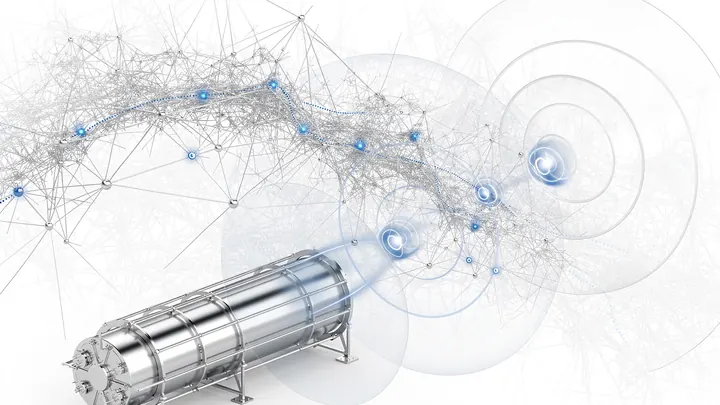
Thousands of kilometers of fiber-optic cables lie on the ocean floor. They carry internet traffic, but the cables themselves sense the slightest vibrations in the water and the seabed. If you listen closely to such a cable, you can hear a blue whale singing or the ground trembling thousands of kilometers away.
A star like the Sun doesn't just shine: it hums quietly. Inside, plasma churns, and these motions make the surface rise and fall rhythmically. Catching such a tremor from Earth is nearly impossible: it gets lost in the noise of the atmosphere and the instrument itself. That's why astronomers listen to stars from space, where it's quieter.
The night sky in a telescope image looks like a photo taken through a fogged-up window: bright stars are visible, but everything faint drowns in a murky haze. That haze is noise — random interference from electronics, heat, and the atmosphere itself.
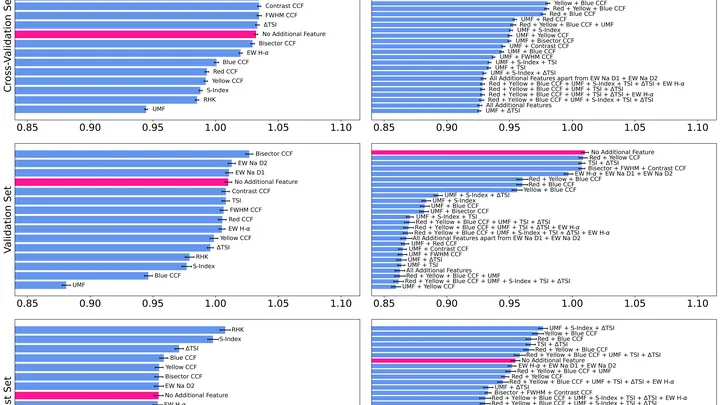
For six straight years, the HARPS-N telescope on La Palma island stared at the Sun as if it were a distant star — taking spectra, tracking brightness, and recording every quiver of spectral lines. All this was to understand how to distinguish a star's subtle sway from a genuine planetary signal.
A star doesn't sit still: its surface boils like a pot of soup.
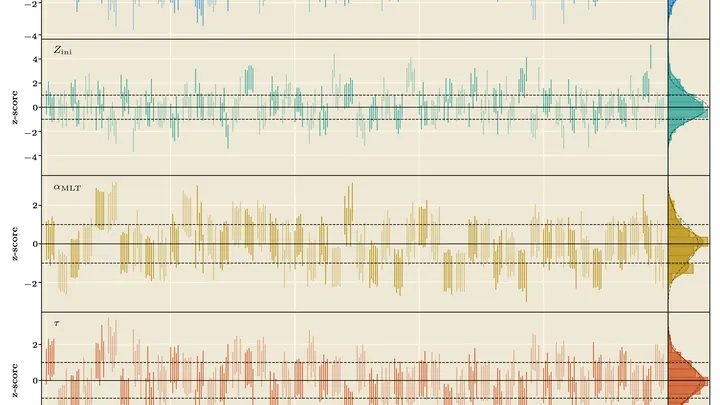
A star trembles like a bell after being struck. These tremors, tiny fluctuations in brightness and surface, can be caught by a telescope. From the frequencies of these 'stellar notes,' astronomers infer what's happening inside: how old the star is, how it's structured.
The galaxy is like a city at night: most windows shine steadily, but sometimes a skyscraper lights up all its lights and then goes dark. Just like that, according to a new hypothesis about planets around alien stars (exoplanet), we might first notice another civilization — by a short but blinding flash that could mark its demise.