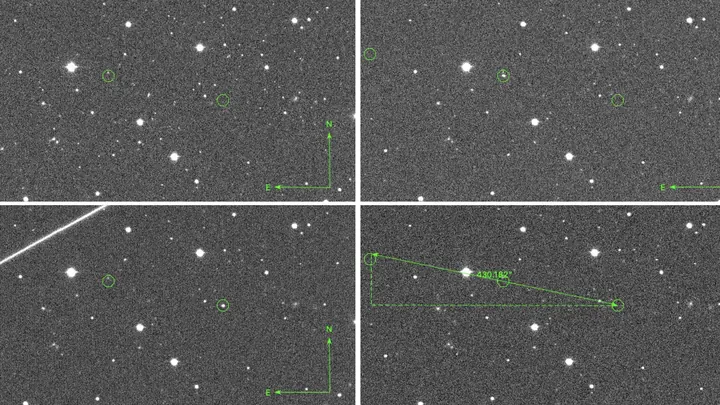
In physics and astronomy, an artifact is a spurious signal or feature in data that arises from instrumental limitations, environmental interference, or data-processing quirks — not from the actual phenomenon under study. Artifacts are the 'noise' that mimics 'signal,' and distinguishing between the two is a core challenge in experimental science. For example, a detector's electronic noise, a cosmic ray striking a sensor, or a telescope's optical distortion can all produce features that look like real astrophysical events.
History
The term has been used in experimental science for over a century, but its systematic treatment grew with modern detectors and imaging in the mid-20th century. No single inventor; it emerged from practical need.
How it works
Artifacts emerge from the imperfect chain between a physical event and recorded data. A sensor may have a nonlinear response, a mirror may scatter light, or software may introduce ringing during image reconstruction. Environmental factors — temperature drift, electromagnetic interference, or even dust on optics — can also imprint false patterns. Scientists identify artifacts by comparing data across multiple instruments, repeating measurements, or using simulations to predict what instrumental effects should look like, then subtracting or masking them.
In practice
In astronomy, artifact removal is essential for interpreting images from telescopes like Hubble or JWST, and in medical imaging, it prevents false diagnoses from MRI or CT scan distortions.
Fun fact
Some famous 'discoveries' — like canals on Mars or certain pulsar signals — were later attributed to artifacts of the instruments or the observer's eye.
In 1960, the Tatel radio telescope spent weeks listening to emptiness around Tau Ceti and Epsilon Eridani. Project Ozma was searching for technosignatures — traces of another mind at work.
Studying distant exoplanets, scientists look for signs of life — for instance, water and carbon — and signs of technology: radio signals, megastructures. But between these clues there is a yawning gap. If intelligence hasn't created machines or they've vanished, we won't notice it.
Civilizations in the Universe are separated not just by distance, but by the vast gulf of time. Hunting for their traces is like archaeology: instead of palace ruins, we find clouds of cosmic dust.
A figure skater glides across the ice, gradually approaching the center of the rink. A slight twist of the torso, and the smooth spiral breaks, the trajectory becomes unpredictable. Something similar happens when a small black hole with its own rotation (spin) falls toward a giant black hole.
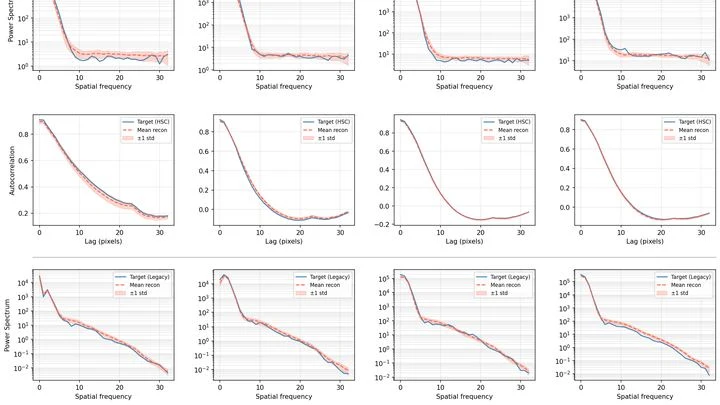
If you photograph the same mountain with a film camera and a modern smartphone, you get different images: colors are brighter in one, details are blurrier in the other. The same goes for telescopes: each instrument sees the sky in its own way, adding its own distortions to the true light of galaxies, like a filter through which we look.
The galaxy is like a city at night: most windows shine steadily, but sometimes a skyscraper lights up all its lights and then goes dark. Just like that, according to a new hypothesis about planets around alien stars (exoplanet), we might first notice another civilization — by a short but blinding flash that could mark its demise.
Back in the 18th century, William Herschel was searching for life on Mars. Today, astronomers are targeting not planets but artifacts — for example, alien probes lurking in the Solar System. The problem is that spotting a tiny object next to the blinding Sun is nearly impossible.
An old aviation instrument sometimes sticks: the needle catches on the scale and doesn't move, even though the plane is already changing altitude. Engineers found a simple solution: add a slight vibration. The shaking doesn't hinder; on the contrary, it helps the needle break free and show the truth.