Domain Wall Steers the Current express
Two superconducting banks are connected by a bridge of magnetic material. Inside the bridge lies a domain wall: a narrow boundary where the magnetization rotates, like a column of soldiers changing their marching direction. The current flowing through such a bridge behaves not like a calm river but like a stream bending around an obstacle: it curls into loops and changes its strength.
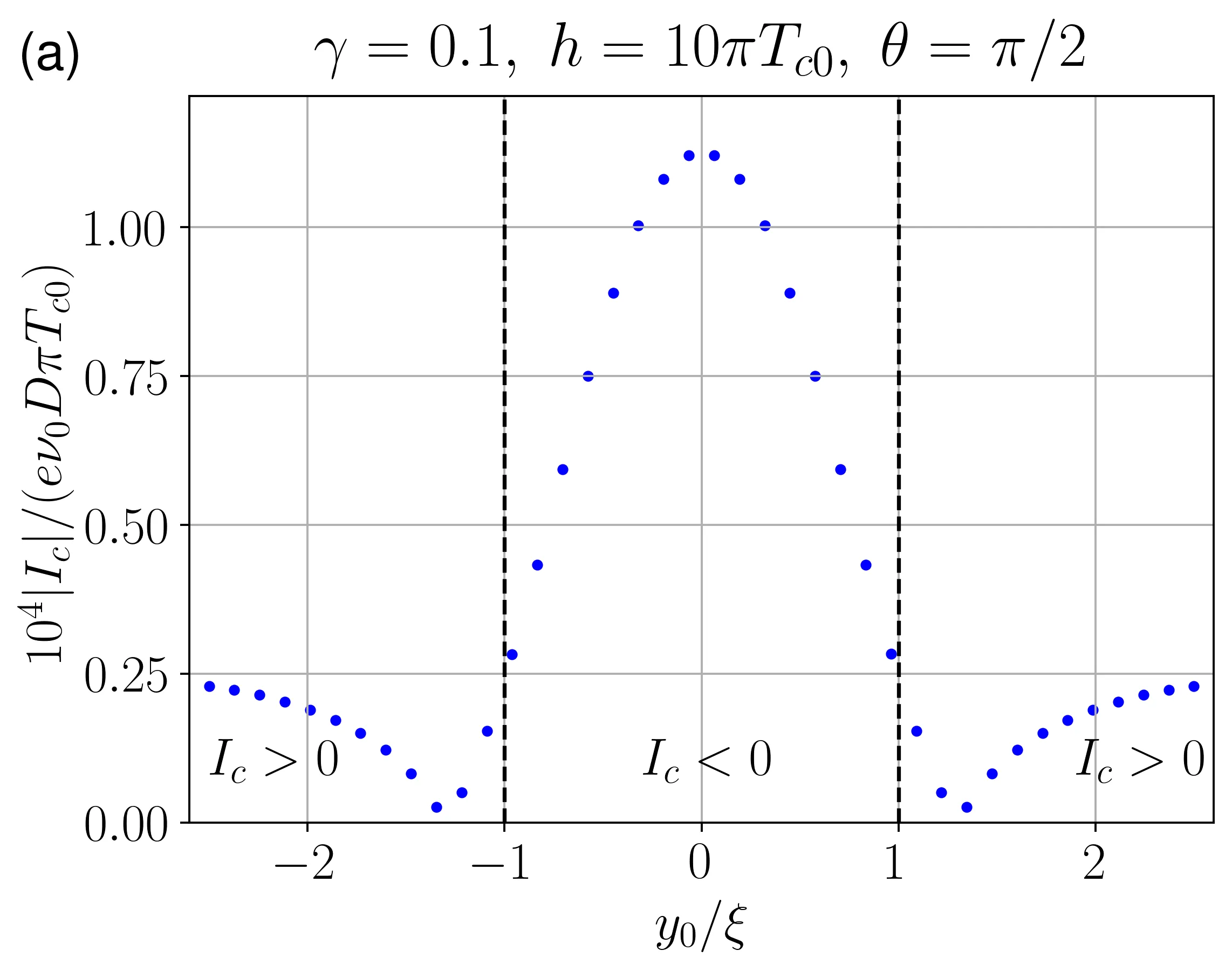
The authors calculated that shifting the wall along the track, even by fractions of a micron, noticeably changes the critical current. At certain positions, the current transitions from the ordinary mode to a 'flipped' one, where the superconducting phase shifts by half a period. Such sensitivity turns the domain wall into a control knob: no external magnets or additional contacts are needed.
This matters for racetrack memory: domain walls already store bits, and now they can also be read by the same current that moves the data. The device becomes simpler and more compact — one and the same path serves as both carrier and detector.
A domain wall can be thinner than ten nanometers — about a thousand times thinner than a human hair.