Laser Beam Searches for Life on Other Planets express
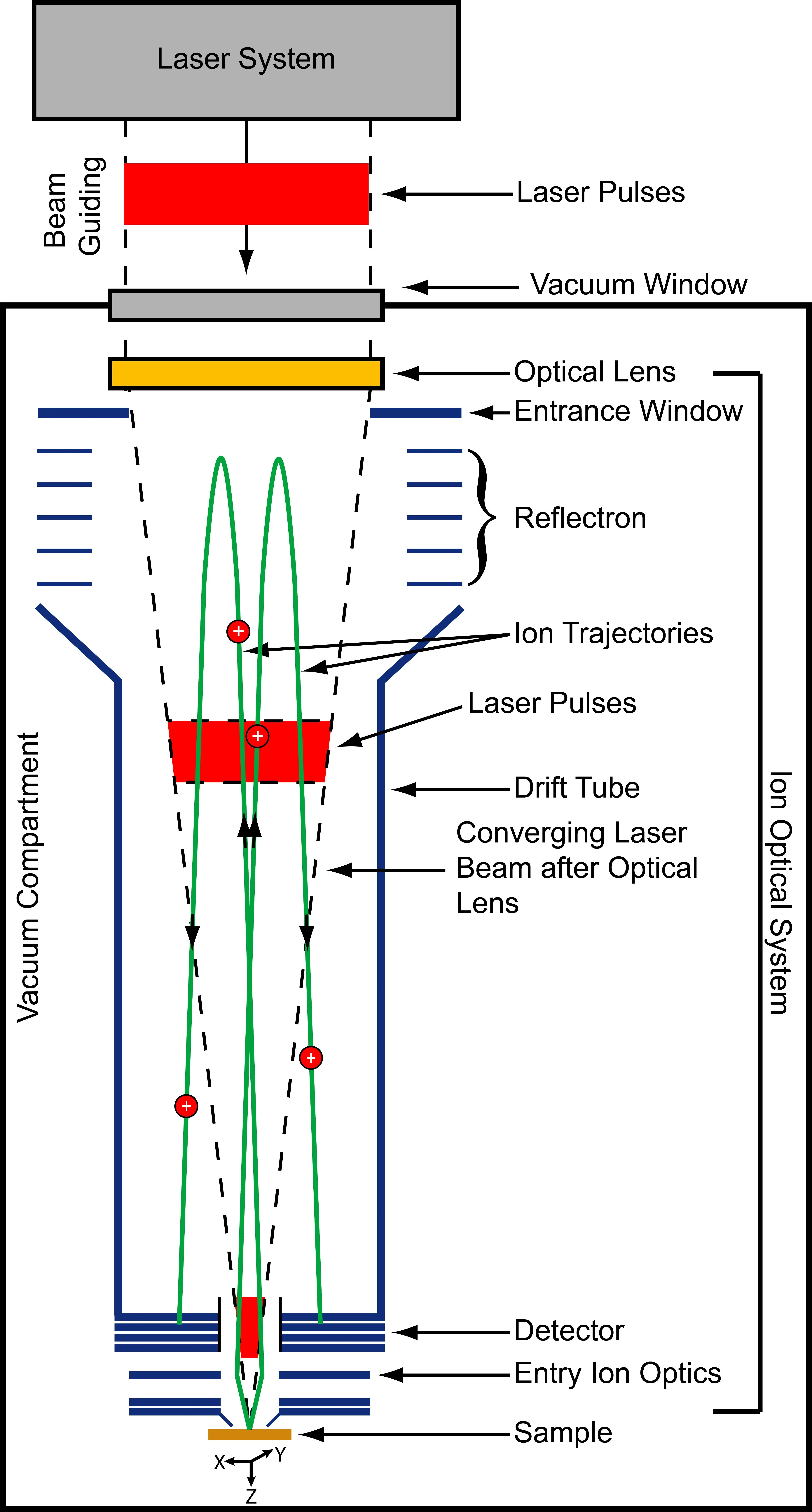
A laser strikes a piece of rock from another planet. The rock vaporizes, and the instrument catches the flying particles and sorts them by weight. That's how laser ionization mass spectrometry works — a method that could answer astrobiology's biggest question: is there life beyond Earth?
The instrument can peer inside a rock layer by layer, like an archaeologist brushing away layers of soil. It finds fossilized microbial structures hidden in the rock. It notices if sulfur in the sample has an unusual isotopic split — on Earth, that's often the handiwork of living organisms. And it recognizes organic molecules, the building blocks of life.
The real trick is in data processing. A mass spectrometer produces mountains of numbers, and the human eye can miss what matters. So scientists bring in machine learning: a neural network looks for patterns without being told what to find. This allows us to spot not only familiar forms of life but also those we can't even imagine.
The technology is already flight-ready. All that's left is a mission to carry such an instrument to Mars or the icy moons of Jupiter. The laser beam will become our probe in the search for cosmic neighbors.
Original abstract
as written by the authors arXiv:2604.18749
The search for signatures of life beyond Earth has been a major goal of space research and astrobiology for decades. The combination of expanded knowledge on Solar System bodies from past missions and advancements in in-situ detection technologies may place humanity on the verge of discovering extraterrestrial life. Here, we highlight the current measurement capabilities of Laser Ionisation Mass Spectrometry for the detection of several classes of signatures of life of high relevance to current astrobiology-focused missions. This includes the detection of microstructures within complex geological hosts by chemical depth profiling, sulphur isotope fractionation signatures, and the detection of various classes of organic molecules. The recorded mass spectrometric data can be fed into network and machine learning analysis routines, which are powerful tools for the unbiased detection of signatures of life, including agnostic detection of biosignatures. We demonstrate that Laser Ionisation Mass Spectrometry is a novel and promising technology for future application. on space exploration missions devoted to life detection.
Laser ionization mass spectrometry is so sensitive it can detect a single molecule among a billion others.
In the movie Prometheus, scientists use a similar device to analyze an alien cave, and find something unexpected.