A Magnetic Compass the Size of a Dust Speck express
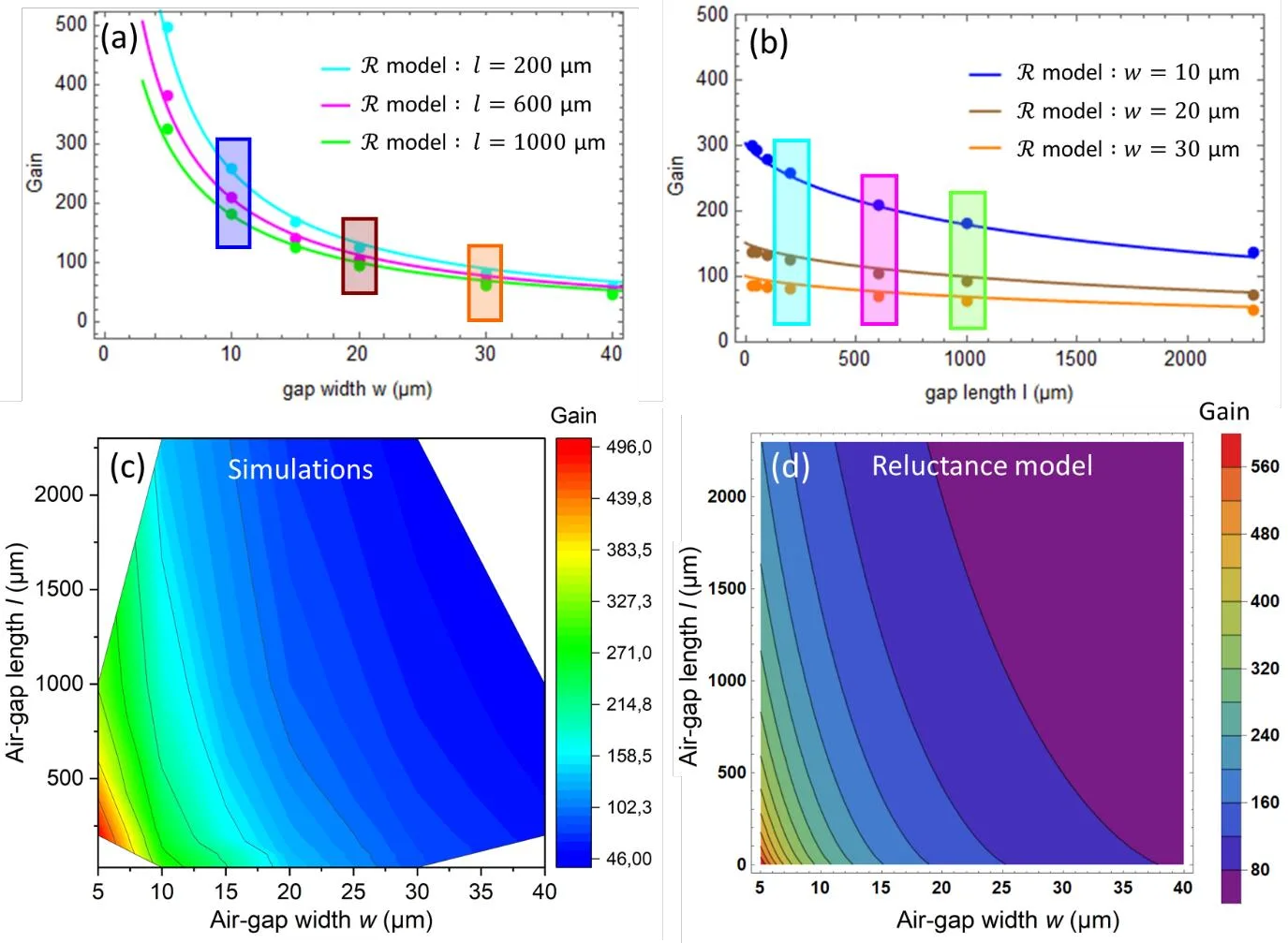
Magnetic sensors smaller than a match head can already detect weak fields — from a beating heart or a distant planet. But making them even more sensitive involves a trade-off: improve one part, and you lose performance in another. Inside the sensor are tiny tunnel junctions (bridges through which current flows) and magnetic flux concentrators — metal plates that gather the field like a funnel gathers water.
The problem is that the more junctions you add, the wider the gap between the plates, and the funnel gathers less field. The authors figured out how to calculate this trade-off in advance. They simulated the sensor's behavior on a computer and derived a simple formula linking component dimensions to sensitivity. The formula is based on magnetic reluctance — the magnetic analog of electrical resistance.
Now engineers can quickly tailor sensor parameters to a specific task without manually testing hundreds of designs. Such ultra-sensitive, compact magnetometers are needed for space probes measuring planetary magnetic fields and for wearable devices tracking heart or brain activity.
Earth's magnetic field is about a hundred times weaker than a refrigerator magnet, yet the new sensor can detect even its faintest fluctuations.