Warp Drive Unstable, But Cosmology Offers Hope express
A warp drive creates a bubble around the ship, compressing space in front and stretching it behind. This is a clever way to bypass the speed-of-light limit without violating Einstein's theory. To curve space so dramatically requires exotic matter — stuff with negative energy that repels rather than attracts. In the ordinary world it doesn't exist; it only pops up fleetingly in quantum fluctuations.
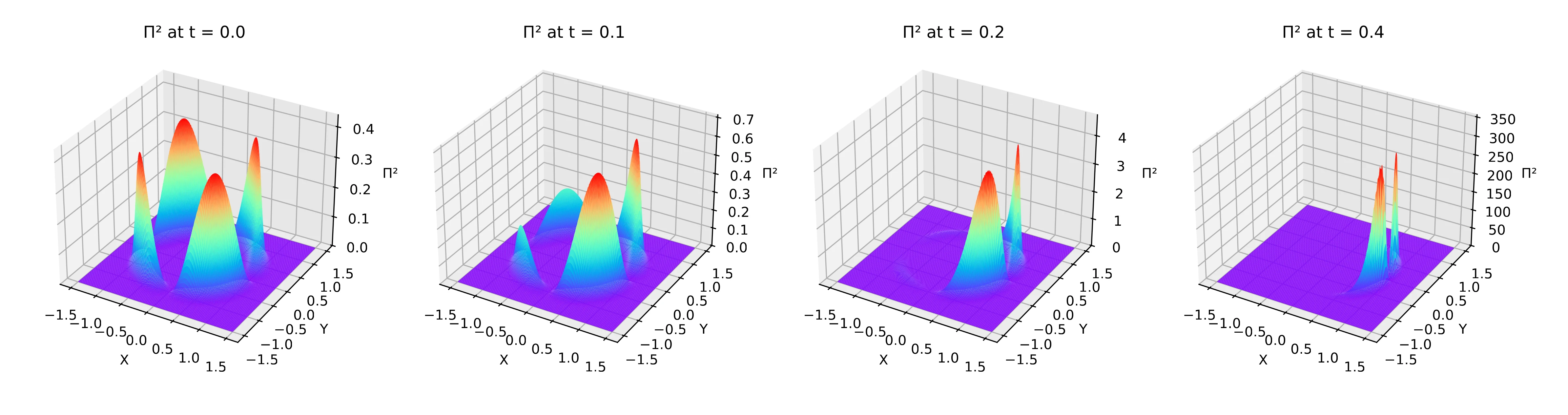
But the main challenge isn't finding exotica, it's stability. The equations showed that the warp bubble is like a soap bubble: internal oscillations tear it to shreds, and any attempt to change speed makes it 'freeze up.' Physicists sidestepped this by using a more general mathematical model that doesn't impose a rigid shape on spacetime. The key step was incorporating the expansion of the universe into the calculations.
And then something astonishing emerged. The behavior of the warp field exactly matched the way cosmologists describe the motion of matter — accounting for asymmetric flows. After all, in the first moments after the Big Bang, the universe underwent inflation: it expanded faster than light. That's a natural warp process on a gigantic scale. By copying its patterns, we could make an artificial bubble stable. The stars grow closer.
Negative energy is needed to compress space, but under normal conditions it's forbidden by the laws of physics. Yet quantum mechanics allows it to appear for record-short times.
Sci-fi films get scientific backing: the warp jumps of 'Star Trek' no longer seem like pure fantasy.