The Universe Around Us Turned Out to Be More Curved Than We Thought ✛ ✦
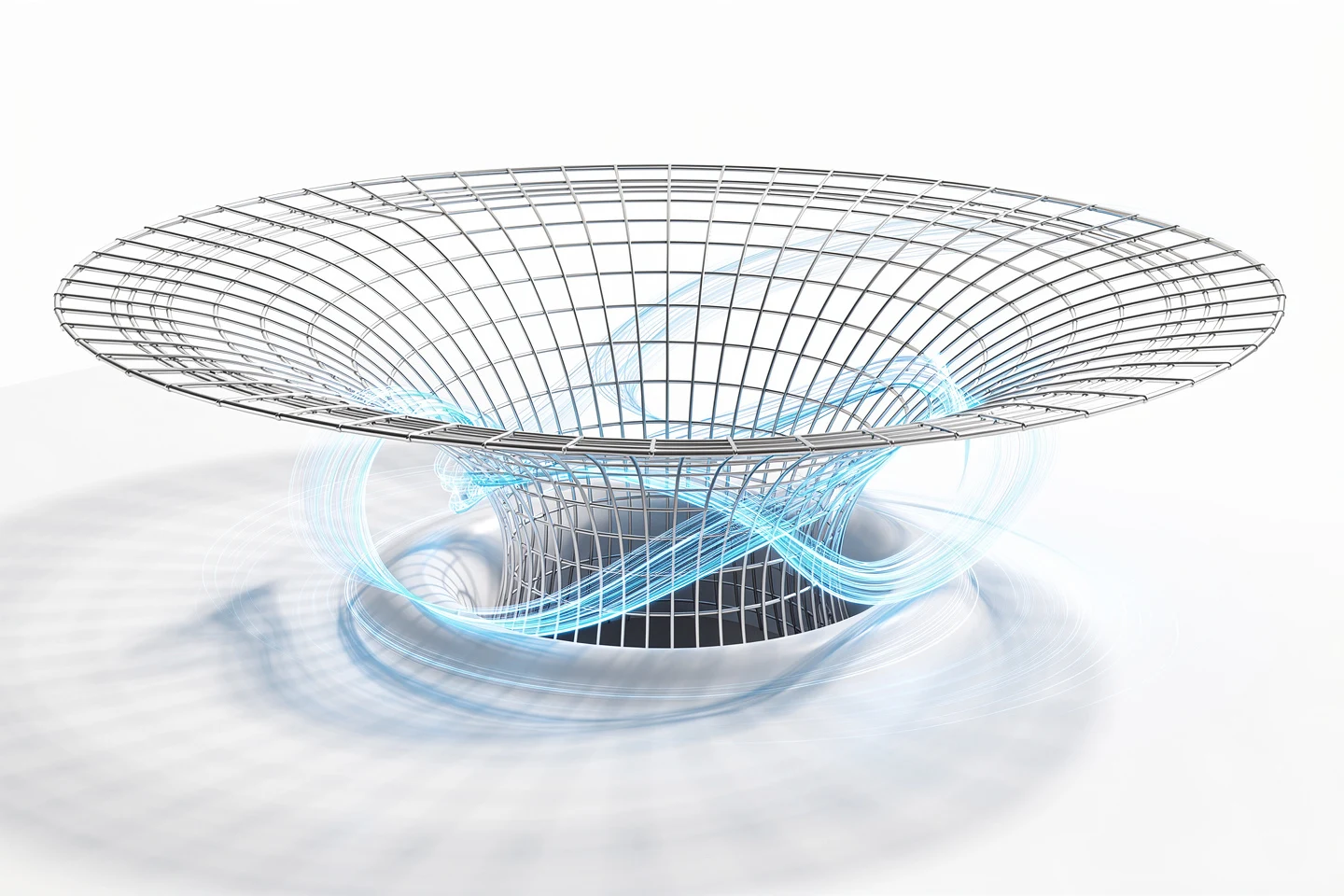
Under the influence of gravity, space dents like a stretched blanket: galaxies and their clusters create dips and bumps, and the main contribution to curvature comes from invisible dark matter (a discovery linked to Vera Rubin). Astronomers mapped local space using the motions of thousands of galaxies (from the Cosmicflows-4++ catalog, accounting for redshift and peculiar velocities) via computer simulations.
It turns out that curvature contributes roughly 10% to expansion and doesn’t taper off over distances up to a billion light-years. This contradicts the standard model, which, relying on the cosmic microwave background, assumes a smooth universe. Local bumps distort dark energy measurements by tens of percent — meaning we could be way off in our estimates. It’s astonishing that we live inside such a 'dent,' nested within an even larger void, like a cosmic matryoshka doll. Accounting for this relief will help refine the cosmic picture started by Edwin Hubble and Georges Lemaître.
Our universe resembles a matryoshka doll: we live inside a 'bubble' surrounded by a 'wall' of superclusters, which in turn is embedded in a giant void.