Quantum Clocks Canceled the Beginning of the Universe ✛ ✦
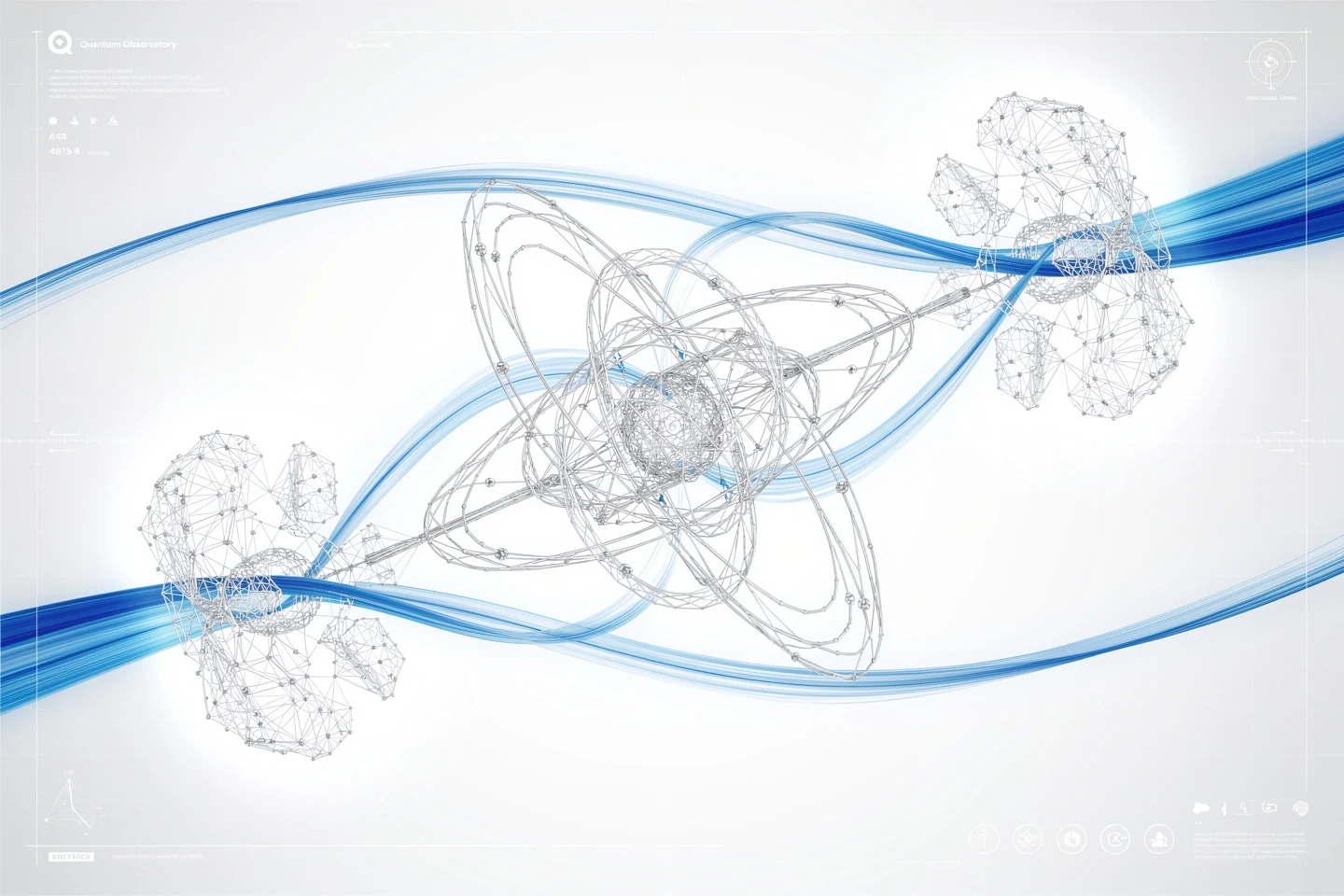
Usually the Big Bang is depicted as a beginning point. But Einstein’s equations and quantum physics break down there: time disappears. Back in the 20th century, Wheeler and DeWitt derived an equation for the entire Universe without time. Later, Wootters proposed looking for time within — not outside, but from matter itself. The key became quantum entanglement — the inseparable connection of distant particles. It's like a clockwork mechanism where each gear sets the pace for the other: their mutual rotation is the flow of internal time.
Applied to an expanding Universe (with different speeds in different directions), the calculation showed: in the superposition of all possible histories, the probability of zero volume is exactly zero. Big Bang without a zero-size point. Computer simulations confirmed this for all permissible parameters.
Thus gravity and quantum information intertwine, and time is the ticking of internal clocks set in motion by matter itself.
The very idea that time could be an internal illusion arose from a 1983 paradox: how can the hands move in a Universe that has no unified clock?