In 1965, Roger Penrose used methods of global differential geometry to prove: if in spacetime the energy dominance condition holds (gravity always attracts) and there exists a closed trapped surface (a surface from which even light rays converge), then a singularity inevitably arises — the edge of the causal past where geodesics terminate. This meant that singularities are not an artifact of symmetry, but a generic feature of gravitational collapse. The theorem was the first rigorous statement about singularities in GR without assuming symmetry. Later, Hawking and Penrose extended it to the cosmological singularity.
History
Roger Penrose in 1965, in the paper 'Gravitational Collapse and Space-Time Singularities,' made a breakthrough, showing that singularities are not a pathology of symmetric solutions but an inevitable consequence of collapse. He introduced the concept of a trapped surface and used a topological argument with the boundary of the causal future. Later, in collaboration with Stephen Hawking, the singularity theorems were extended to the cosmological context, proving the existence of the Big Bang. Penrose's work earned him the 2020 Nobel Prize.
How it works
The theorem states that under realistic conditions, gravitational collapse always generates a singularity — a boundary of spacetime beyond which the theory breaks down. This justifies the inevitability of black holes and the need for quantum gravity to describe singularities. Applications: black hole astrophysics, cosmology (the Big Bang singularity). Limitations: requires energy conditions that may be violated at the quantum level; the assumption of global hyperbolicity is unrealistic for quantum gravity.
In practice
Justification of the inevitability of black holes in astrophysics: predicts information loss and gravitational collapse; guides the search for quantum gravity.
Fun fact
Penrose's theorem 'guarantees' black holes: it states that if a star has collapsed, then a singularity is inevitable, like falling into a bottomless abyss.
A black hole pulls in anything that gets too close. But if you toss in not one object but a pair, one of them can fly back out, carrying off some of the hole's rotational energy. This trick, devised by Roger Penrose in 1969, works only because a black hole has a horizon — a boundary beyond which nothing returns. Now it turns out the horizon isn't necessary.
A black hole pulls in anything that gets too close. But if you toss in not one object but a pair, one of them can fly back out, carrying off some of the hole's rotational energy. This trick, devised by Roger Penrose in 1969, works only because a black hole has a horizon — a boundary beyond which nothing returns. Now it turns out the horizon isn't necessary.
A spotlight beam fades into the darkness, but if you trace it backward, you hit the lamp. The history of the universe might be the same: tracing its expansion backward, we run into a beginning.
Physicists took the simplest model — a universe that stretches equally in all directions, like a cube with all sides growing.
Quantum mechanics allows a particle to be in two places at once: this is called superposition. But massive objects, like a dust grain or a ball, don't behave that way: their position is always definite. Why? One idea is that it's an illusion: the particle is constantly "jittering" from random environmental kicks, and the blurred picture averages out.
A homogeneous, spherical cloud of cosmic dust begins to contract under its own gravity. At some point, by classical laws, it should collapse into a point of infinite density — a singularity.
A black hole spun up almost to its limit is like an athlete balancing on the edge of a record. The most interesting action isn't inside the hole itself, but in the thinnest film of spacetime at its horizon. It's there that tiny corrections to Einstein's gravity can suddenly swell to gigantic proportions.
A rotating black hole is no calm whirlpool. Space around it shudders and rings at the slightest disturbance, like a guitar string after a pluck. These oscillations are described by the Teukolsky equation — a complex mathematical construct that physicists have studied for half a century.
Recently, a strange symmetry was noticed in this equation.
An old house. The facade is freshly painted, the stairs don't creak. A pretty picture. But try to move in heavy furniture, and the floorboards give way. The beauty of the facade says nothing about the strength of the floors.
It's much the same with black holes without singularities.
An old house. The facade is freshly painted, the stairs don't creak. A pretty picture. But try to move in heavy furniture, and the floorboards give way. The beauty of the facade says nothing about the strength of the floors.
It's much the same with black holes without singularities.
Light freezes at the edge of the abyss: that's what the event horizon of an ordinary black hole looks like. But at the center of this abyss lurks a singularity, a point where the laws of physics break down. What if, instead of a point, there were a hard shell?
A gravastar is not a black hole.
A black hole sitting on a thin cosmic membrane (brane) resembles a heavy ball stretching an elastic sheet. In classical physics, it is bald — only mass, charge, and rotation. But add a scalar field (an invisible substance like temperature), and the hole can spontaneously grow 'fur' from this field.
A campfire burns steadily and long. But when the wind blows, the flame flickers out, leaving only embers. A similar story plays out with the gravastar — a hypothetical object that was supposed to replace the black hole.
An ordinary black hole hides a singularity — a point where the laws of physics break down.
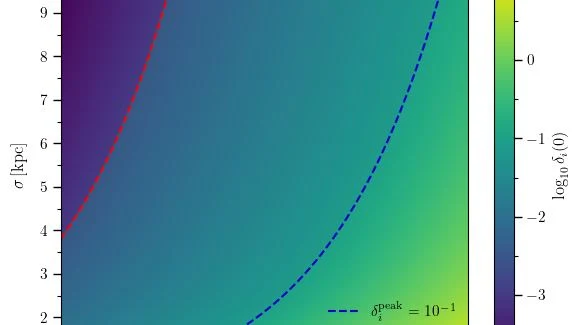
At the center of many galaxies lurks a black hole, wrapped in an invisible cloud — the halo of dark matter. This is not just a featureless mass: its density changes from the edge to the center, and the degree of this "compression" is called compactness.
A taut trampoline sheet dips under a heavy ball. If the ball spins quickly, the sheet begins to twist around it. Spacetime near a rotating black hole behaves similarly: it is not just curved, but also dragged along by the rotation, like water swirling around a whirlpool.
A star runs out of fuel and rapidly collapses under its own gravity. According to classical ideas, it collapses into a point of infinite density — a singularity. But what if nature abhors infinities? In models of regular black holes, instead of a singularity, a dense core of unknown matter forms at the center.
A black hole usually hides its singularity behind an event horizon — an invisible boundary from which not even light can escape. But sometimes this 'cloak' is absent, and the singularity, a point where familiar physics breaks down, is exposed to an outside observer.
At the center of a classical black hole lurks a singularity — a point where the density and curvature of spacetime become infinite. Physics goes silent there.
Hot gas spirals inward, falling onto an invisible superdense object. Such a disk resembles a giant whirlpool, but it is often tilted: its axis does not align with the rotation axis of the central body. The gravity of the massive object makes the disk wobble slightly, like a spinning top losing its balance.
In classical theory, a black hole is where matter collapses to a point of infinite density. Such a 'singularity' looks like an error in the equations: nature hardly tolerates infinities. Many physicists seek ways to 'smooth out' this flaw, and one idea is to modify the theory of gravity itself at small distances.
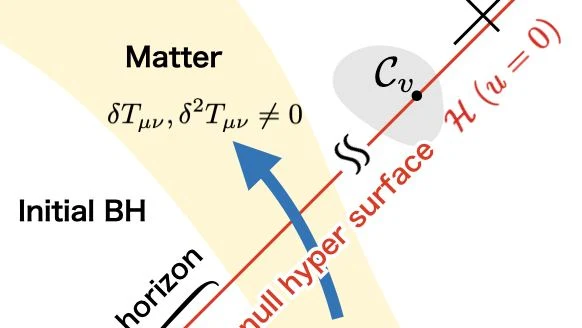
The boundary of a black hole is like the edge of a waterfall: cross it, and there's no way back. But unlike a waterfall, this boundary can be very fragile: a light nudge is enough to make it vanish.
Physicists have found that the horizon's stability is set by an imaginary 'light flow' coming from the past. Invisible streams pierce spacetime.
At the center of a black hole, classical theory paints a point where density and spacetime curvature shoot to infinity — like an infinitely sharp needle. But quantum corrections, tracing back to the work of Karl Schwarzschild, add a tiny “pillow”: space cannot collapse to zero.
In the ocean, a whirlpool pulls everything into a closed loop, just as a gravitational wave in empty space twists time into a loop. Gravitational wave — a ripple in the fabric of spacetime, and its special shape can turn the usual flow of events into a closed cycle. In such a zone, an object can return to its own past without violating the laws of physics.
An electron and its antiparticle — the positron, predicted by Дираком, — upon meeting, momentarily form позитроний: a tiny pair circling each other, like in an atom but without a nucleus. Almost instantly it decays, emitting two photons that turn out to be mysteriously linked.
In the first moments after the Big Bang, the universe inflated at an unimaginable rate. This inflation left behind ripples — tiny overdensities in the hot radiation and plasma.
A wormhole is a tunnel connecting two distant regions of the universe. If such a wormhole existed and were traversable, a particle inside it would feel not only gravity but also a force from its own electric field. This force depends on how spacetime is curved around it.
Observations by James Webb showed: already 500 million years after the Big Bang (at redshifts z~10), the Universe was aglow with black holes with masses of billions of solar masses. This baffles theories of gradual growth: matter would not have time to 'feed' the seeds at the required rate.
At the centers of many galaxies lurk giant rotating black holes. Astrophysicists have long suspected that these objects are remarkably resilient: after swallowing a star or merging with another hole, they quickly settle down and forget the catastrophe.
Two magnets collide in a dark room, stick together into a clump, and a dull thud echoes. Black holes behave much the same way, except instead of magnets they carry electric charge, and instead of a thud, there's a burst of gravitational waves. But there's a third player in this story — an invisible field that physicists call scalar.
Ordinary gravity, as described by general relativity, behaves like a soft rubber membrane. When a massive star exhausts its fuel and collapses, it deforms this membrane so strongly that a black hole forms — a region where spacetime curvature becomes infinite, and nothing, not even light, can escape.
Deep inside a star compressed to its limit, particles behave like the strings of an unusual musical instrument. Their oscillations obey a complex equation that for nearly a century no one could solve exactly.
A quantum system is like an island gradually eroded by the ocean. The waves, representing environmental influence, wash away the shores, stripping the island of its unique contours. The GKLS equation (Gorini–Kossakowski–Lindblad–Sudarshan) describes exactly how quickly this 'quantumness' fades.
But every wave has an energy source.
At the very beginning of the universe, when all of space was compressed into a point, the laws of physics break down. This point is called a singularity — an edge where our equations lose meaning. But what if it's not an end, but a special type of boundary?
The authors of this work propose viewing the singularity as a free boundary.
A star contracts under its own gravity, and at some point its fate hangs on a razor-thin balance. Classical physics paints a grim picture: if the mass and the force of compression are tuned with terrifying precision, what emerges is not a black hole but a 'naked' singularity.
A black hole is not just a dark spot in space. It is a region where gravity compresses matter so intensely that even light cannot escape. Among all possible black holes, one stands out — the rotating Kerr black hole. Its description was long thought to be tied to Einstein's equations, like a recipe tied to a specific cookbook.
You toss pebbles into a whirlpool, trying to spin it faster and peer into its depths. A black hole is a cosmic whirlpool, where instead of water there is curved spacetime, and instead of a bottom there is a singularity — a point where the familiar laws of physics break down.
Just a few hundred million years after the Big Bang, in the ocean of invisible dark matter, giant black holes were already taking shape. They were born from the matter itself — without any help from stars. This mechanism, based on the equations of Lemaître, explains their early appearance.
When a massive star runs out of fuel, its core collapses under its own weight. A black hole forms — a region where gravity is so strong that even light can't escape. For a long time, it was thought that a point of infinite density, a singularity, lurks at the very center.
An old mechanical alarm clock ticks on the shelf. You hear the steady sound, see the hands moving, and you're certain time is passing. But if you take the clock apart, you won't find a single part labeled "time." Only springs and gears.
A balloon doesn't deflate all at once: first, dents appear on its surface, which run, merge, and finally the balloon shrivels into a point. Domain walls behave in much the same way — thin partitions that divided space in the first moments after the Big Bang.
An ordinary magnet always carries two poles — north and south. Split it in half, and each piece immediately grows its own pair. But deep in particle theory lives a strange notion: the monopole — a particle carrying just one magnetic charge, a lone pole without a partner.