Popular

Carlo Rovelli

1956- · quantum gravity, theoretical physics, philosophy of science
Italian theoretical physicist, one of the founders of loop quantum gravity. Made significant contributions to the development of a theory alternative to string theory, which describes the quantum structure of spacetime. Also known for philosophical works and science popularization.

Biography

Born in Verona. Studied at the University of Bologna. Received his PhD in Padua. Worked at the University of Rome, University of Pittsburgh, and also in Marseille. Professor at the University of Marseille. Winner of numerous awards for popularization. Founder and active developer of loop quantum gravity together with Lee Smolin and Abhay Ashtekar.

Key discoveries

💡 Passionate traveler and mountaineer; his love of mountains influenced his philosophical views on time and space. He also wrote about the nature of time in the bestseller 'The Order of Time'.
Quote: "Reality is interaction. There are no objects outside of interactions; the world is a web of events."
Links in the knowledge graph 1
Related tags
spacetime curvatureentropy
Related laws
Wheeler-DeWitt equation
Related scientists
Jacob BekensteinKarl SchwarzschildJoseph WeberEmmy NoetherWilhelm WienLudwig BoltzmannKip ThorneCharles Bennett

Related articles

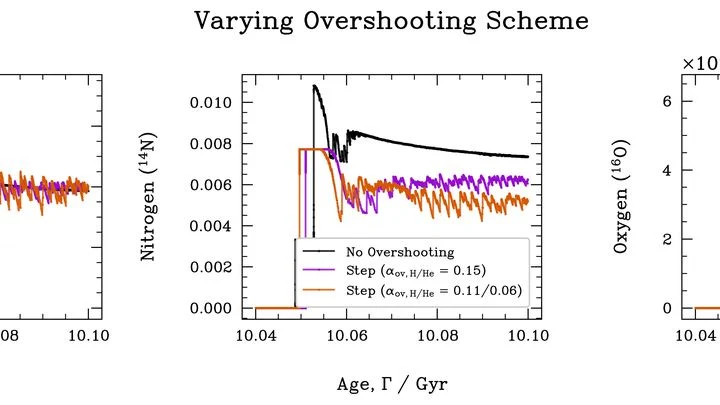
How a Neural Network Learned to See Quantum Foam

At the quantum level, space and time resemble a foam of microscopic bubbles. Neural networks have learned to instantly compute their interactions, replacing hours of calculations. This brings us closer to understanding the structure of the Universe at the smallest scales.
arXiv:2505.03255 · 2025-05-06

A Black Hole with Three Event Horizons: A New Recipe

A new model combines loop quantum gravity and dark energy, giving birth to a black hole with a triple horizon. This layered structure affects the shadow, vibrations, and light deflection, promising to become a key to testing quantum gravity and the nature of the universe's accelerating expansion.
arXiv:2505.12291 · 2025-05-18

Fuzzy-nova: A Quantum Wave Dissolving Black Holes

According to classical theory, the collapse of a massive star ends in a black hole with a singularity, where the curtain of physical laws falls. Roger Penrose proved the inevitability of singularities, and Stephen Hawking showed that quantum effects create the information paradox. New work proposes
arXiv:2605.07848v2 · 2026-05-08

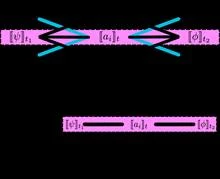
How a Timeless World Gains a Past and a Future

A new study shows that timeless equations are not flawed. They resemble a film reel where each frame exists independently, with no direction. But when a clock emerges within the system—like turning on a projector—the film starts rolling forward, and the familiar flow of time appears.
arXiv:2605.17935 · 2026-05-18

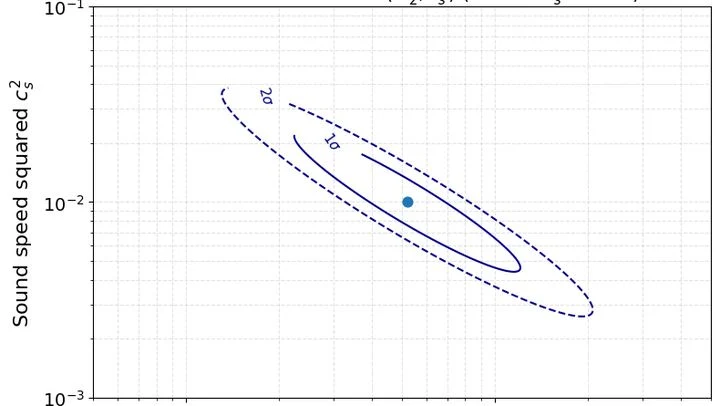
Quantum Sound in the Fabric of the Universe

According to one hypothesis, the cosmos is not monolithic, but made of tiny quantum 'building blocks'. Previously, only their synchronized dance was studied. But new work shows: when you account for their inevitable jitter, something like sound waves emerges. This quantum ripple barely influences th
arXiv:2605.18977 · 2026-05-18