How a Quantum Coin Pretends to Be a Die express
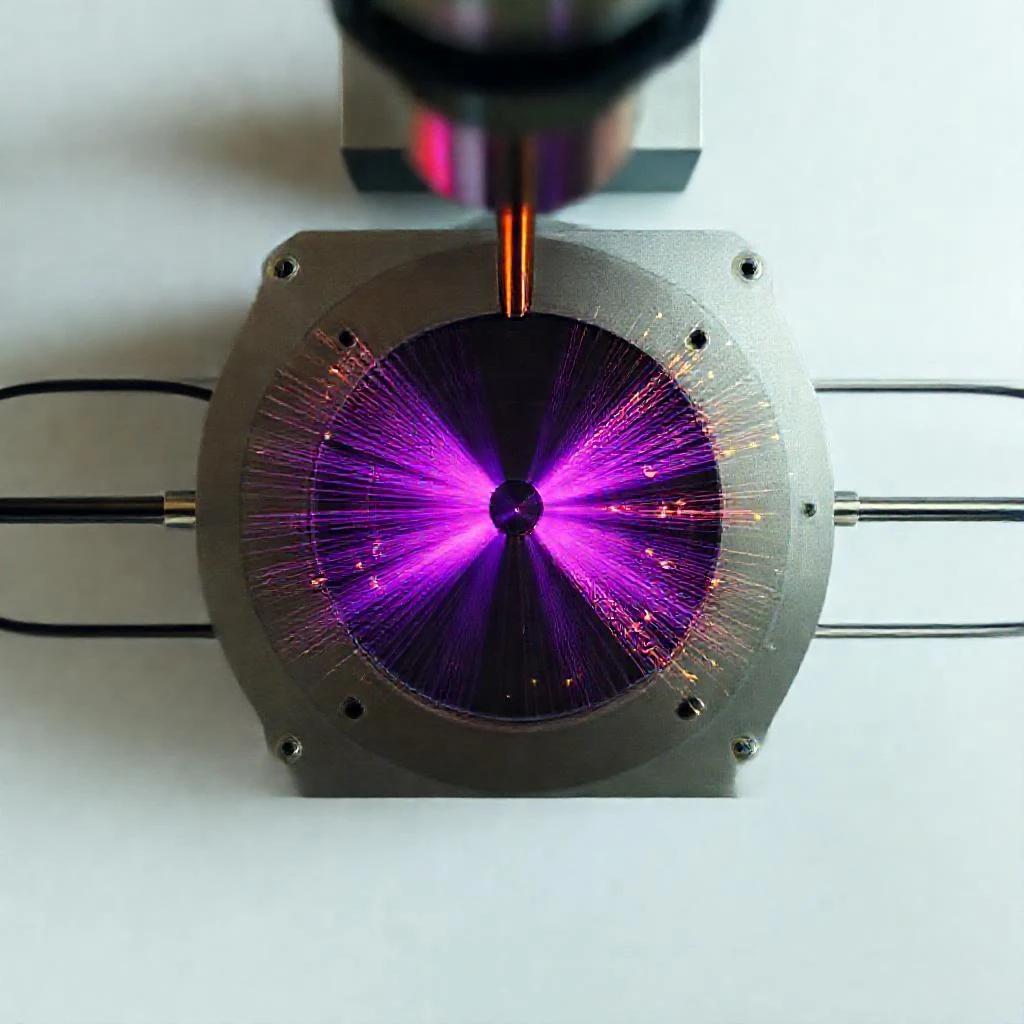
Every quantum particle has spin — an intrinsic magnetic property, like a tiny arrow. In an experiment, a beam of such particles passing through a magnet splits in two, like a coin that lands either heads or tails. That’s exactly how particles like a hydrogen atom behave.
But new research shows that the same “coin” can be made to work like a multi-faced die. All you need are tight constraints — for instance, locking the particle in a cramped trap. Then its mathematical description changes, and instead of just two options, the magnetic field pulls out a fan of many traces. In condensed matter (solid materials), this trick explains unusual properties and hints at how to create substances with tailored characteristics. The most astonishing part: one and the same electron can masquerade as possessing any spin, blurring the usual distinctions between particles.
Original abstract
as written by the authors arXiv:2605.31435
We show that a spin-1/2 particle can behave as if it were spin-$$s$$, and generate $$2s+1$$ spots in a Stern Gerlach measurement (albeit with a smaller gyromagnetic ratio). This arises from some subtle properties of effective Hamiltonians and Hamiltonians with constraints. Examples of implications of the effect in condensed matter are discussed. We also give some simple non-perturbative bounds for a system subjected to strong constraints.
The original Stern–Gerlach experiment in 1922 was so sensitive that scientists could observe the splitting of the silver beam with the naked eye, thanks to the atoms depositing on the glass.