Neutrinos from around the world pieced into one picture express
Neutrinos are often compared to a radio broadcast picked up by different receivers. One station sends a signal, but antennas in Japan, Antarctica, and at the bottom of the Mediterranean Sea hear it differently — due to distance, interference, and antenna orientation. Until now, it was thought that combining recordings from such different “receivers” into one coherent picture was impossible: too many technical subtleties.
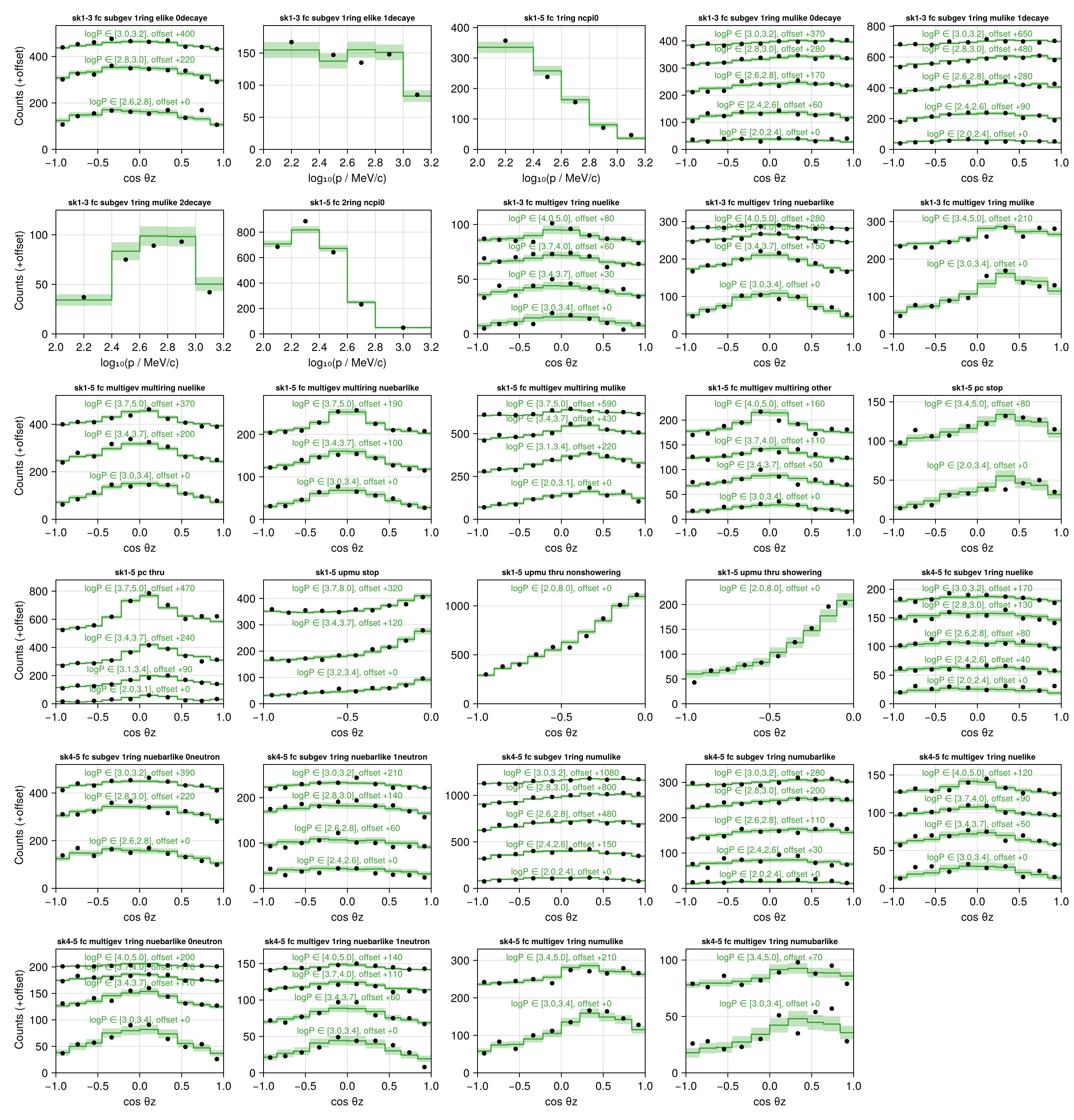
A group of physicists proved otherwise. They took data from the Super-Kamiokande detector (a huge water tank in a Japanese mountain), IceCube-DeepCore (kilometer-long strings in Antarctic ice), KM3NeT/ORCA (a network on the sea floor), and the Daya Bay reactor in China. In total—839,048 registered particles, binned into 1,536 cells. To describe all of this together, a model with 91 parameters was needed. It turned out that a single physics framework links these disparate measurements without any strain.
The result — more precise values of the neutrino mixing angles that govern their transformations from one type to another. The analysis also showed that the data agree better with the normal mass ordering (where the lightest neutrino is indeed the lightest) rather than the inverted one. This is not a final verdict, but a serious argument in favor of one of the two possible arrangements of the neutrino world.
Now that global fitting has been proven possible, we can expect new joint analyses. Each detector catches neutrinos of different energies and from different directions, and together they cover the entire “radio station”—from nearby reactors to distant cosmic sources.
Original abstract
as written by the authors arXiv:2606.09714
We present the first combined oscillation analysis of multiple atmospheric neutrino datasets, featuring data from Super-Kamiokande, IceCube-DeepCore, and KM3NeT/ORCA together with reactor data from Daya Bay. Such combinations have long been considered infeasible outside experimental collaborations; we demonstrate that a unified physics model can simultaneously describe all datasets with no significant parameter tensions. Fitting 839048 events across 1536 bins with 91 parameters, our combined analysis yields competitive measurements of the neutrino mixing parameters, and prefers the Normal over the Inverted Mass Ordering.
One of the detectors, Super-Kamiokande, contains 50,000 tons of ultrapure water and sits a kilometer underground — to filter out everything except the ubiquitous neutrinos.