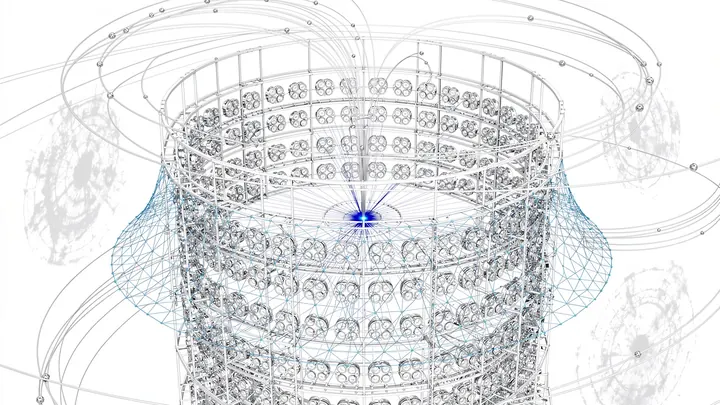
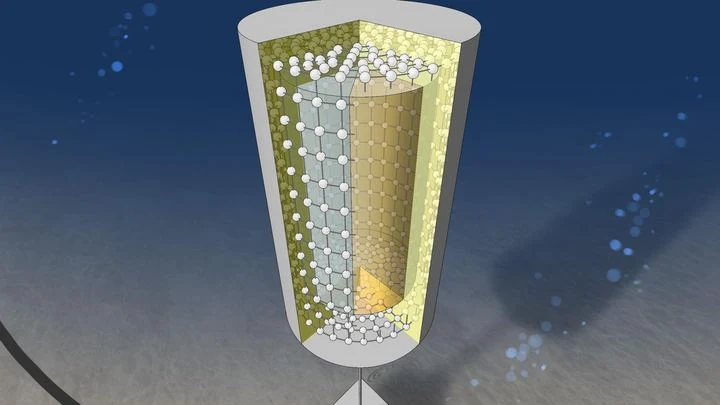
KM3NeT is a neutrino telescope under construction in the depths of the Mediterranean Sea, designed to detect high-energy neutrinos from cosmic sources. It consists of thousands of optical sensors strung along vertical lines anchored to the seafloor, spanning a volume of about one cubic kilometer. Neutrinos are nearly massless particles that interact so weakly with matter that they can pass through the entire Earth unimpeded, making them ideal messengers from the most violent processes in the universe.
History
The KM3NeT collaboration was formally established in 2006, building on the experience of earlier underwater neutrino experiments like ANTARES and the Russian Baikal project. The name stands for 'cubic kilometer neutrino telescope'.
How it works
When a neutrino occasionally collides with a water molecule, it produces a charged particle that travels faster than light in water, generating a faint blue flash called Cherenkov radiation. The telescope's photomultiplier tubes detect these flashes and reconstruct the direction and energy of the original neutrino. By pointing the detector downward, KM3NeT uses the Earth itself as a filter to block cosmic rays and other background particles, allowing only neutrinos to reach the detector from below.
The telescope is so sensitive that it can also detect the faint neutrino background produced by the decay of radioactive elements inside the Earth, helping to map the planet's interior heat production.
The universe is constantly sending us signals, but many are too faint to notice. Relic neutrinos, particles left over from the Big Bang, pass through Earth by the billions every second, yet catching even one is a feat on the edge of possibility. We need a detector that can sense energy a thousand times smaller than what it takes to move a speck of dust.
Boiling milk develops a trembling skin. By watching its movements, you can guess the strength of the fire beneath the pot and the fat content of the milk. In a similar way, astrophysicists peer into the ancient microwave radiation — the oldest light that has reached us from an era when the universe was only 380,000 years old.
Deep beneath the ice of the South Pole, nearly two and a half kilometers down, an unusual telescope is at work. It is not pointed at the sky but through the Earth. Its quarry: neutrinos, nearly elusive particles that pass through planets and stars without interacting with anything.
In 1998, physicists caught neutrinos doing something astonishing: the particle changes its type on the fly. That is only possible if it has mass. This became the only laboratory proof of physics beyond the Standard Model. But exactly how much a neutrino weighs remains a mystery.
A billiard ball clicks against another in complete darkness. The sound of the impact and the clatter of balls dropping into pockets: that's all you hear. This is roughly how physicists study the interactions of elementary particles at energies that no terrestrial accelerator can reproduce.
Three rain gauges are set up across a big city. Two of them record rare but very intense downpours, while the third, the most sensitive, stays dry. That's roughly the puzzle posed by neutrino detectors: those nearly elusive particles that arrive from the depths of space.
The ANITA-IV balloon-borne experiment, floating over Antarctica, reported four suspicious signals.
In February 2023, the KM3NeT underwater telescope, anchored at a depth of three kilometers off the coast of Sicily, registered a flash. A single muon streaked through the detector, leaving a trail of energy at 220 petaelectronvolts. That's like a mosquito punching through a concrete wall in mid-flight.
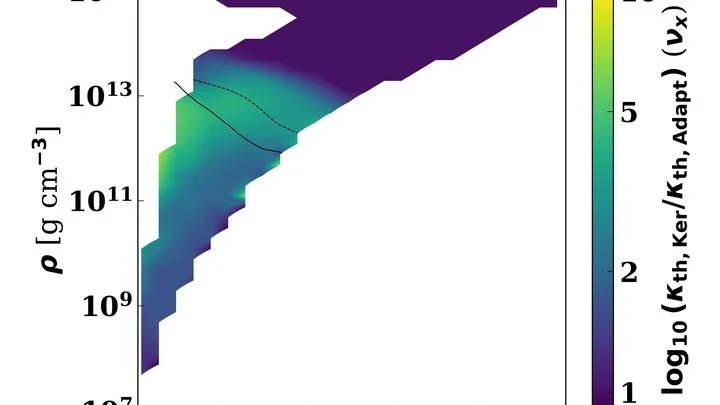
The collision of two neutron stars is a cosmic laboratory where matter is compressed to unimaginable densities. In the first moments after the merger, a hot cloud forms and cools by emitting neutrinos. These ghostly particles carry away energy and dictate how much matter is ejected into space and which heavy elements are synthesized.
In the depths of the ocean, where light never reaches, a plan is taking shape to capture particles that barely interact with anything. Geoneutrinos, tiny messengers from the scorching mantle, are emitted during the decay of uranium and thorium. Their flux carries information about how much heat lies hidden beneath our feet.
When a massive star dies, its core collapses, and a supernova explosion occurs. The cataclysm births streams of particles — like ripples from a thrown stone. The first to arrive are swift neutrinos, which pierce the Earth, hardly interacting. Then, hours later, ghost particles with a tiny charge appear.
Neutrinos are often compared to a radio broadcast picked up by different receivers. One station sends a signal, but antennas in Japan, Antarctica, and at the bottom of the Mediterranean Sea hear it differently — due to distance, interference, and antenna orientation.
An old photograph taken at the moment of the universe's birth has been carrying its light to us for nearly 14 billion years. This snapshot is the cosmic microwave background, the cooled echo of the Big Bang. It captures the tiny inhomogeneities from which galaxies later grew.
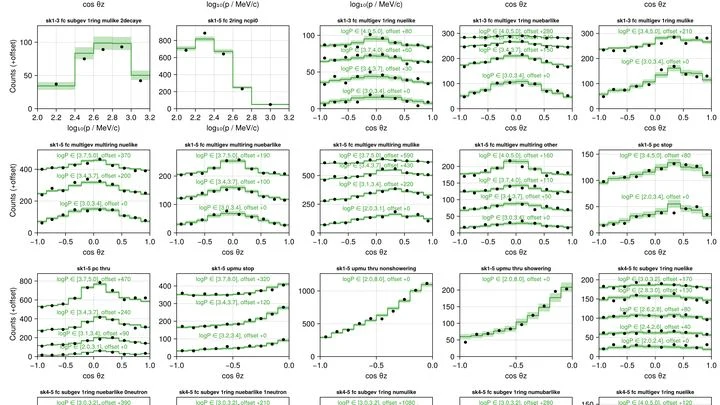
A giant tank of ultrapure water sits deep underground in Japan. Its walls are lined with thousands of light-sensitive sensors that catch faint flashes — the traces of ghostly particles passing through the water.
An invisible fence blocks the strait. You can't climb over it or dive under it: it's not made of steel, but of a stream of particles penetrating the water column. That's one way to describe the idea of detecting nuclear submarines by their antineutrino emission.
Deep in the Mediterranean Sea, where water presses down with the force of hundreds of atmospheres, a network of light-sensitive spheres waited for a rare guest. And it came — a neutrino that carried through the bulk of the Earth an energy comparable to the impact of a flying brick.
Inside the detector, which resembles a large thermos filled with germanium, faint flashes are born. Neutrinos, tiny particles that barely interact with matter, occasionally bump into germanium nuclei. The nucleus recoils, and the detector registers the jolt. But to distinguish a real signal from noise, the instrument needs precise calibration.
The speed of light in a vacuum is physics' metronome: it sets the rhythm for all processes. If it falters, the familiar harmony collapses. Neutrinos, ubiquitous but almost intangible particles from space, can check if this rhythm ever stumbles under extreme conditions.
Neutrinos are the most abundant massive particles in the universe. Trillions of them pass through us every second, yet they leave barely a trace. Their collective gravity, though tiny, can influence the motion of entire galaxies. Think of two people approaching each other on a busy street; invisible passersby alter their speed.
Neutrinos are almost elusive particles: they zip through planets without noticing atoms. So every catch is a stroke of luck. Recently, the underwater detector KM3NeT snagged a neutrino with energy millions of times greater than Earth's most powerful accelerators can produce.
Neutrinos are tiny particles that pass through the planet's bulk like light through a windowpane. Every second, billions of them fly through your pinky fingernail, but catching even one is no easy feat. To do it, scientists dug a two-kilometer-deep mine in Canada and installed the SNO+ detector.
The Universe is a colossal web of invisible dark matter and galaxies, stretched by the expansion of space. Neutrinos, nearly intangible ghost particles, barely cling to the threads, but their collective mass subtly shifts the tension of the entire network.
Deep beneath our feet, within the planet's bulk, radioactive elements are slowly decaying. This process spawns tiny particles — geoneutrinos. They pass through the crust, mantle, and core, barely interacting with anything.
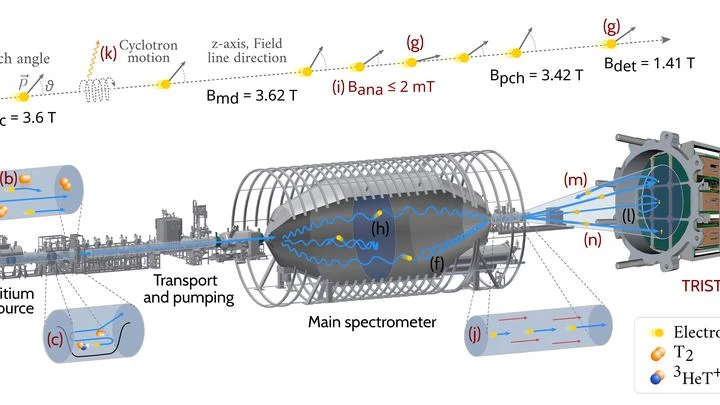
Radioactive tritium decays, emitting an electron. Its energy is almost always the same, but sometimes, just a little less. This shortfall could mean that alongside the ordinary neutrino, another, hidden particle was born.
The Standard Model describes three types of neutrinos, but scientists suspect there is a fourth — the sterile one.
Neutrinos — elementary particles rightly dubbed “ghosts”—barely interact with matter, making their detection a formidable challenge. The existence of neutrinos was predicted by Wolfgang Pauli, and the name was coined by Enrico Fermi.
A tiny ghostly particle zips through a piece of germanium. Usually it leaves no trace, but sometimes, like a billiard ball, it smacks into an atom's nucleus. The nucleus recoils, and that jolt can be detected. At Oak Ridge National Laboratory, the Ge-Mini detector caught such recoils for two years.
Neutrinos are the most elusive of known particles.
A high-speed collision knocked a neutron out of a helium-8 nucleus, and for an instant a helium-7 nucleus appeared, like an overloaded shelf shedding three books at once. This fleeting 'sound' of decay was captured for the first time: three neutrons flew apart, leaving behind an ordinary helium-4 nucleus.
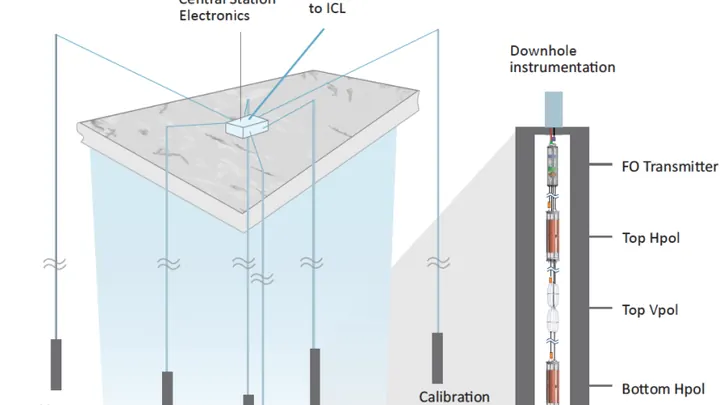
Deep within the Antarctic ice, at depths where sunlight never reaches, antennas hang suspended. They listen not for sounds but for radio waves, waiting for a signal from a particle that is nearly impossible to catch. A neutrino passes through the Earth like a bullet through fog, but occasionally, very rarely, it grazes an ice atom.
At the center of galaxy NGC 4278 sits a black hole that shoots out two plasma jets, like a giant cannon firing particles into space. These jets accelerate particles to energies that no earthly accelerator could ever dream of.
In an underground hall at Fermilab, a huge tank holds liquid argon — a transparent fluid at minus 186 degrees. When an invisible neutrino flies into the tank, it occasionally strikes an argon nucleus, and a short track of charged particles flashes.
Cosmic neutrinos are ghost particles, passing freely through the Earth. The IceCube telescope in the ice of Antarctica once caught such a neutrino, and it matched an infrared flare. That flare turned out to be the moment a black hole tore a star apart in a distant galaxy.
Inside a giant spectrometer in Karlsruhe, shaped like a huge metal barrel, scientists are catching particles that are nearly impossible to catch. Neutrinos are the ghosts of the microcosm: every second, trillions of these particles fly through your body, and you don't even notice. But they do have mass, and scientists want to measure it.
Cosmic rays are charged particles that fly to us from the depths of the Galaxy. If you plot how many particles arrive at each energy, the line runs smooth, then suddenly drops sharply.