How Neutron Star 'Sighs' Give Away Their Secrets express
When two superdense stars circle in a tight dance, the space around them shudders. This shudder, gravitational waves, is caught by giant detectors on Earth. But deciphering the signal is tricky: you need to figure out what exactly you're dealing with — a pair of black holes or neutron stars. The latter have a distinctive signature: they respond to their partner's tidal forces like a bell to a strike.
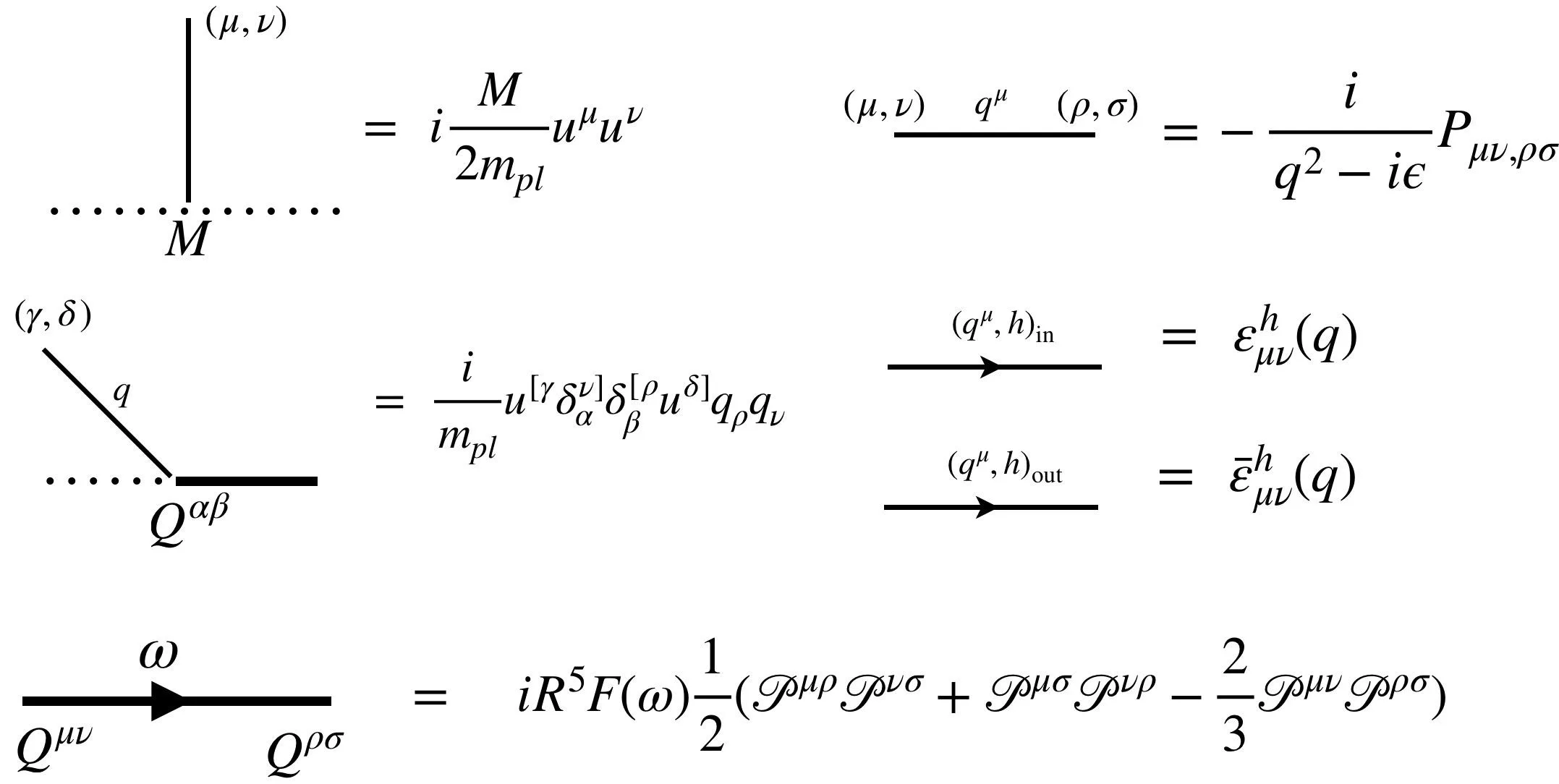
However, describing this response in the language of general relativity is hampered by coordinate tricks and the star's complex internal structure. The authors found a way out: they applied an approach borrowed from particle physics — the worldline within effective field theory. Here, the star appears as a point-like object reacting to external influence. In parallel, they solved the full equations inside and outside the star, carefully stitching the solutions together. Comparing the two pictures gave a clear definition of the dynamical tidal response.
The result matched expectations in the calm limit and near resonances — frequencies at which the star vibrates especially strongly. Moreover, the method allowed them to compute the imaginary part of the dominant oscillation, which arises from energy leaking into gravitational waves. This is like measuring the damping of a bell's sound, from which you can infer its material.
Original abstract
as written by the authors arXiv:2606.14405
A key challenge of gravitational-wave physics is distinguishing the nature of compact objects in binary coalescences, in particular whether they are black holes or neutron stars. Neutron stars are set apart by a stronger tidal response, whose static and dynamical aspects are directly linked to their rich internal physics. Measurements of this response through gravitational-wave observations constrain the neutron-star equation of state and provide insight into the physics of high-density matter. However, defining the tidal response in general relativity is difficult due to coordinate ambiguities and the complexity of connecting the star's response to the binary dynamics and the associated waveforms. In this paper, we show how the dynamical tidal response of a neutron star can be systematically defined within the worldline effective field theory (EFT) framework, and relate it to the gauge-invariant amplitude for gravitational-wave scattering off an isolated star. We compute this amplitude both within the EFT, using standard quantum field-theory techniques, and within stellar perturbation theory (the corresponding ultraviolet theory), solving the coupled metric and matter perturbation equations numerically in the stellar interior and matching to the analytical Mano-Suzuki-Takasugi (MST) solutions in the vacuum exterior. Matching the amplitude between the two theories fixes the dynamical tidal response. The result is consistent with known expectations, including the static limit and the behaviour near the star's resonant modes, and it recovers the imaginary part of the dominant oscillation mode induced by gravitational-wave dissipation. We conclude with a discussion of potential improvements within both the EFT and perturbation theory.
Tidal forces in a close pair of neutron stars can heat their interiors to millions of degrees — even without a collision.