Popular

James Webb Fishes Out an Invisible Planet from a Dusty Disk ⚡ экспресс

Original: "Discovery of an Exterior Third Planet Orbiting $$\beta$$ Pictoris"
arXiv:2606.23789 · 2026-06-22 · CC BY 4.0 · ⏱ 1 min · Exoplanets
The James Webb Telescope fished out a third invisible planet from the dusty disk of the star Beta Pictoris.
Abstract

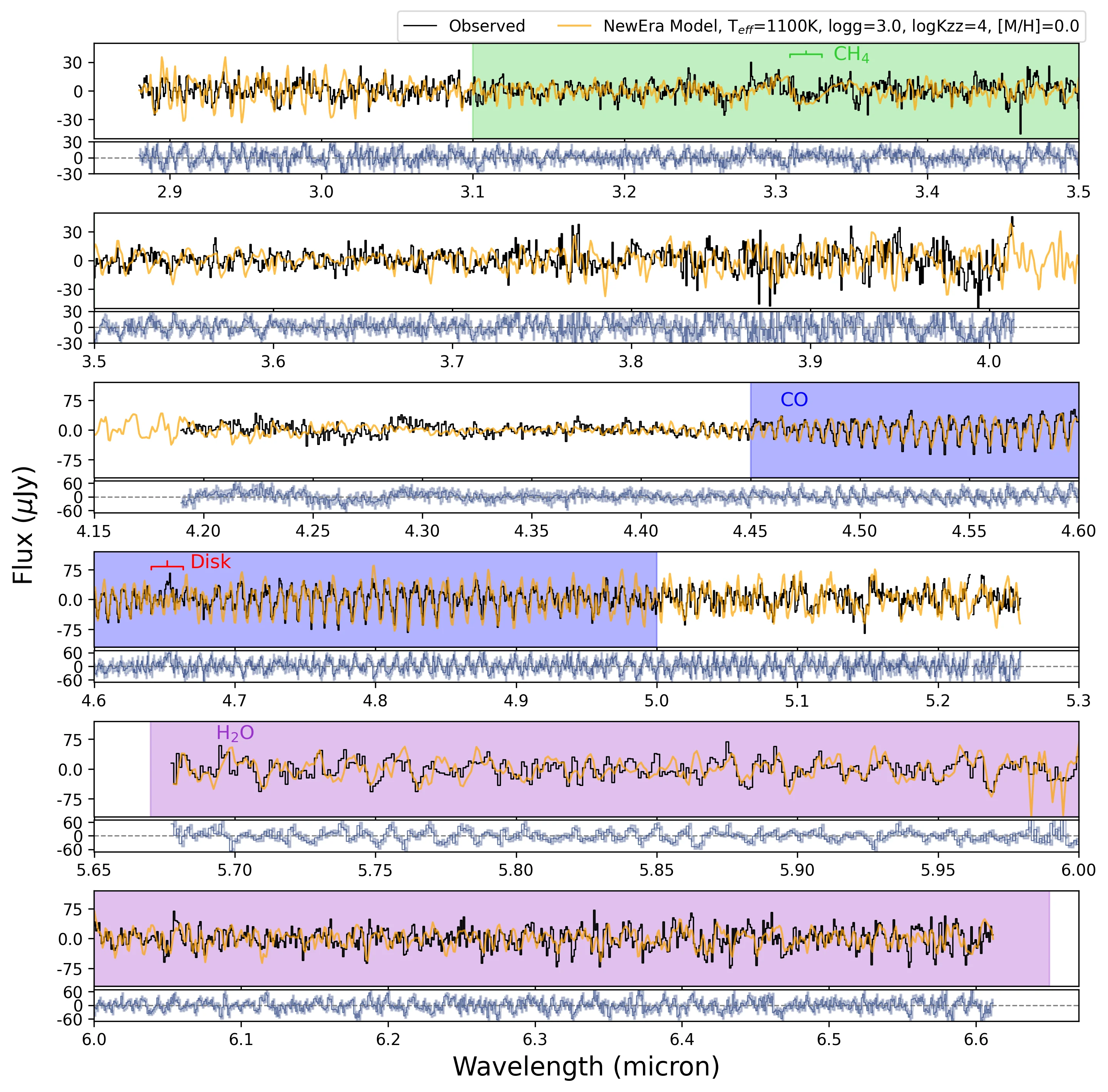
Using the James Webb Space Telescope, astronomers have discovered a third giant planet in the β Pictoris system—now the second system where more than two planets are directly visible. Surprisingly, the planet was found not in a regular image, but by picking out its spectral 'fingerprint' against the bright dusty disk (like recognizing a familiar tune in an orchestra’s din). The spectrum revealed methane, carbon monoxide, and water, and its motion suggests the planet is 'sweeping clean' the inner zone of the disk. Its mass is 2–4 Jupiter masses, and its distance from the star is over 30 astronomical units. This method opens the hunt for planets hidden in debris disks.

Links in the knowledge graph 1

📄 Showing the "Simple" version — "Popular" is not ready yet. Add it to favorites to help prioritize it.

Using James Webb, astronomers 'fished out' a third giant planet from the murky dust disk of the star β Pictoris. Two others were already known, but this one was hiding in the bright light, like a fish in muddy water.

Regular imaging didn't help, so they used splitting light into colors: it revealed the fingerprints of water, methane, and carbon monoxide. It's like fishing by chemical 'scent': instead of casting a net blindly, they used a precise lure—a template of molecular lines.

This search is like recognizing a fish not by its appearance, but by the composition of its scales.

The fished-out planet β Pic d is 2–4 times more massive than Jupiter and orbits far out—farther than Neptune is from the Sun. With its gravity, it scrapes out the inner edge of the dust disk, like raking silt. A year on it lasts over a hundred Earth years, and the method itself opens our eyes: searching for worlds where before we saw only murk.

🎯 A year on β Pic d lasts at least a century and a half: the planet is so distant that a single orbit takes over 100 Earth years.

Scientists
Christian DopplerD. B. McLaughlinDidier QuelozMichel MayorR. A. RossiterAlbert Einstein
Tags
exoplanet JWST spectroscopy Water carbon cosmic dust
Laws
Doppler effectgravitational lensingKepler's third lawMaxwell's equationsPlanck's lawPlanck–Einstein relation
Original: arXiv:2606.23789 · CC BY 4.0 · bridge42worlds