The Universe in a Matrix: How Quantum Simulations Do Without a Lattice express
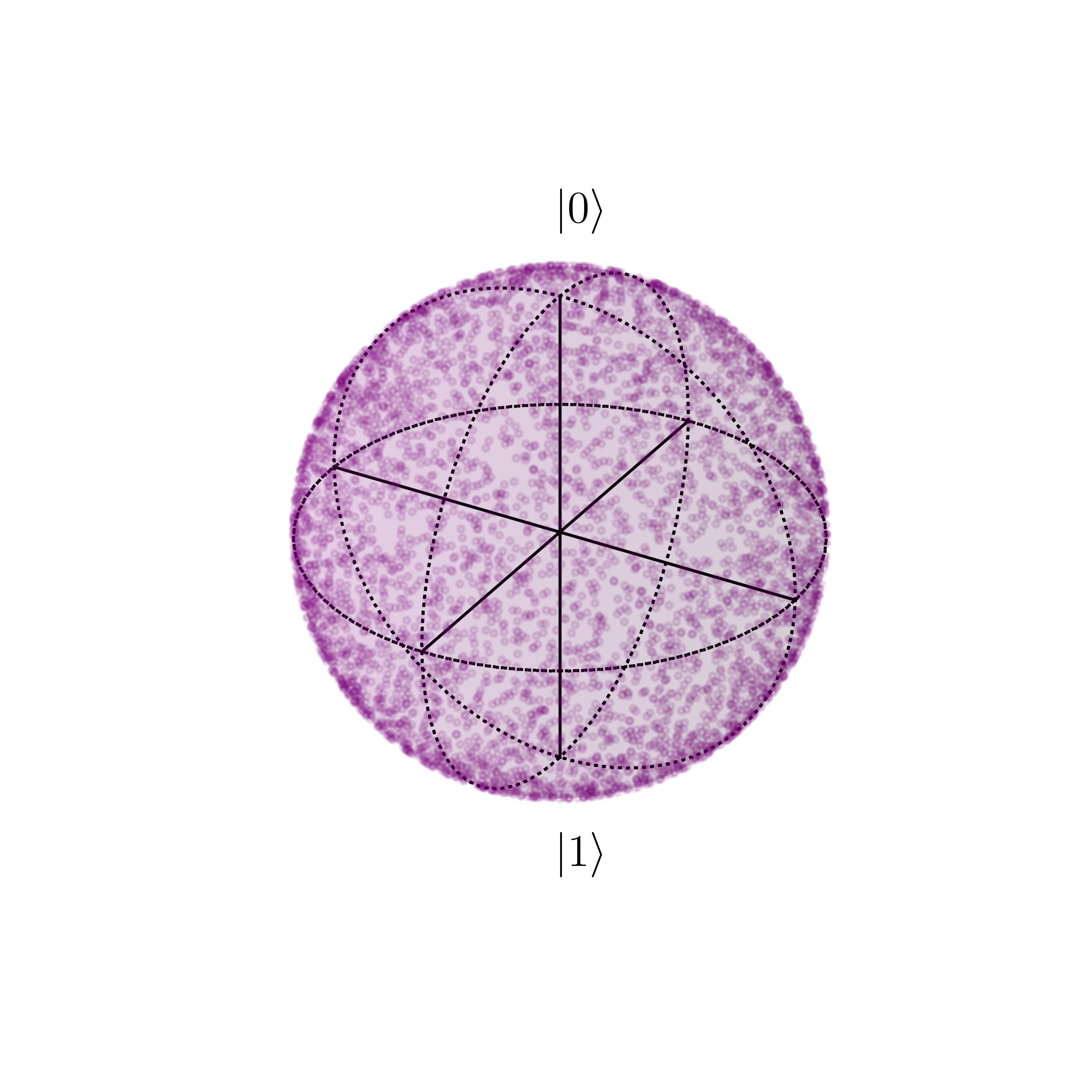
A translator who translates not words but the very structure of a conversation runs into trouble when the chat moves beyond a quiet room. In a familiar simulation on a spatial lattice, everything follows a strict script. But the moment the interlocutors find themselves in a noisy square, where sound is distorted by echoes and the crowd keeps changing direction, the script falls apart. That's roughly how traditional quantum simulations 'stumble' over dynamic, curved spacetime.
The new approach abandons the fixed lattice. Instead, it uses a set of large matrices (tables of numbers) whose 'communication' rules define the geometry of the world. It's like an orchestra without a score: each musician plays their own part, but together they create a symphony where the melody is space itself. The authors showed how to make such an orchestra sound on a quantum computer. They use periodic, repeating sequences of operations on matrices (the Floquet technique), which on average reproduce the probabilities predicted by field theory.
Numerical checks confirmed the method works. Moreover, on a model with the gauge group SU(2), they managed to see the confinement phase transition (particle confinement) both on a flat and on an expanding cosmological background. The latter is a step toward simulating inflation or particle production in the early universe.
Now the translator is not tied to a single room. They've learned to work with a living, changing space of conversation — and that changes the game for quantum simulation of fundamental physics.
The 'Loschmidt echo' technique used in this work originally emerged in nuclear magnetic resonance and quantum chemistry. It shows how 'entangled' a system becomes over time — and now it helps study the fabric of spacetime.
The idea that spacetime might be 'woven' from matrices echoes the concept of 'The Matrix' in the Wachowskis' film, where reality is just a set of rules executed by computer code.