method

lattice simulation

A computational method that models physical systems on a discrete grid of points.
18 related articles

Description

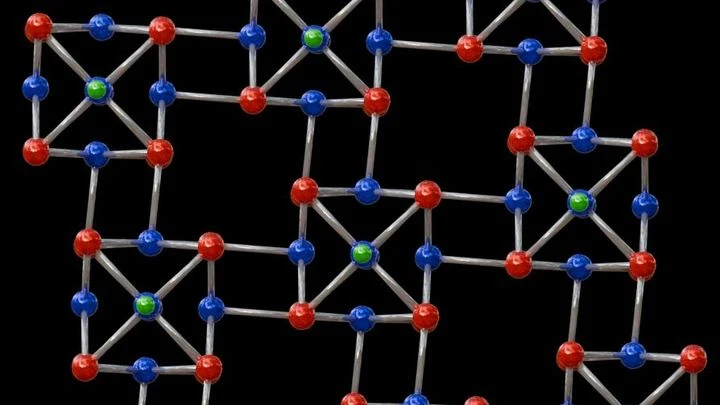
Lattice simulation is a computational technique that represents a physical system as a discrete grid of points, or lattice, and solves the governing equations on that grid. This approach is essential for studying systems where continuous mathematics is intractable, such as quantum chromodynamics (the theory of strong nuclear forces) or complex many-body problems. By discretizing space (and sometimes time), researchers can use powerful numerical methods to simulate phenomena that would otherwise be impossible to calculate analytically.

History

The method was pioneered in the 1970s by Kenneth Wilson, who introduced lattice gauge theory to study quark confinement, work that earned him the 1982 Nobel Prize in Physics.

How it works

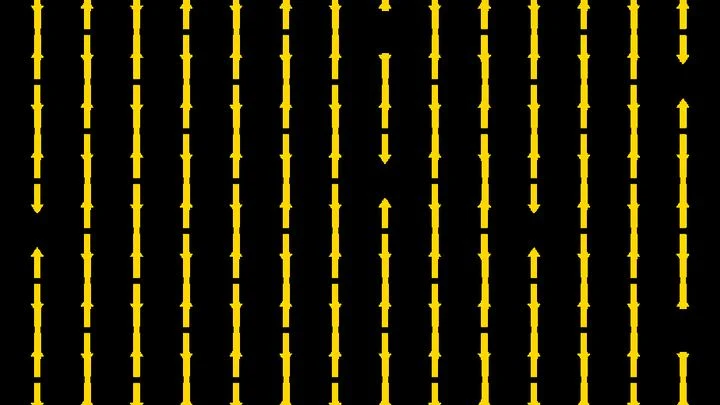
The idea is to replace continuous space with a finite set of points, typically arranged in a regular pattern. Fields (like the electromagnetic potential or the wavefunction of a particle) are defined only at these points, and derivatives are approximated by differences between neighboring points. This turns differential equations into algebraic equations that can be solved iteratively on a computer. For quantum systems, the lattice spacing acts as a natural cutoff that tames infinities, and results are extrapolated to the continuum limit as the grid is made finer. Recent advances include adaptive algorithms that refine the grid only where needed, and even 'lattice-free' methods that use neural networks to represent the system more efficiently.

In practice

Lattice simulations are used to predict the properties of materials, model the early universe's quark-gluon plasma, and design quantum devices, such as simulating how light is collected from atoms in a quantum simulator.

Fun fact

The name 'LATTICE' in one of the cited titles refers to a software package that acts as a 'polyglot' for molecular simulation, allowing different molecular dynamics codes to communicate through a common lattice-based interface.


Concept graph →

Related articles · 18

Mountain Trails of Quantum Phases
In a mountain range, there are trails that can be contracted to a point if you walk through a flat valley. But there are also loop routes that cannot be shrunk without crossing a ridge.
Quantum Physics2026-08-041 minarXiv:2608.04290express
Quantum Simulator on Fleeting Qubits
A quantum computer is usually like an assembly line: operations proceed one after another, and each error accumulates. In the new work, physicists tried a different path — an architecture where the computation grows out of the measurement process itself. They took 56 ions in a trap and wove them into a three-dimensional cloud of entangled particles.
Cosmology2026-07-292 minarXiv:2607.27141express
Modeling the Boiling Cauldron of the Universe
The early universe was less like a calm pond and more like a boiling cauldron. Matter flowed, collided, and swirled against the backdrop of rapid spatial expansion. To understand how stars and galaxies emerged from this hot soup, physicists build digital simulations. This new work is the third part in a series on lattice-based cosmological modeling. The first two focused on fields; this one deals with fluids.
Machine Learning2026-07-161 minarXiv:2607.15180express
Neural Cartographer: Recovering the Invisible Laws of Nature
Many natural processes are described by differential equations, but scientists often have only fragmentary data — a sort of torn map. The new computational method works like a cartographer who reconstructs a complete map of the terrain from a few landmarks.
Machine Learning2026-07-151 minarXiv:2607.14410express
LATTICE: How to Unify Cellular Data
For a long time, biologists studied cells by listening to just one voice in a polyphonic choir: measuring gene activity while ignoring how DNA is packed. It's like trying to grasp a conversation knowing only one language. LATTICE fixes this: the program learns five molecular 'languages' at once — from gene activity to spatial markers.
eess.SY2026-07-141 minarXiv:2607.12343express
How a Smart Algorithm Learns Not to Crash
A driver on a slippery road doesn't know exactly how the car will respond to the steering wheel, and learns on the go, leaving room for error. A smart control algorithm behaves in a similar way.
Quantum Physics2026-07-042 minarXiv:2607.04040express
The Universe in a Matrix: How Quantum Simulations Do Without a Lattice
A translator who translates not words but the very structure of a conversation runs into trouble when the chat moves beyond a quiet room. In a familiar simulation on a spatial lattice, everything follows a strict script. But the moment the interlocutors find themselves in a noisy square, where sound is distorted by echoes and the crowd keeps changing direction, the script falls apart.
Materials2026-04-111 minarXiv:2604.10304express
Heat Disrupts the Light Orchestra
A laser strikes the crystal, and it responds with flashes of light, like a bell ringing after a blow. But if the bell is warm, its sound wavers and fades. Same here: the crystal's atoms constantly jitter from heat, and this jitter disrupts the electrons' smooth flight, making the light dim and blurry.
Strongly Correlated2026-03-301 minarXiv:2603.28125express
Magnetic Monopoles on Quantum Ice
Magnetic monopoles are like halves of a magnet that cannot exist alone in ordinary materials. But in spin ice, they appear in pairs connected by an invisible thread — a Dirac string. Previously, such monopoles were only seen in artificial systems at room temperature, but their quantum motion remained a mystery.
Nuclear Theory2026-03-271 minarXiv:2603.26881express
Nuclear Reactions on a Quantum Computer
When two atomic nuclei collide, the outcome depends on their energy and the angle at which the fragments fly apart. Typically, such calculations demand enormous computing power, and accuracy hits a wall due to approximations.
Nuclear Theory2026-03-261 minarXiv:2603.25081express
Catching the Elusive: Measuring the Decay Width of Helium-5
The helium-5 nucleus is like an overtightened string: touch it, and it falls apart into helium-4 and a neutron. Catching such a decay and measuring its rate is no easy task. Standard calculation methods stumble over mathematical noise. The researchers took a reliable approach to describing nuclear forces and added a clever trick — analytic continuation.
Quantum Gases2026-03-262 minarXiv:2603.25775express
Neural Network Spots Knots in Quantum Fog
In a cold cloud of atoms chilled to near absolute zero, energies can behave like threads that weave into braids. These braids are not just a pretty image: their pattern is tied to topology, the branch of mathematics that studies properties preserved under continuous deformations.
Quantum Gases2026-03-022 minarXiv:2603.01760express
Light That Twists Time
If you shake a box of sand long enough, patterns appear on its surface — patterns that weren't there when the box was still. It's the same here: physicists took a cloud of cold atoms, trapped them in an optical lattice, and began shaking it periodically. This gave rise to a new state in the atoms, like a new pattern in the sand that doesn't exist without the shaking.
HEP Lattice2026-02-202 minarXiv:2602.18080express
A Meson on the Quantum Stage
Inside a proton, quarks are held together by gluons, like springs. Let go of one quark — the spring stretches and snaps, creating a new quark. That's the strong force at work, and simulating it in real time on a regular computer is nearly impossible: there are too many possibilities, all tangled together. Enter the quantum computer.
Quantum Gases2026-02-041 minarXiv:2602.04948express
Quantum Simulator Assembles Light from Atoms
Light and matter in the tiny world obey laws that are hard to compute even on a supercomputer. Physicists build special "quantum simulators"—setups where cold atoms play the roles of particles and fields. But until now, such simulators could only depict the field in its simplest form: as if it were either present or absent.
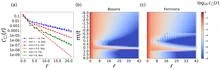
Bosons Instead of Fermions: Quantum Simulations of Gauge Theories
Two actors on the same stage. One is a fermion, finicky and demanding, hard to make follow the rules of a quantum simulator. The other is a boson, easygoing and undemanding, ready to take any role. The director hopes the audience won't notice the substitution.
math.NA2025-03-312 minarXiv:2503.24234
A Lens That Sees the Skew: Nonlinear Climate Models
Glasses with flat lenses show a symmetric world: rise and fall, heat and cold look the same. For decades, climatologists have viewed El Niño through such glasses, using linear inverse models. These captured the rhythm of oscillations but missed that the warm phase of El Niño is typically sharper and stronger than the cold La Niña.
math.NA2024-07-152 minarXiv:2407.10931
The Climate Clockwork: New Math Captures Seasonal Rhythms
Every winter, the Pacific Ocean warms slightly off the coast of Peru, and every summer it cools. This rhythm is set by the gears of the climate machine, but some turn fast, others slow, and still others speed up or stall. Linear inverse models have helped us glimpse these gears in data for decades, but they were blind to seasonal changes in pace.