Why Black Holes Spin: The Clue in Stellar Mergers ✛ ✎
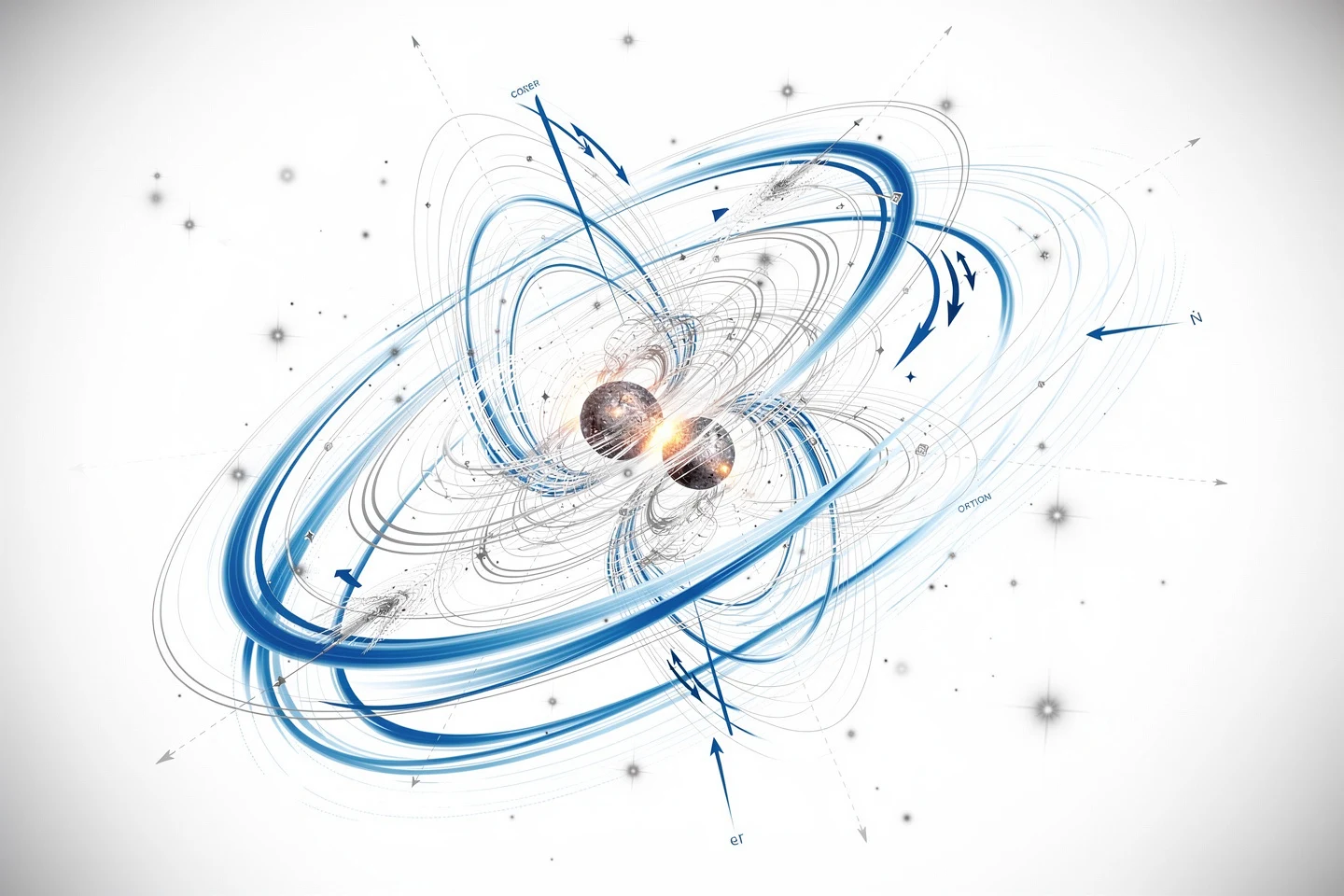
In star clusters, where thousands of luminaries crowd like commuters in rush hour, collisions are inevitable. When two large stars merge, a scorching blue giant forms, surrounded by a shell of hydrogen. Using spectroscopy, a method of dissecting light, astronomers see from its color that such a star is incredibly hot. And most importantly, it spins like a top because it contracted after the merger. This is akin to a figure skater pulling their arms in and spinning faster.
Later, such a giant collapses into a black hole — an object with gravity so strong that not even light can escape. Amazingly, the star's rapid rotation is passed on to this cosmic abyss. The result is a black hole with a frantic spin rate — almost at the limit of what's possible.
Such fast-spinning black holes leave a unique signature in space — gravitational waves, which, like ripples on water, propagate at the speed of light. They are caught by giant detectors on Earth. Through the Hubble Space Telescope, scientists peer at young clusters where future cosmic spinning tops are being born right now. This whole picture fits into the story of the universe since the very Big Bang — for it was then that the first stars began to ignite.
A single merger of stars in a tight cluster can spin up a future black hole to thousands of revolutions per second, whereas without this intervention it would have remained nearly stationary.
Rapidly spinning black holes slow time, as shown in the movie 'Interstellar,' and their cosmic dance affects the entire galaxy.