A Magnetic Bottle Without a Lid express
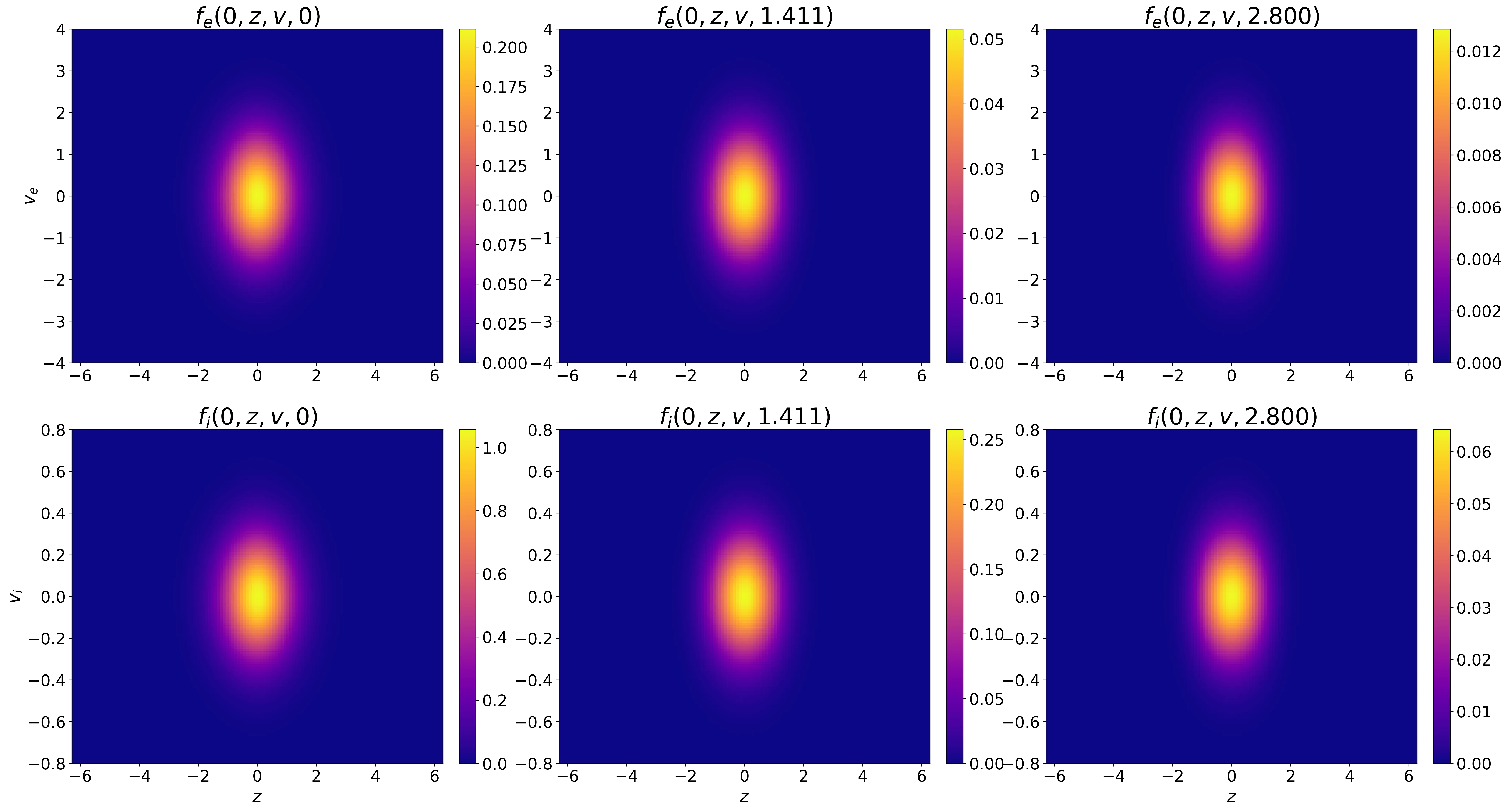
A magnetic mirror is a tube open at both ends. The magnetic field inside is arranged so that hot plasma doesn't leak out: at the ends, the field lines bunch up like a cork in a bottle. Plasma particles flying toward the exit are repelled by these "corks" and bounce back. But some still escape: that's the classic "loss cone" argument.
The authors of the new study approached the problem as a mathematical optimization. They sought the best shape of the magnetic field by solving equations for charged particles and the self-consistent electric field (which the plasma creates for itself). And then two surprises emerged. First: this electric field acts as an extra wall: it reflects particles even where the magnetic field is weak. Second surprise: if you consider only electrons, the optimal field shape is a bump in the middle of the tube. But if you add ions, the shape becomes familiar — with peaks at the ends.
It turns out that a magnetic mirror is not just a magnetic bottle. It's a living system where the field shape and the electric "fence" must be tuned together. Without accounting for this coupling, you can't build an optimal trap.
Magnetic mirrors are among the first devices for plasma confinement. In the 1950s, they were proposed as a simpler alternative to closed doughnut-shaped chambers, but for a long time it was thought that end losses were too large. Now it turns out that the plasma's own electric field can greatly reduce these losses.
In Tony Daniel's novel "Earthling," a starship uses an engine based on an open-ended magnetic trap, just like in this work.