math.OC math.OC

23 articles

articles

eess.SY2020-04-233 minarXiv:2004.11411
How to Hear the Ocean's Voices
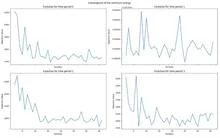
Earth's climate resembles a choir, where each member sings their own part at their own pitch. Some voices hold low notes, like multi-year ocean temperature oscillations, while others produce rapid trills, like short atmospheric waves. The conductor needs to hear each one, but the voices overlap and the notes blend into a mush.
stat.ME2020-07-013 minarXiv:2007.00267
Causality That Flips Sign: How Regimes Shape Connections
In a tropical forest, the dry season gives way to the rainy season, and with the weather, the rules of life change: some animals go into hibernation, while others come out of hiding. Likewise, in complex systems, from climate to economics, the links between processes are not set in stone. They depend on a hidden "regime" that itself switches from time to time.
Blind Search for El Niño Precursors
A blindfolded sapper searches for a mine by tossing pebbles at random. He cannot see the map or calculate where the charge is buried. But if he throws enough pebbles and listens for which one lands with a duller thud, he can pinpoint the danger. That is roughly how a new method for predicting El Niño works: the warm current that every few years alters weather across the entire planet.
A Quantum Sieve for the Power Grid
Every day, the power grid faces a puzzle: which power plants should be switched on to reliably meet demand without breaking the bank? For 15 generators and 24 hours, the number of possible schedules exceeds 2.3×$$10^{108}$$, more than the number of atoms in the visible universe. No classical supercomputer can sift through all of them, so dispatchers settle for a compromise.
Superconductivity2026-02-152 minarXiv:2602.14261express
How to Design a Superconductor That Doesn't Lose Current
A superconductor is a material that, at very low temperatures, conducts electricity without losses: electrons move without bumping into each other, like a crowd walking down a perfectly smooth corridor. But turn on a strong magnetic field, and vortices appear inside the superconductor — tiny regions where superconductivity vanishes.
math.OC2026-02-211 minarXiv:2602.18725express
How to Sync Different Maps of the Same City
A city can be studied in different ways: one person maps the streets, another tracks traffic flows, and a third maps population density. The maps don't match, but they describe the same place. A similar problem arises when biologists look at a cell through different instruments: one shows its shape, another the distribution of proteins inside. We need to understand how these data are related.
Fluid Dynamics2026-02-221 minarXiv:2602.19336express
Microbe Swimmers: How Body Shape Dictates Trajectory
A microbe with flagella rows through water the way a person rows with their arms. But if a person swims breaststroke, they go forward, while a microbe goes in a spiral. The reason is that a microbe has no single direction: each part of its surface pushes water in its own direction, and the body twists like a corkscrew.
Instrumentation2026-03-171 minarXiv:2603.16981express
A Comet with a Steering Wheel: Four Engines for an Interstellar Voyage
An icy rock is flying through the Solar System on an open trajectory — coming in from interstellar space, swinging around the Sun, and heading back into the dark.
math.OC2026-04-051 minarXiv:2604.04305express
Epidemics as a Game: How Personal Calculations Reshape the Wave of Infections
An epidemic is not just a virus: it's millions of personal decisions. One person keeps riding the subway; another locks themselves at home. Classical models describe the average behavior of a crowd but don't ask why each individual acts that way.
math.OC2026-04-241 minarXiv:2604.23063express
How to Spot Details in a Blurry Image
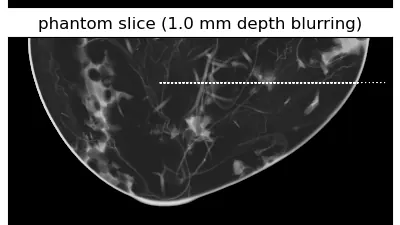
The X-ray machine moves around the breast in an arc, taking several images from different angles. From these flat frames, the computer assembles a 3D picture, like putting together a mosaic from pieces. But if the mosaic pieces are crumpled or smudged, the picture turns out blurry. In tomography, the role of "crumples" is played by noise and imperfections in the imaging.
q-bio.PE2026-07-052 minarXiv:2607.04456express
How Life Learns to Survive
Molecules float in a pot of broth. Some copy themselves, others help their neighbors, and still others just get in the way. This isn't soup: it's a model of early life: a replicator system. Usually, we assume the rules of the game are fixed once and for all: whoever reproduces fastest wins. But the authors of this study proposed something different — the rules can change too, just very slowly.
math.OC2026-07-131 minarXiv:2607.11306express
Mathematics finds the perfect plan to fight a pandemic
Mathematicians confirmed: the ideal response to a pandemic is the 'hammer and dance' strategy. First, a sharp lockdown smashes the wave of infections like a hammer blow. When hospitals empty, the dance begins — a cautious, step-by-step return to normal life.
math.OC2026-07-131 minarXiv:2607.11344express
Taming Chaos: How Algorithms Predict the Future
Complex machinery, from drones to surgical robots, sometimes behaves like a wild mustang: full of disorder and whims, where the slightest touch triggers a storm. Instead of rote memorization of formulas, the new method observes the system like a horse breaker.
math.OC2026-07-141 minarXiv:2607.12775express
Smart Acceleration: Teaching the Power Grid to Think Faster
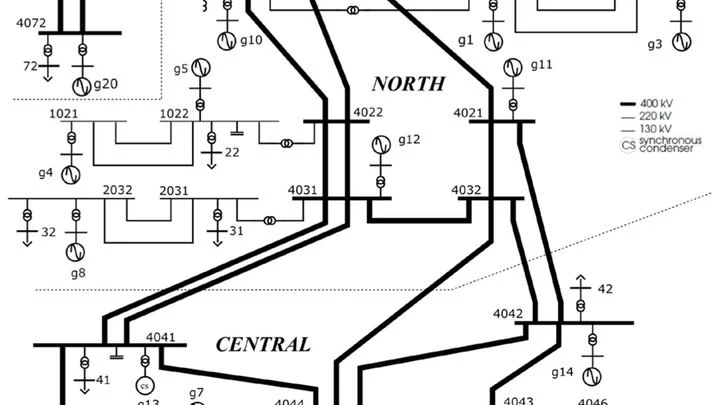
Power systems with solar panels and wind turbines are like a chess game: cloud cover and load changes are the opponent's moves, impossible to foresee. To maintain balance, operators used to run through dozens of scenarios (uncertainty) — that took too much time and computing power.
math.OC2026-07-151 minarXiv:2607.13701express
How to Keep a Problem from Ballooning: A Fast Method for Machine Learning
The standard approach to a certain class of machine learning problems is like a spring that's been stretched and then forgotten: standard methods artificially inflate the problem's size, turning computations into a black hole for memory and time.
eess.SY2026-07-151 minarXiv:2607.13889express
How a Simple Equation Saves the Power Grid
The power grid can be pictured as a water supply system: pipes are the lines, and pumps are the converters. When pressure (voltage) drops in some district, powerful pumps can send extra water (power) there. The trouble is, too strong a flow causes overload, and too weak a flow doesn't help. You need to know exactly how far to open the valve. Engineers found the answer.
Image Processing2026-07-161 minarXiv:2607.14894express
Why photo enhancement software fails on unfamiliar images
The photo enhancement algorithm is like a navigator that step by step leads a blurry picture toward a sharp view. It removes noise and distortions, moving pixel by pixel along a familiar map. But if the image was taken in unfamiliar conditions (say, with unusual blur) the map doesn't match the terrain.
Robotics2026-07-161 minarXiv:2607.14943express
How Robots Chart a Course Through a Galaxy of Errors
A twitch of the robot's camera and it drops the part: its neural network is thrown off. But if you peek at its signals, they resemble constellations in a galaxy: when things go smoothly, they cluster in one sector, and just before an error, they abruptly shift to another. The boundary between them is as clear as a safe channel through reefs.
Quantum Physics2026-07-281 minarXiv:2607.26349express
Penalty Without the Extra Weight: Quantum Annealing on a Diet
A quantum annealer is like a smart oven: it searches for the lowest point in an energy landscape to find the answer. But many constrained problems, like "pick exactly three items"—can't be loaded directly into such an oven. They have to be translated into unconstrained quadratic formulas, usually by adding penalties.
Plasma Physics2026-07-291 minarXiv:2607.26479express
A Magnetic Bottle Without a Lid
A magnetic mirror is a tube open at both ends. The magnetic field inside is arranged so that hot plasma doesn't leak out: at the ends, the field lines bunch up like a cork in a bottle. Plasma particles flying toward the exit are repelled by these "corks" and bounce back. But some still escape: that's the classic "loss cone" argument.
q-bio.PE2026-07-292 minarXiv:2607.27496express
The Backbone of Food Webs: How to Save Ecosystems in a Changing Climate
A web where lions eat zebras and hyenas finish the leftovers is not just a list of dinners. It's a survival map for an entire region. When the climate shifts, animals move, and the map tears. To understand where it will tear and where it will hold, you need to find its unchanging 'skeleton'—the connections that repeat across different places.
q-bio.BM2026-08-182 minarXiv:2608.17759express
A Protein Thread Woven from Noise
Under an electron microscope, a protein looks like a series of blurry shadows — hundreds of thousands of images of the same molecule, but from different angles and with heavy noise. Previously, from these shadows, one first assembled a volumetric 'haze'—a map of how electric charge is distributed inside the protein.
Exoplanets2026-08-212 minarXiv:2608.20662express
Asteroid Hopping: How to Save Fuel
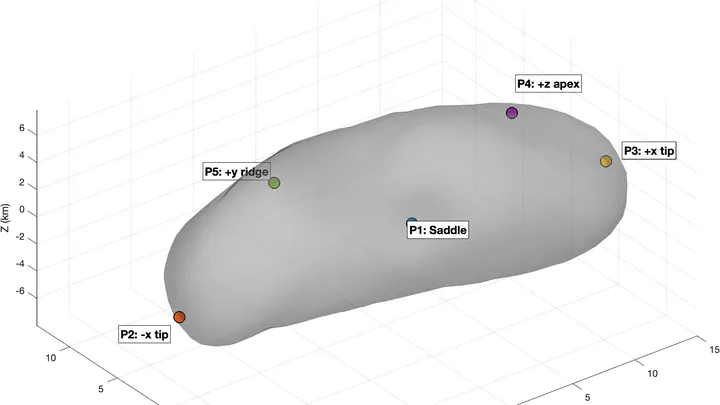
Hopping from rock to rock on the asteroid Eros is not for the faint of heart. Gravity there is so weak that a person could jump hundreds of meters, but that's exactly why any wrong push sends you into space or slams you into sharp cliffs.