Comet Dust: A View from Orbit and the Lab express
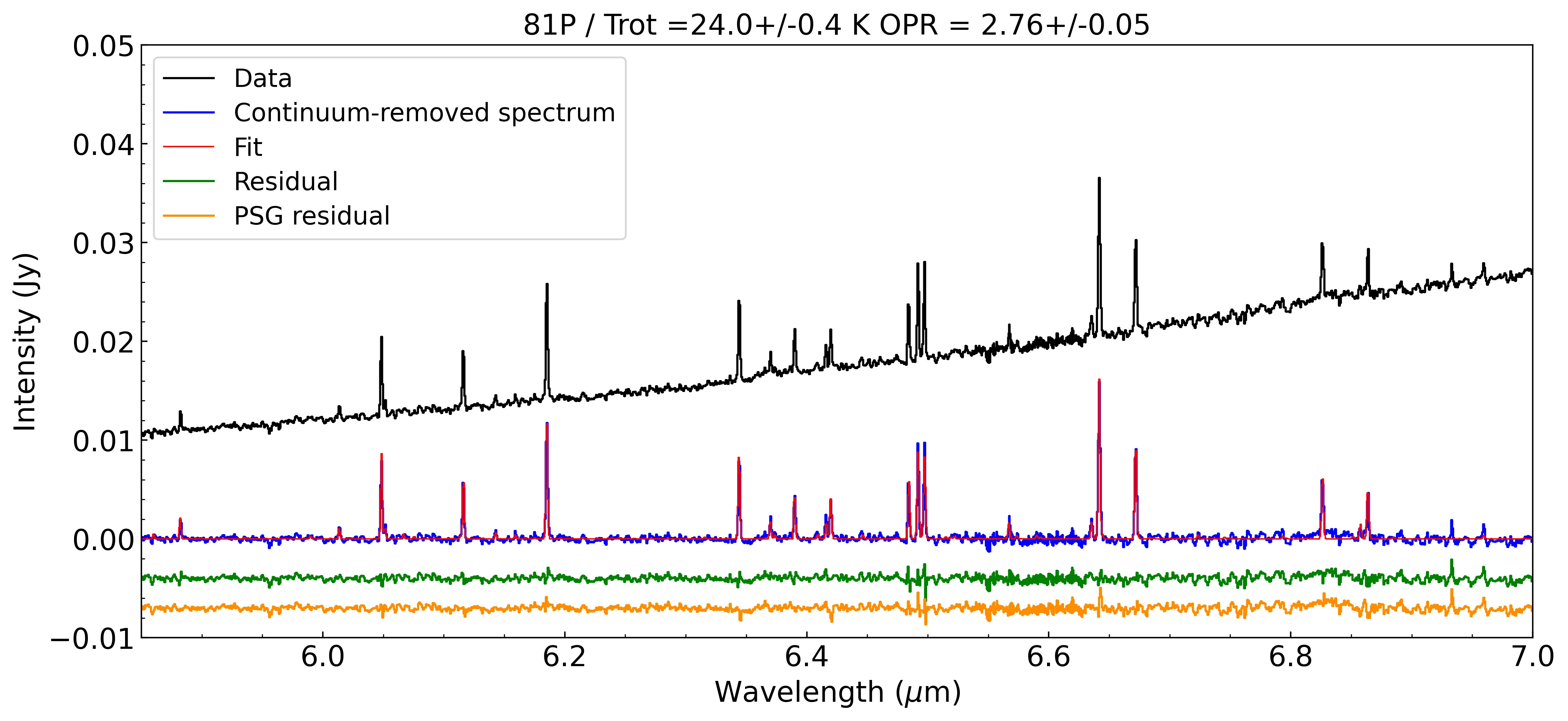
In March 2023, the James Webb Space Telescope pointed its instruments at the short-period comet 81P/Wild 2. This celestial body, about the size of a small town (nucleus radius around 1.77 km), is already familiar to scientists: in 2006, the Stardust probe flew through its tail and collected dust samples that were later studied in Earth laboratories. Now, the opportunity arose to compare those samples with remote observations, and to see how complete a picture telescopes can provide.
The NIRSpec and MIRI spectrographs aboard Webb worked like sensitive chemical analyzers. They captured light from the gases and dust around the nucleus and picked out the characteristic "fingerprints" of molecules. They found water, methane, ethane, methanol, carbon monoxide, carbon dioxide, and rarer compounds — carbonyl sulfide, hydrogen cyanide, and even a form of carbon dioxide with a heavy carbon isotope, carbon-13. The ratio of normal to heavy carbon dioxide was 85 to 4, and the water vapor showed a specific quantum state, the so-called ortho-para ratio, equal to 2.76. These numbers barely differ from measurements taken during previous close approaches of the comet to the Sun.
Comparison with Stardust samples revealed an important feature: the two methods are sensitive to different populations of dust particles. Laboratory analysis better captures large, dense grains, while Webb's infrared spectra see the smallest, fluffiest ones. Instead of a contradiction, we got a mosaic: each mission highlighted its own piece of the overall picture. The comet, once "caught" in an aerogel trap, now speaks the language of thermal radiation, and its story adds new chapters to the old ones.
Comet 81P/Wild 2 once orbited far beyond Neptune, but in 1974 Jupiter's gravity altered its orbit, and now it approaches the Sun every 6.4 years.
In Arthur C. Clarke's story "The Wall of Darkness," a comet serves as a source of a mysterious substance that alters the perception of time — much like Wild 2's dust changes our understanding of the early Solar System.