A Thermal Thermometer for the Sun express
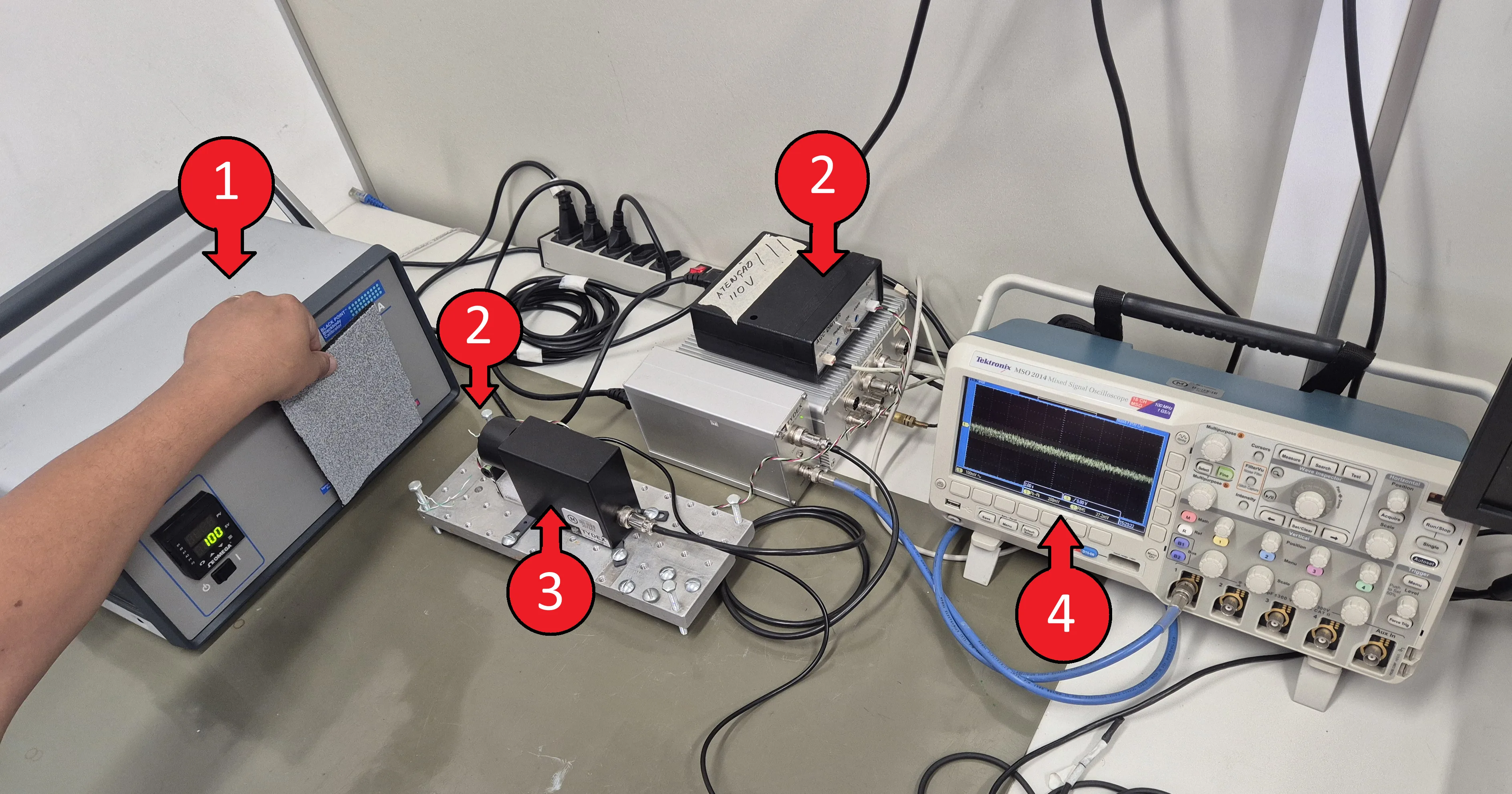
In the kitchen, when a pan heats up, your hand feels the heat before you even touch it. A solar telescope picks up similar invisible heat — only from a star, not a stove. The instrument, called HATS, captures radiation in the terahertz range, which was previously little studied due to technical difficulties. Its heart is a Golay cell, a tiny chamber filled with gas that expands with heat and moves a tiny mirror.
To extract the weak signal from noise, a rotating disk with slits is placed in front of the detector: it interrupts the beam 20 times per second. The signal becomes a flicker, which is then processed mathematically. The authors compared two approaches: sine wave fitting and fast Fourier transform with six different "windows"—filters that smooth the signal edges in different ways. The Hamming window worked best: the error was only 15.48, and the calibration coefficient was 10.32 millivolts per kelvin.
Calibration accuracy matters not only for the Sun. The same modulation and filtering principle is useful in factories where you need to measure the temperature of molten metal without contact, or in instruments monitoring water vapor in the atmosphere. In medicine, terahertz rays promise a safe way to look under the skin without X-rays. So a small thermometer for a star helps build big tools for Earth.
The Golay cell was invented in 1947 for military thermal imaging and is still used in terahertz detectors due to its simplicity and sensitivity.
In the series "Star Trek," the medical tricorder scans the body without contact — terahertz sensors like the one calibrated here bring such devices closer to reality.