Light That Remembers How the Crystal Is Oriented express
Light born when a fast electron enters a material is usually assumed to be the same in all directions. But in crystals where optical properties depend on direction, that's not the case. Run your hand over velvet: one way it's smooth and shiny, the other — dark and rough. Similarly, a crystal responds differently to light depending on how it's oriented.
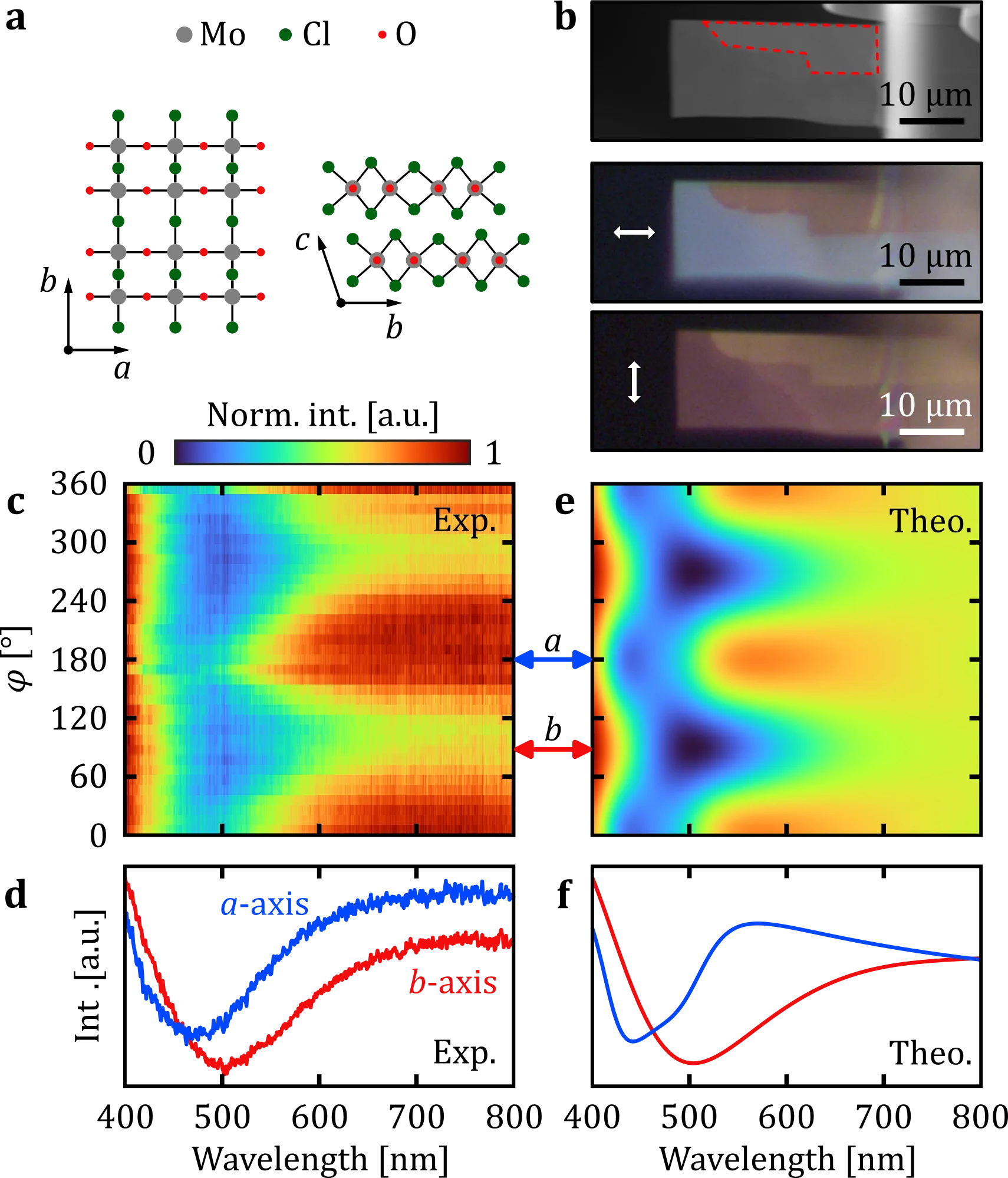
Scientists took two layered crystals, germanium sulfide and molybdenum oxychloride, and directed a beam of electrons at them. Measuring the glow, they saw that the color of the radiation changes if you rotate the crystal by 90 degrees. It's as if the same musical instrument played different notes when held horizontally or vertically.
This discovery gives physicists a new tool: by analyzing the emission spectrum, they can determine how optical properties are distributed inside a crystal without destroying the sample. And in the future, such crystals might become the basis for compact light sources with tunable color, just rotate the plate.
Germanium sulfide is a layered material similar to graphite: it can be split into sheets just a few atoms thick. Moreover, the optical properties along and across the layers differ by several times.
In Isaac Asimov's novel "The Gods Themselves," a world with different physics is described, where light behaves differently in different directions, and that changes the entire technology of a civilization.