Scales for Thoughts: How to Measure Whether a Neural Interface Really Speaks
In the 1980s, the DARPA speech recognition challenge settled the debate between statistical methods and hand-written rules, setting a common standard for the entire field.
The transmission of information using light, typically through optical fibers or waveguides.Optical communication is the transmission of information using light, typically through optical fibers, free space, or waveguides. It is the backbone of the internet and modern telecommunications, enabling data rates of terabits per second over long distances. The concept encompasses everything from simple LED signaling to coherent laser systems and quantum key distribution.
Optical telegraphy dates to the 18th century, but modern optical communication began with the invention of the laser in 1960 and the first low-loss optical fiber in 1970 by Corning. The first transatlantic fiber-optic cable, TAT-8, was laid in 1988.
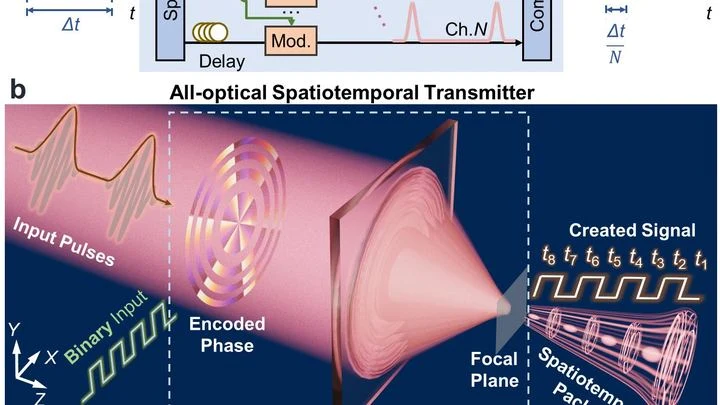
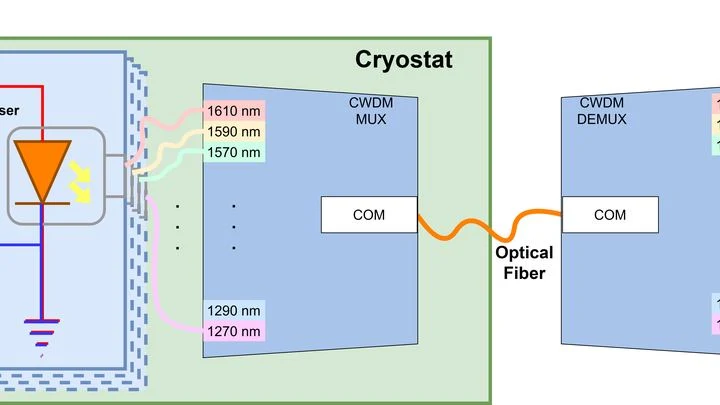
Information is encoded onto a light beam by modulating its intensity, phase, or polarization. In fiber optics, light pulses travel through a glass core by total internal reflection, bouncing off the cladding. At the receiver, a photodetector converts the light back into electrical signals. Advanced systems use wavelength-division multiplexing, where multiple colors of light carry independent data streams simultaneously, multiplying capacity. In free-space optical links, beams travel through air or vacuum, as in the underwater laser communication mentioned in the titles.
Optical communication is used in undersea cables, data center interconnects, fiber-to-the-home broadband, and inter-satellite laser links. It also enables quantum key distribution for secure communication.
A single optical fiber can carry more than 3 trillion bits per second, enough to stream about 50 million simultaneous high-definition video calls — a feat mentioned in the title 'Свет вместо проводов: 3 триллиона бит в секунду'.