The Sixth Phoenix Galaxy Cluster: The Mystery of the Faint Cluster ✛
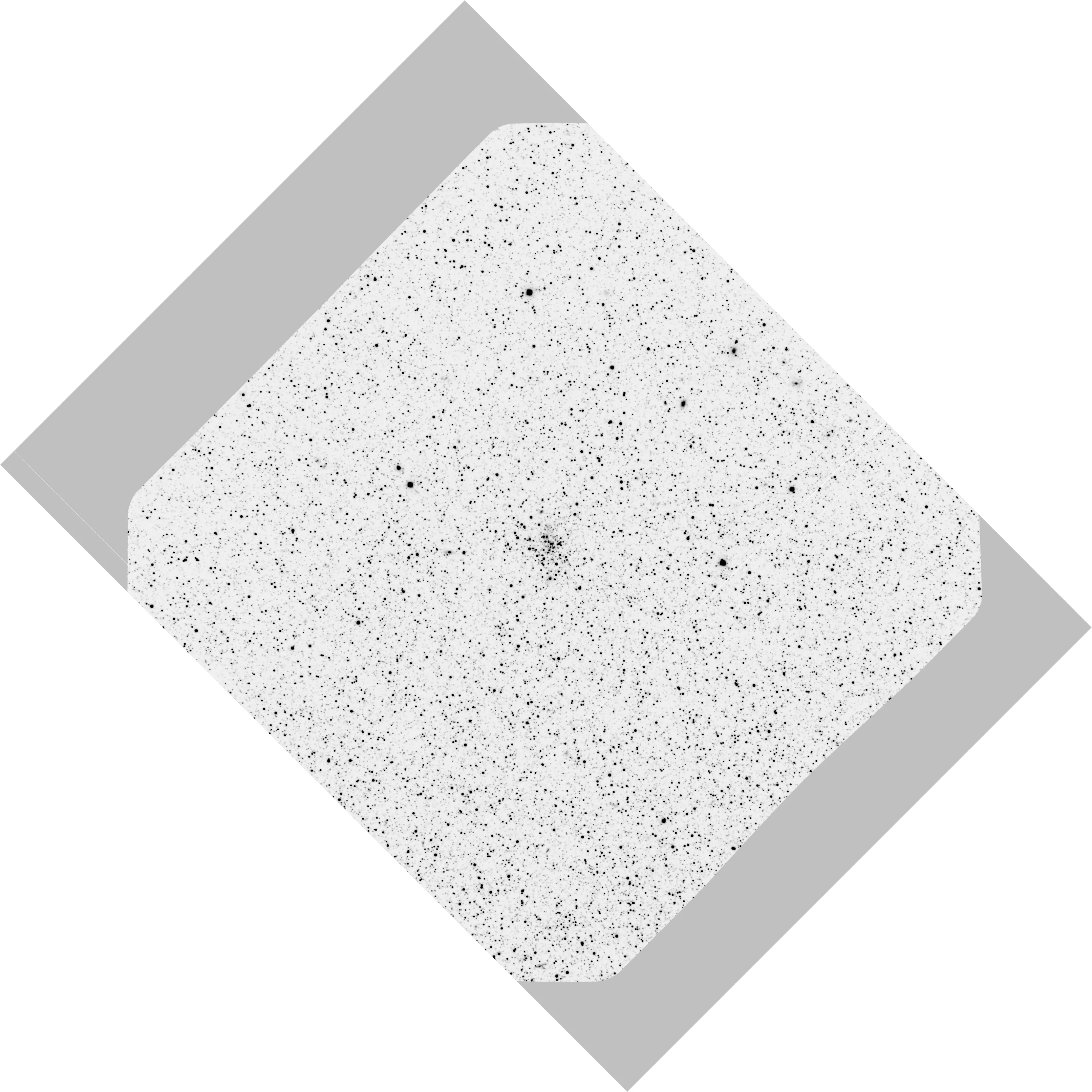
In the stellar family of the Phoenix galaxy, there are five old globular clusters, and the sixth child was long considered a foundling. The object Fornax 6, located just 270 parsecs from the galaxy's center, looked like a random clump of field stars or a compact group of distant galaxies. Astronomers argued over whether it deserved to be called a cluster.
This new work combined two powerful tools: MUSE integral-field spectroscopy on the VLT and archival deep GMOS-S images. Spectra of 137 stars with high signal-to-noise ratios allowed measurements of radial velocities and metallicities. Using Bayesian mixture modeling, stars were probabilistically classified as cluster members or background population. For structural analysis, they used GMOS photometry reaching 4 magnitudes deeper than previous data. The age was estimated by comparing the observed color-magnitude diagram with PARSEC isochrones.
The analysis revealed 43 probable member stars of Fornax 6. The cluster has a radial velocity of 50.9 km/s and a velocity dispersion of 3.2 km/s, significantly lower than that of the background population (11.5 km/s). The metallicity is [Fe/H] = -0.61 dex, much higher than that of other Phoenix clusters (from -2.4 to -1.4 dex). For the first time, the main-sequence turnoff is observed, indicating an age of about 3 billion years. Structural parameters: half-light radius of 8.8 parsecs, ellipticity of 0.14, and absolute magnitude $M_V$ = -5.0. The cluster's morphology is irregular, which may indicate tidal disruption.
This work strengthens the status of Fornax 6 as a true star cluster. It is the youngest and most metal-rich cluster in the Phoenix system, challenging our understanding of cluster formation in dwarf galaxies. The alternative hypothesis of captured stars from a dark subhalo is unlikely because the cluster's age is uniform. Future missions like Euclid and the Nancy Grace Roman Space Telescope will provide unprecedented depth and resolution for surveying dwarf galaxies. This will allow the discovery of many similar faint clusters and test models of their formation and evolution. To settle the nature of Fornax 6 definitively, more precise measurements of velocity dispersion and deep observations of the turnoff region are needed.
Fornax 6 was first noted by Harlow Shapley in 1939 as a "very faint cluster," but was then largely forgotten, being dismissed as a random grouping of stars.