The Sixth Fornax Cluster: The Mystery of a Faint Stellar System ✛
Context
The Fornax dwarf spheroidal galaxy is one of only two in the Local Group that hosts a system of globular clusters. Its five known clusters are very old and metal-poor. Fornax 6, located just 270 parsecs from the galaxy's center, was long considered a random grouping of field stars or a compact group of distant galaxies. Previous studies yielded contradictory results: a high velocity dispersion suggested an anomalously large mass-to-light ratio. The new work uses much deeper data to definitively clarify the nature of this object.
Methods
The team combined MUSE integral-field spectroscopy on the VLT with archival deep GMOS-S imaging. Spectra of 137 stars with high signal-to-noise ratios allowed measurements of radial velocities and metallicities. Using Bayesian mixture modeling, stars were probabilistically classified as cluster members or background population. For structural analysis, they used GMOS photometry reaching 4 magnitudes deeper than previous data. Ages were estimated by comparing the observed color-magnitude diagram with PARSEC isochrones.
Results
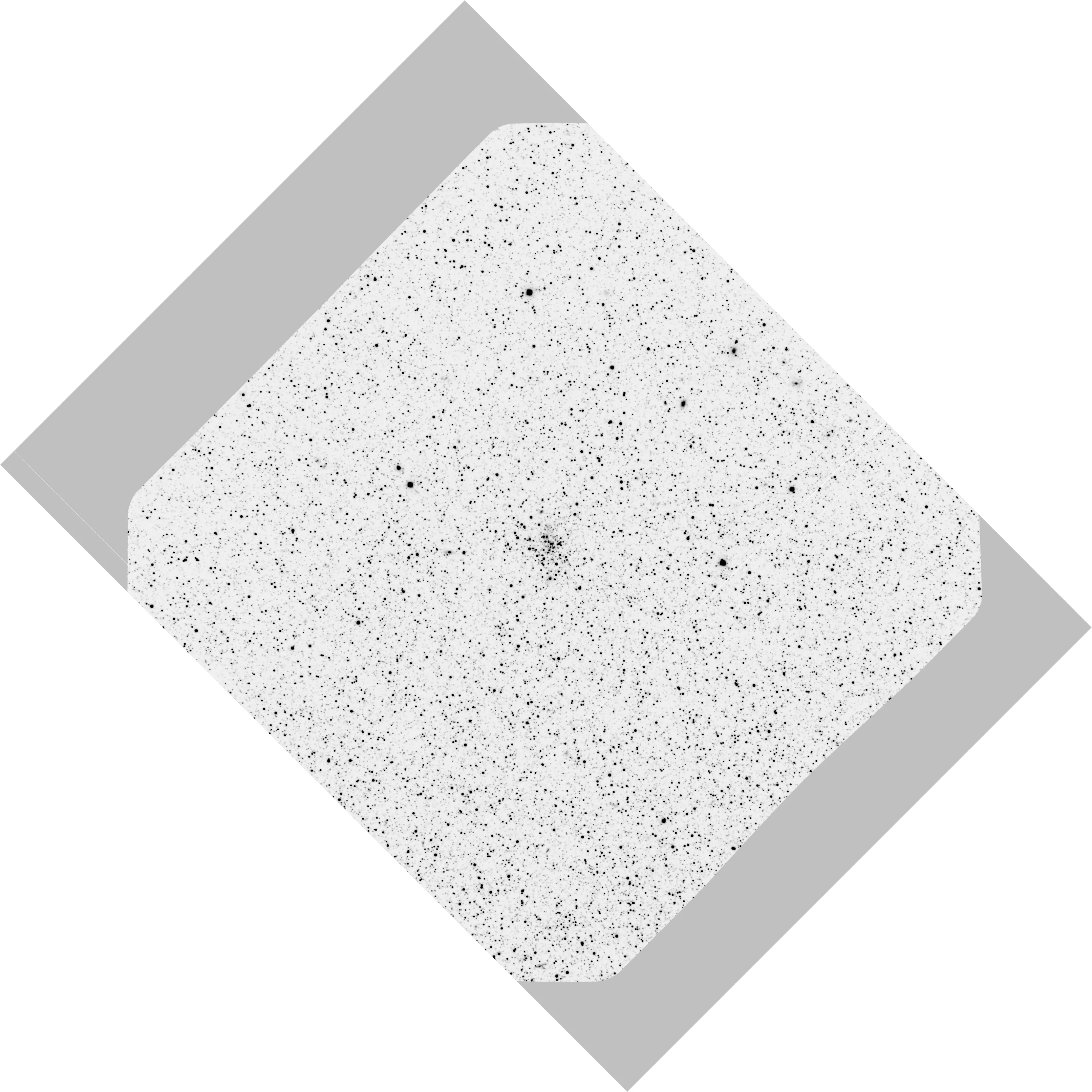
The analysis identified 43 probable member stars of Fornax 6. The cluster has a radial velocity of 50.9 km/s and a velocity dispersion of 3.2 km/s, significantly lower than that of the background population (11.5 km/s). The metallicity is [Fe/H] = -0.61 dex, much higher than that of other Fornax clusters (ranging from -2.4 to -1.4 dex). For the first time, the main-sequence turnoff is observed, indicating an age of about 3 billion years. Structural parameters: half-light radius of 8.8 parsecs, ellipticity of 0.14, and absolute magnitude $M_V$ = -5.0. The cluster's morphology is irregular, which may indicate tidal disruption.
Implications
This work strengthens the status of Fornax 6 as a genuine star cluster. It is the youngest and most metal-rich cluster in the Fornax system, challenging current ideas about cluster formation in dwarf galaxies. The high velocity dispersion at low mass remains puzzling: possible explanations include unresolved binaries, field contamination, or tidal disruption. The alternative hypothesis of stars captured by a dark subhalo is unlikely given the cluster's uniform age.
Future development
Future missions such as Euclid and the Nancy Grace Roman Space Telescope will provide unprecedented depth and resolution for surveying dwarf galaxies. This will enable the discovery of many similar faint clusters and test models of their formation and evolution. To definitively settle the nature of Fornax 6, more precise measurements of the velocity dispersion and deep observations of the turnoff region are needed.
Impact
The results are important for understanding the formation of globular clusters in dwarf galaxies and for testing cosmological models that predict dark matter substructure.
Next steps
Planned observations with higher spectral resolution will refine the velocity dispersion, and deep, high-resolution imaging will study the stellar population in the turnoff region.
Key open problems
This work touches on the cusp/core problem in dwarf galaxies: the existence of clusters in a dark-matter-dominated galaxy raises questions about the halo density profile. It also relates to the mystery of young cluster formation in dwarf galaxies and the role of tidal interactions.
The knowledge machine's view
This section is addressed to the author of the paper and their colleagues. Neighbouring works were found by meaning-based search across our archive, not by word overlap. We do not review: we show the field around the work.
What the work does
You combined MUSE spectroscopy with deep GMOS imaging to pick out 43 member stars of Fornax 6, measure its age at about 3 billion years and metallicity [Fe/H] = -0.61, and confirm that it is the youngest and most metal-rich cluster in Phoenix, likely being disrupted by tidal forces.
Where its strength is
The deep data and Bayesian modeling allowed a reliable separation of the cluster from the background and, for the first time, revealed the main-sequence turnoff point, providing a solid foundation for further study of its origin and evolution.
Where it could go next
- It might be interesting to compare the properties of Fornax 6 with results from searches for young clusters in other dwarf galaxies, where similar methods for isolating stellar populations have already been applied.based on: Contour Map of Stellar Nurseries: Computer Vision Finds Clusters in the Fireworks Galaxy arXiv:2607.26330v1
- To clarify the nature of the high velocity dispersion, one could consider models that include dark subhalos or tidal effects, similar to those discussed in connection with dynamical friction in nearby systems.based on: Dark Vortices Dampen Drag arXiv:2608.00258v1
- The question of the origin of the metal-rich population in Fornax 6 can be compared with studies of stellar streams and accretion in dwarf galaxies, where similar chemical anomalies are found.based on: Stars Born from an Interloper Cloud arXiv:2603.10607
Worth trying
- Check whether the stars of Fornax 6 are part of a more extended structure by comparing their kinematics with maps of Phoenix's stellar population.
- Assess the contribution of unresolved binaries to the velocity dispersion using repeated spectroscopic observations.
- Compare the color-magnitude diagram of Fornax 6 with models of simple stellar populations of different metallicities to refine the age and possible spread.
Why this may matter
Clarifying the nature of Fornax 6 is important for understanding how star clusters form and evolve in dwarf spheroidal galaxies, and it may shed light on the history of metal enrichment in such systems.
Nearby works in our archive
- Faint Galaxies Reveal Their Stellar Secretssimilarity 0.55
- Contour Map of Stellar Nurseries: Computer Vision Finds Clusters in the Fireworks Galaxysimilarity 0.54
- Dark Vortices Dampen Dragsimilarity 0.52
- Stars Born from an Interloper Cloudsimilarity 0.51
- Fossil Stars Found in Dwarf Galaxysimilarity 0.50
- Dark Matter: An Invisible Web Explains Three Mysteriessimilarity 0.50
The archive is sparse around this work: the closest review is only 0.55, against a usual 0.64. It looks like few have drilled nearby.
Fornax 6 was first noted by Harlow Shapley in 1939 as a "very faint cluster," but was then largely forgotten, being dismissed as a random grouping of stars.
Key numbers
- cluster age: about 3 billion years
- metallicity: [Fe/H] = -0.61 dex
- half-light radius: 8.8 parsecs
- velocity dispersion: 3.2 km/s
- absolute magnitude: M_V = -5.0