A Vacuum Cleaner with Two Buttons: How Plasma in a Tokamak Gathers Particles Toward the Center on Its Own ✛
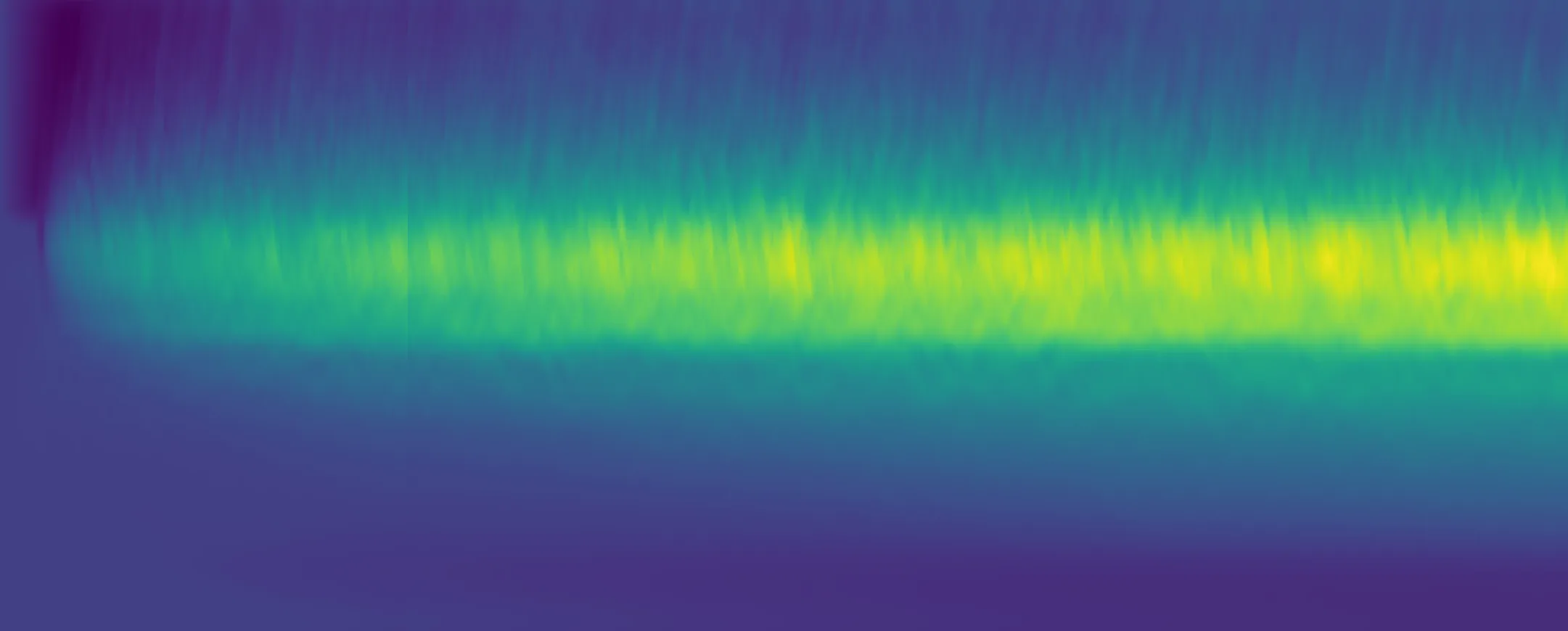
A vacuum cleaner sucks in dust even if there is more of it near the nozzle. The same happens in a tokamak: plasma particles are drawn toward the center, even though their density is higher at the edge. This phenomenon is called particle pinch, and it contradicts the usual rule that everything tends to move from dense regions to sparse ones.
Scientists modeled the edge of the plasma in the Alcator C-Mod device and saw how, from a flat density profile, a peak grows at the center within a few milliseconds. The vacuum cleaner switches on by itself, without external commands. First, turbulence does the work: plasma eddies carry particles inward when the temperature rises toward the edge and the density toward the center. It is like a crowd where people pass each other along in the right direction, even though each step is random.
The second mechanism came as a surprise. Standard theory says that an electric field should push particles outward or have no effect at all. But in the model, the researchers included plasma resistivity and electron inertia, and the field acquired a small shift, enough to pull particles in. It is like discovering a second button on the vacuum cleaner that you did not know existed.
A control experiment confirmed the idea: when they removed the heat transport across the field, the density peak disappeared. This means that it is the nonuniform heating that creates the asymmetry which turns on the vacuum cleaner. Previously, it was thought that such an effect could only occur in turbulent chaos, but now it is clear that a quiet field can also do the job.
This result matters for fusion reactors. To confine plasma, you need to know where the fuel particles will end up. If the vacuum cleaner is always at work, you can predict the density profile more accurately and design future devices better. The vacuum cleaner turned out to be not a toy but a working tool.
In the simulation, particles 'swim against the current': they move from the edge toward the center even though the density gradient initially points outward. Such counterintuitive transport is possible due to correlations between density and electric field fluctuations, not ordinary diffusion.
The idea of plasma spontaneously compressing toward the center echoes the concept of the 'pinch' in science fiction, for example, in Larry Niven's novel 'Ringworld', where magnetic fields confine plasma in a reactor.