Light as a Score: Chip Learns to Conduct Flashes ✛
A conductor raises the baton, and each musician enters at their own moment, creating a beautiful melody. Light can also be organized like an orchestra: pulses of different colors arrive in the right order with the right pauses. Previously, this required bulky instruments that couldn't be reconfigured. Now scientists have created a small chip that conducts light pulses, and a neural network helps it quickly find the correct settings.
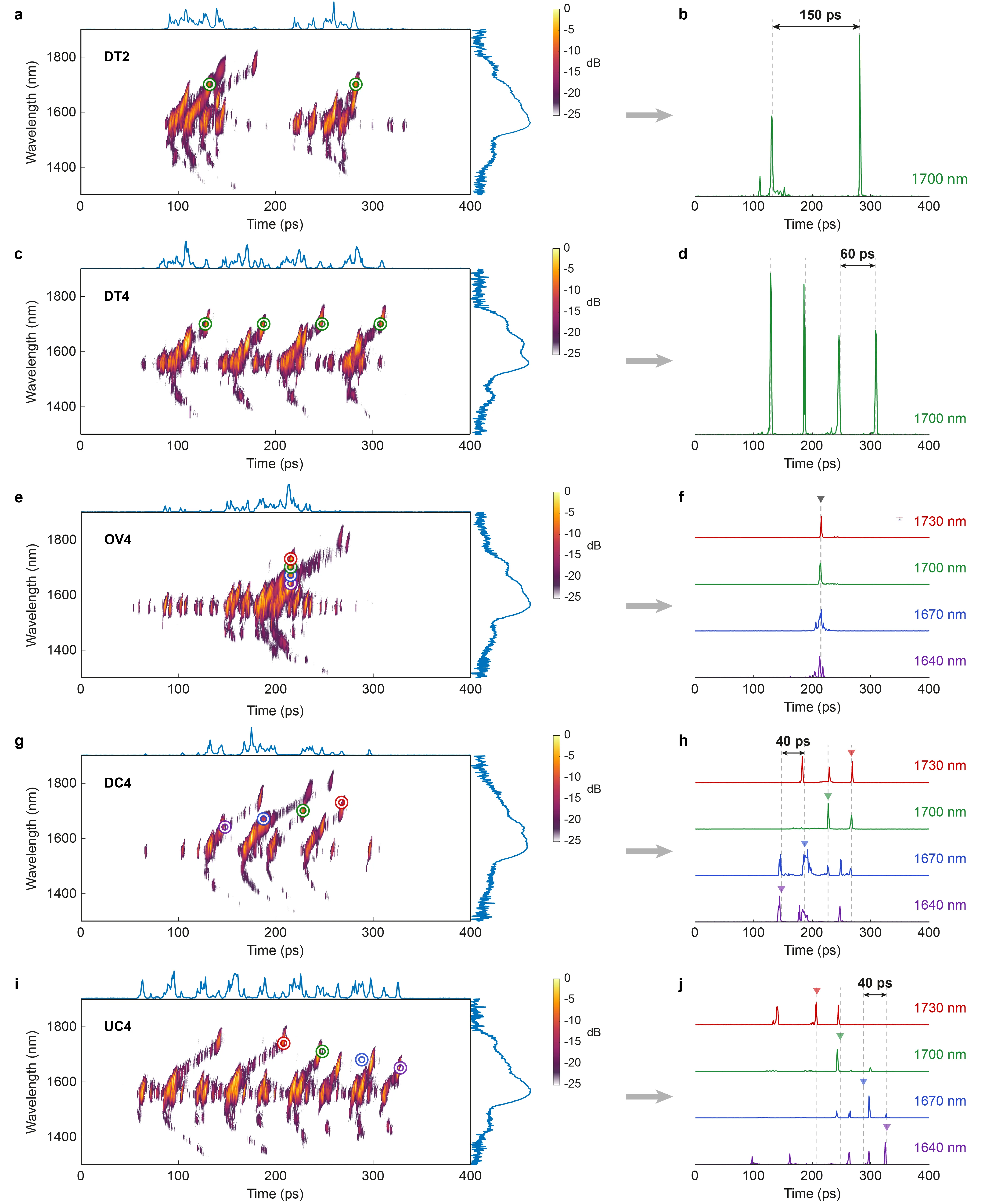
Here's how it works. A laser sends very short pulses of light into the chip, which splits each pulse into several copies with different delays, like echoes in the mountains. These copies then pass through a special fiber that stretches them into a broad range of colors, much like white light spread by a prism. The neural network predicts what pattern will result from different chip settings, helping to achieve the desired outcome.
Previously, such light sources had a fixed shape and couldn't be changed. Now you can specify how many pulses you need, what colors, and with what pauses, and the system will tune the chip itself. This is useful for microscopes that examine living cells and for materials processing. Light has become an obedient orchestra, ready to play any score.
The neural network predicted spectrograms in 50 microseconds, while an experimental measurement took 2 seconds, making it 40,000 times faster. Training on 5000 examples took only 6 minutes on a graphics processing unit.
The idea of programmable light that adapts to the task resonates with the concept of 'smart' optical systems from M. John Harrison's novel 'Light', where light is used as a computational medium and tool.