The secret of wavelets lies in compromise. Fourier analysis provides perfect frequency resolution but loses time information. The windowed Fourier transform fixes this but fixes the window size. Wavelets adjust the window width adaptively: for high frequencies, short windows are used; for low frequencies, long ones. This is like musical notation, where long notes represent bass sounds and short ones represent rapid trills. In practice, wavelets excel at image compression (JPEG 2000 format) and cleaning signals from noise without blurring sharp transitions—for example, in medical tomograms.
History
The history of wavelets began with Haar's work (1909)—the simplest step-like system. From the 1930s to the 1980s, separate ideas emerged: the Littlewood–Paley function, quadrature mirror filters by Croisier, Esteban, and Galand. A coherent theory arose in the early 1980s from the work of geophysicist Jean Morlet and mathematician Alex Grossmann, who built the continuous wavelet transform for seismic signal analysis. Then Ingrid Daubechies (1988) created smooth orthogonal wavelets with compact support, enabling a fast transform. Later, Mallat and Meyer developed multiresolution analysis, linking wavelets to signal filtering.
How it works
The scaling function φ(t) and mother wavelet ψ(t) generate a basis such that {ψ_{j,k}(t) = 2^{-j/2} ψ(2^{-j}t - k)}. Any signal can be decomposed: f(t) = Σ_k a_{j0,k} φ_{j0,k}(t) + Σ_{j≥j0} Σ_k d_{j,k} ψ_{j,k}(t). The coefficients d are obtained by the fast Mallat algorithm using cascaded filtering. At each level, the signal passes through a pair of filters—low-pass (averaging) and high-pass (detailing)—followed by decimation. This is dual to a bank of quadrature mirror filters. The orthogonality condition of the wavelet basis requires the filters to satisfy certain relations. The analysis is flexible: the wavelet shape can be tailored to the data type.
In practice
Digital fingerprints and barcodes are compressed using wavelets. Instruments that search for defects in aircraft parts listen for crack echoes with wavelets.
Fun fact
Human vision is somewhat similar to wavelet analysis: we can discern both the overall shape of a chair in dim light and a fine inscription on its leg—the brain processes images at multiple scales simultaneously.
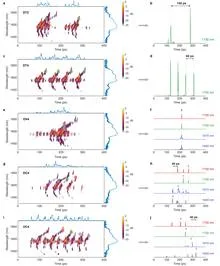
A conductor raises the baton, and the orchestra produces not just sound but a complex score: each note sounds at its own moment, at its own pitch, with the right volume. Light can also be a score, if you control its spectrum and timing. Previously, this required bulky setups that could not be reconfigured after assembly.
A cartographer receives a sheet with distances between hundreds of unnamed islands. No island is labeled, but the distances repeat, forming triangles and quadrilaterals. From these repetitions, the cartographer reconstructs the map of the archipelago, not knowing which island is which. This is roughly how the new work in molecular spectroscopy works.
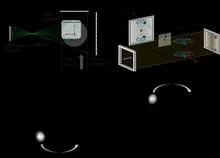
In a dark room, a sunbeam passes through a pinprick in cardboard, and an upside-down image of the street appears on the wall. A pinhole camera needs no lenses: the tiny hole itself selects the rays coming from each point of the scene. Scientists at the ESRF applied this principle not to light but to X-rays, and made the camera see not shape but chemical composition.
Waves on the water's surface usually break against any obstacle — a rock, a piling, an island. But what if you arrange obstacles so cleverly that the wave barely notices them? In a new study, scientists assembled a pattern of many points on the water, arranged according to special mathematical rules, and sent waves through them.
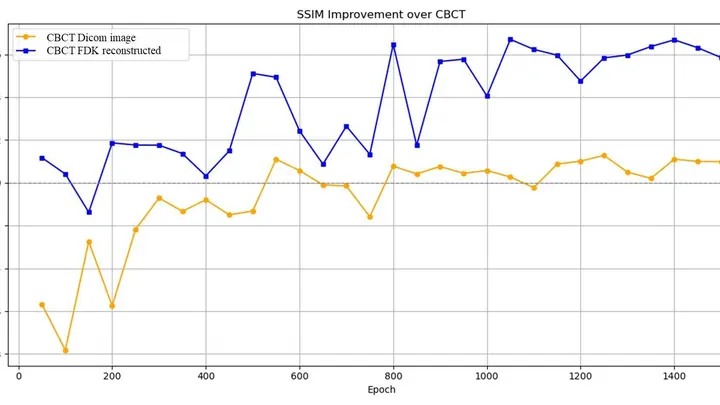
A low-dose X-ray image looks like a view through a fogged-up window: outlines are there, but details drown in a hazy veil. Doctors need such images during radiation therapy — to aim the beam precisely at the tumor and spare healthy tissue. But saving on radiation comes at the cost of noise, streaks, and artifacts that obscure what matters.
The orchestra plays, but the musicians can't hear each other. The conductor keeps stopping the music and walking over to each player to tune the instrument. That's roughly how space telescopes with segmented mirrors work.
Radio signals in a room act just like sound in a concert hall: bouncing off walls and objects, they create a unique pattern — a silent melody for every location. Your phone, like a keen ear, catches this melody amid noise and distortion. It remembers which chord matches the corner of the couch, and which one fits the doorway.
Radars listen to the echo of radio waves, like a microphone recording music. To make equipment cheaper, the 'recording' is done less frequently than theory demands: this is spectrally efficient (compressed) sensing. The cost of this economy is the emergence of false 'ghosts': the system sees targets that aren't there, just like off-key notes on old tape.
Unlike regular cameras, event-based ones only record moments when light becomes brighter or dimmer. They don't produce snapshots; instead, they send an endless stream of such flashes. Scientists turned this stream into a sharp picture of the Earth while flying over it on a satellite. Each flash is like a piece of a mosaic; together they form a still image.
A city signal bounces between walls like a ball, and your phone catches dozens of its 'reflections'—echoes. Each microsecond of delay adds 300 meters to the path.
The signal's speed is constant, like that of light (speed of light).
The ocean acts as a giant battery for solar energy, converting it into the kinetic energy of waves. Devices that harvest this energy (wave floats, or converters) turn oscillatory motion into electric current. Their performance hinges on three parameters: geometric shape, spatial arrangement, and tuning parameters (e.g., damping).
The quantum many-body world is a jazz ensemble, where each electron improvises, continuously listening to all the others, and the overall wave function is born from this tense dialogue.
Isolating the signal from a single pair of supermassive black holes is like hearing a dancer's footsteps amid the roar of a hurricane. Somewhere in space, these monsters spin in a slow gravitational tango, distorting spacetime itself.
When black holes collide, the very fabric of spacetime trembles. That rumble, gravitational waves, gets picked up by detectors, but decoding the signal used to take hours of computer simulation.
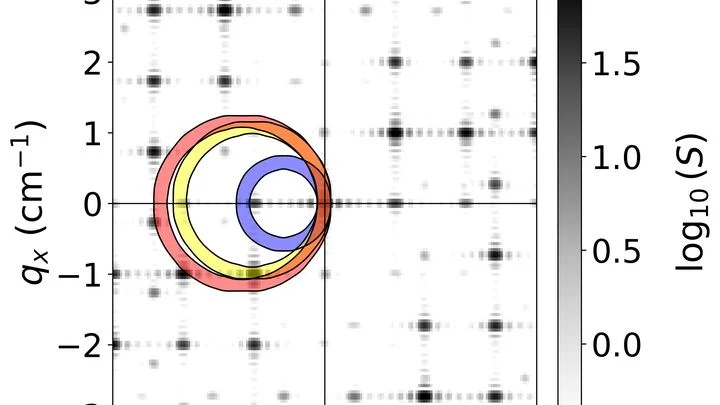
In the quantum world, electrons can behave like waves. If you create the right conditions for them, these waves start to feel something akin to gravity. In crystals known as Weyl semimetals, electrons move as if they were massless, and their energy depends on direction, like a tilted cone.
The lungs are not two bags but millions of tiny sacs where air enters and blood flows close by. To see how they work, doctors sometimes use MRI without contrast: the scanner picks up weak signals from the tissues themselves. But these signals are like a radio in a thunderstorm — breathing is irregular, pulse jumps, and the image falls apart.
Conventional X-ray fluorescence analysis works like a meticulous scribe: to learn the composition of a picture, it walks over every square centimeter and logs whether lead or copper is present. For a flat sheet, that's tolerable, but for a three-dimensional object, it's torture.
A conventional antenna array is like a choir: many voices singing in unison, with the sound amplified in only one direction. To catch a signal from another side, you have to rearrange the whole choir. Now imagine a single voice that can change its timbre so that the sound itself focuses in the desired direction.
Prostate cancer radiation therapy requires precise calculation of the radiation dose at every point in the body. The classic Monte Carlo method simulates millions of particles and takes hours, while adapting the plan to daily anatomical changes needs seconds.
An ordinary camera captures light reflected from objects and builds a picture from it. But if the object is hidden behind an obstacle or does not reflect light, radio waves come to the rescue: they pass through walls and fog, and a computer reconstructs the image from scattered signals.
When a planet passes in front of a star, the light pierces its atmosphere and absorbs the flavor of gases. Each gas leaves its color fingerprint in the light — a bitter or sweet stroke. Scientists try to read this recipe: what substances and in what proportions are mixed in the air of an alien world.
A beam of light passing through a transparent plate usually keeps its color. But if you stack the plate from thin alternating layers, it becomes a grating that reflects and transmits waves selectively. This has long been used in lasers and optical filters. Now such gratings have been made to vibrate, and light started changing color.
Deep inside a mountain, under layers of rock, lies a germanium crystal the size of a fist. It waits for a rarest of events: an atomic decay that happens once in billions of years. But inside the crystal, something is always ticking — cosmic rays, traces of radioactivity, thermal noise.
The heart beats, and on a paper ECG strip, each beat looks like a sharp spike with two humps: a quick rise, then a smaller wave, then a descent. A doctor looks at such a strip and sees the rhythm, but the shape of each spike, how exactly the muscle contracted, is hard to discern, especially if the recording lasts a full day.
This new method turns that strip into a colorful carpet.
Light passing through ripples on a water surface paints dancing patterns on the bottom of a pool. Engineers have used a similar idea to make light compute. They fabricated a tiny plate with a wavy relief: each ridge and groove deflects rays in its own way. When an image falls on such a surface, the light transmitted through it converges at different points behind it.
Just as Water changes phase, freezing into ice or evaporating into vapor, forsterite, a key mineral of Earth's mantle, under pressures of hundreds of thousands of atmospheres, reassembles its crystal lattice.
A tiny vanadium oxide particle behaves like a window with adjustable transparency: in one state it lets infrared light through, and in another it starts absorbing it. The switch doesn't happen abruptly but smoothly, like turning a dimmer knob to adjust a lamp's brightness.
Sound in a thin plate behaves like ripples on water: it travels, reflects off edges, and changes shape. But sound has a peculiar trait: it can pass through places where waves are forbidden to exist. It's as if ripples on a pond suddenly vanished before a stone barrier and reappeared on the other side, without going around it.
A laser hits tissue, and the tissue responds with a barely audible click — a sound wave. Sensors pick it up, and from that, an image of what's inside is built. That's how photoacoustic imaging works: light reaches deep, and sound carries the picture out.
In the new scheme, there are no sensors. Instead, several thin light beams are sent through the area where the wave has passed.
A laser beam is trapped between two mirrors, one of which trembles under an invisible force. Each vibration of the mirror changes the phase of the light, and from these changes you can infer the force. But the light itself pushes on the mirror, which is quantum backaction, and it imposes a fundamental limit on measurement accuracy.
An orchestra plays a complex piece, and each group of instruments enters on its own schedule. The violins might slow down while the woodwinds keep the same tempo, and the percussion might suddenly burst into a roll. The conductor hears everything at once, but pinpointing the exact moment when the flutes, not the cellos, changed rhythm is nearly impossible.
The river that circles Antarctica does not flow in a single channel: it sometimes splits into branches, sometimes merges into one stream. That is what the fronts of the Southern Ocean look like on maps built from satellite data on sea surface height. Previously, these fronts were sought along lines of equal water level, and they seemed to creep slowly southward.
An old aviation instrument sometimes sticks: the needle catches on the scale and doesn't move, even though the plane is already changing altitude. Engineers found a simple solution: add a slight vibration. The shaking doesn't hinder; on the contrary, it helps the needle break free and show the truth.