Superconductivity is like a dance of electrons: they move in pairs without losing energy. In conventional superconductors, this dance is set by the electron velocity.
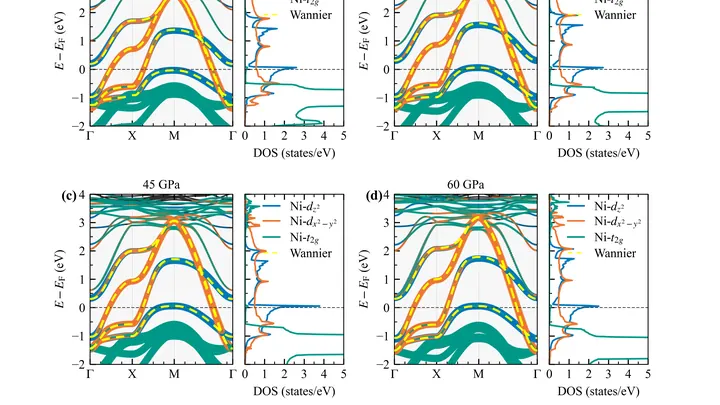
Under pressure, the layered crystal La₃Ni₂O₇ behaves like an orchestra where the conductor adjusts the volume of different instrument sections. Compression increases electron hopping between layers — which, one might think, should boost superconductivity. But at the same time, some electrons become too mobile.
A stack of playing cards lies still. You can slide the top card with your finger: that's crude intervention. Or you can blow so that the whole stack momentarily changes shape, but the cards don't scatter. That's roughly how light, in a new experiment, rearranges a crystal of tin selenide (SnSe).
Usually, to change the structure of a solid, you heat it or pass a current through it.