Vibration-Absorbing Layer Cake: The Material That Chooses Quiet ✛
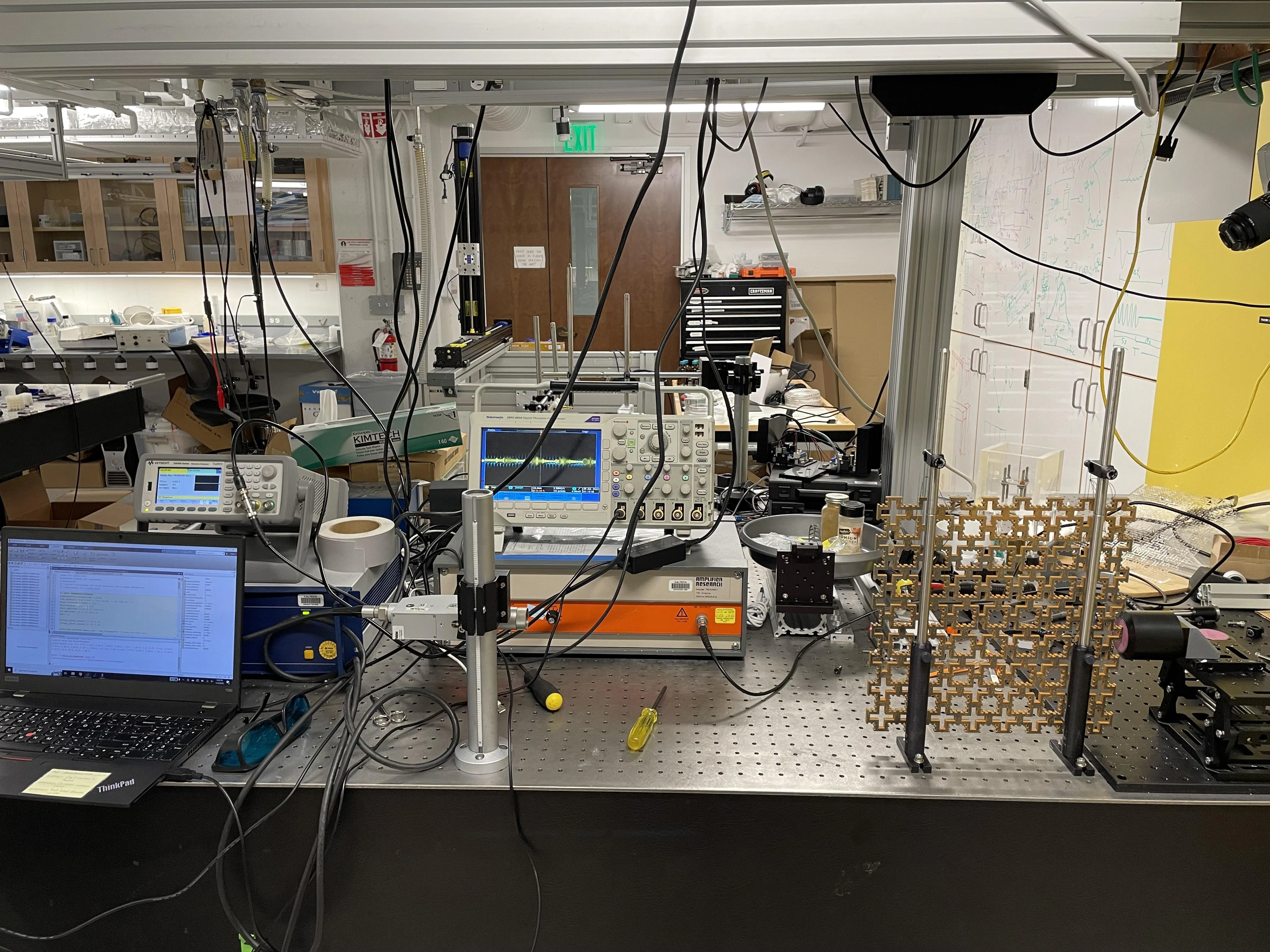
Engineers have developed a material that dampens tremors at several frequencies at once, like a layer cake made of multiple sieves with different holes. Each "sieve" layer lets some vibrations through and blocks others, working independently. Much like spectral analysis of light, where different colors are separated from each other, this method breaks down complex vibrations into simple components. A computer program, analyzing data, selects the pattern of such filters on its own, reducing the uncertainty of the search and finding the best solutions.
Large details of the structure do not affect the operation of small ones, and vice versa. The resulting patterns are not only effective but also understandable: the program highlights key features, like a master sees the essence in a blank. Similar ideas will also help in studying gravitational waves — ripples in space that also have certain frequencies. Just as water calms in a lull, this material cuts off unnecessary vibrations.
Such structures will lead to microscopes that are not afraid of the slightest tremble, and to buildings where street noise does not penetrate. Unexpectedly: the algorithm doesn’t just try out options: it explains on its own which pattern elements are important, almost like a teacher pointing the way to a solution.
Engineers already use similar principles for sound insulation in cars and planes, but handling multiple frequencies at once remains a challenge.
The fictional vibranium from Marvel, capable of absorbing any vibrations, might one day become a reality thanks to such methods.