Why Does Time Only Move Forward? ✛
Time flows like a river — from past to future. We remember yesterday, and broken cups don't reassemble themselves. This is called the arrow of time — the direction of this flow. It was usually explained by the growth of disorder: everything tends toward chaos. Ludwig Boltzmann showed that disorder only increases.
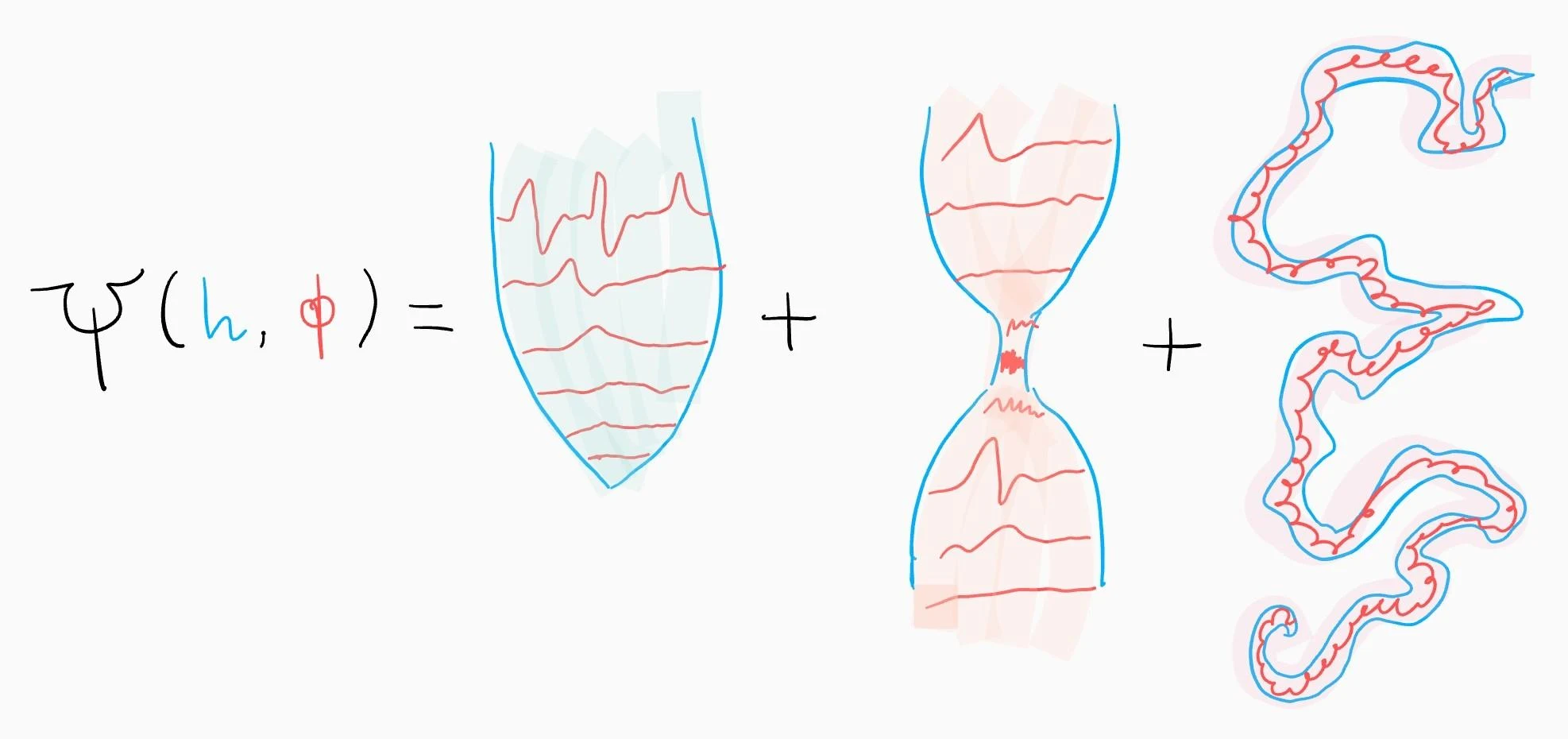
But new research reveals the true cause: the very structure of the Universe, its expansion after the Big Bang, channels this river. Spacetime is curved so that the future always differs from the past. Roger Penrose foresaw this back in the 1970s: the arrow of time is woven into the shape of the cosmos. Calculations confirm — the global shape of the Universe prevents time from flowing backwards. Astonishingly, if the cosmos were contracting, cooled tea could heat itself up. The passage of minutes and hours is an echo of cosmic processes.
If the Universe were contracting instead of expanding, tea could heat itself up, and broken cups could reassemble themselves.
In the movie 'Tenet', the characters encounter an inverted arrow of time, which would be impossible without disrupting the global geometry of spacetime.