The Moon — a Giant Gravitational Bell ✎ express
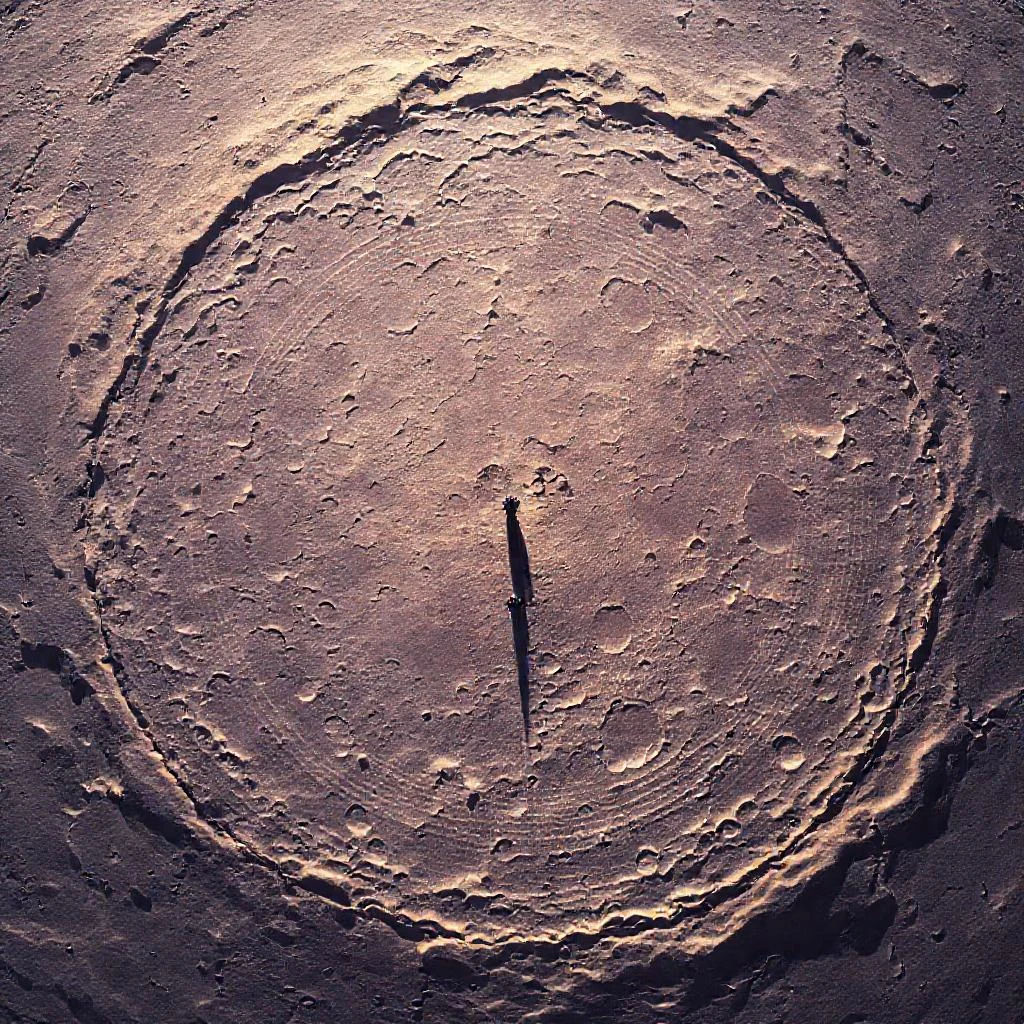
The Moon is not just a rocky sphere, but a giant bell. Passing through it, gravitational waves cause it to vibrate almost imperceptibly. This tremor was predicted by Einstein, and Weber was the first to try to hear it with Earth-based detectors.
Recent modeling has revealed the secret: the varying thickness of the crust acts like an acoustic lens. In the South Pole–Aitken crater, where the crust thickens to 80 km, the signal becomes dozens of times louder — at a frequency of one oscillation per minute. It is this spacetime ripple that betrays the mergers of black holes.
Now scientists have a precise map of the Moon's most 'hearing' spots. By placing instruments there, we will be able to discern cosmic events on the other side of the Universe. And here's something astonishing: this amplifier-crater is so vast that its diameter is three times the distance from London to Moscow.
The South Pole–Aitken crater is the largest impact basin in the Solar System with a diameter of 2500 km. Its rims are higher than the Himalayas, and the crust here is thicker than anywhere else on the Moon.