The Moon as a gravitational wave detector is a concept that turns our natural satellite into a giant resonant mass. Instead of relying on laser interferometry like Earth-based detectors (LIGO, Virgo), this approach uses the Moon's own vibrations — its seismic 'ringing' — to sense passing gravitational waves. When a gravitational wave sweeps through, it subtly stretches and compresses the Moon's body, exciting its normal modes of oscillation, much like a bell struck by a hammer. The resulting seismic signals, picked up by seismometers placed on the lunar surface, would carry the imprint of the wave's frequency and amplitude.
History
The idea of using the Moon as a gravitational wave detector was first proposed in the 1960s, shortly after the theoretical prediction of gravitational waves, but it gained renewed attention in the 2020s with advances in lunar seismology and plans for permanent lunar bases.
How it works
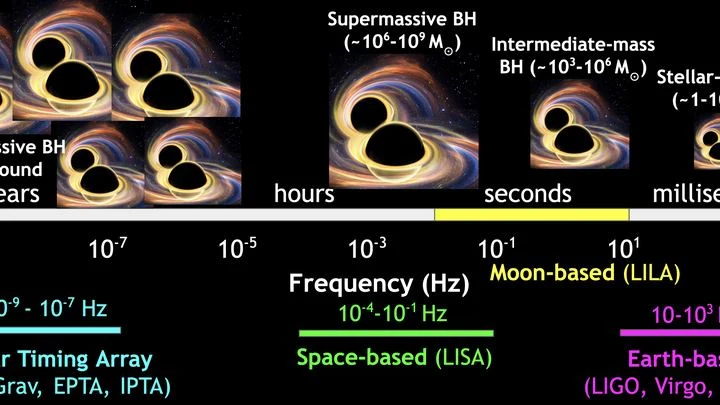
The Moon acts as a resonant detector: gravitational waves with frequencies matching the Moon's natural vibrational modes (typically in the millihertz range) would cause measurable displacements in its crust. Seismometers, far more sensitive than those used during the Apollo missions, would record these tiny ground motions. The key advantage is the Moon's size and isolation — it is a massive, quiet body in space, free from Earth's seismic noise and atmospheric interference, making it ideal for detecting low-frequency gravitational waves that Earth-based detectors cannot access.
In practice
This concept could enable the detection of gravitational waves from supermassive black hole mergers and other low-frequency cosmic events, complementing existing detectors and opening a new window into the early universe.
Fun fact
The Moon's seismic 'ringing' from gravitational waves would be so faint that it would be drowned out by the constant micrometeorite impacts, requiring sophisticated signal processing to extract.
The two states of a strontium atom are like twins running down the same track, but one is slightly higher than the other. Usually, the light used to manipulate atoms pushes one twin harder and the other more weakly. Here, they chose a wavelength of 813 nanometers—'magic'—where both get the same kick.
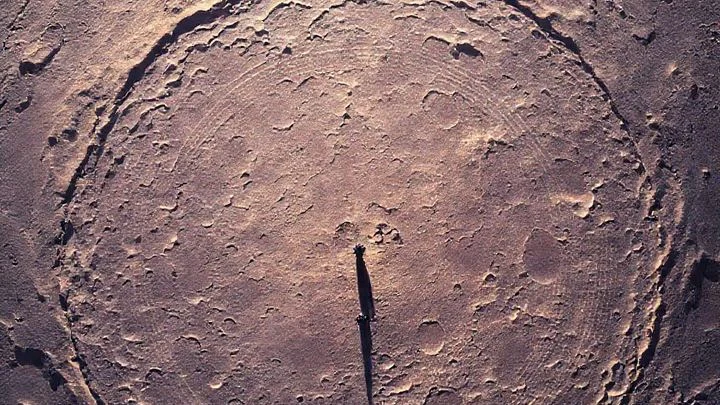
The Moon is an airless sphere of dense rocky grit called regolith. When fast particles from space slam into it, muons are born in the soil — unstable relatives of electrons, but two hundred times heavier. Most fly downward and fade away in the depths. But those that pop upward into the vacuum can travel tens of kilometers before decaying.
The Sun is not just a source of light but a giant laboratory where ghostly particles are born. Every second, billions of neutrinos fly through your body, barely noticing you. But inside the Sun, these particles behave differently: they change their type on the fly, like an actor playing three roles in a single play.
When two neutron stars, compressed to the size of a city, approach in their final dance, the spacetime around them comes alive, emitting gravitational waves.
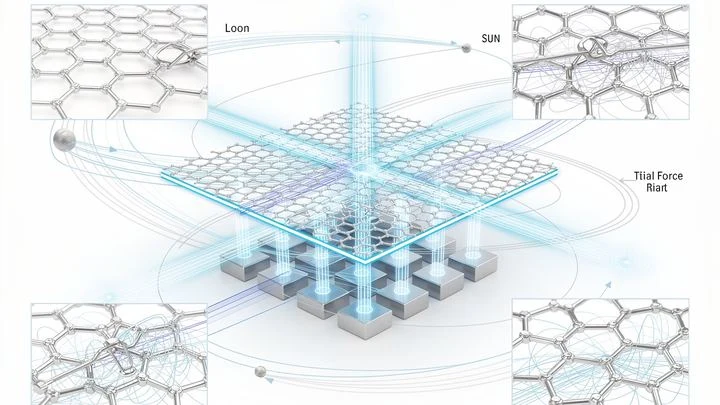
In the quiet of a laboratory, a graphite flake hovers above a magnetic grid. This is not just a demo of diamagnetism's magic — it's listening to the Universe. Like a spider casting its web to catch vibrations from an invisible world, this flake has become a gravitational web.
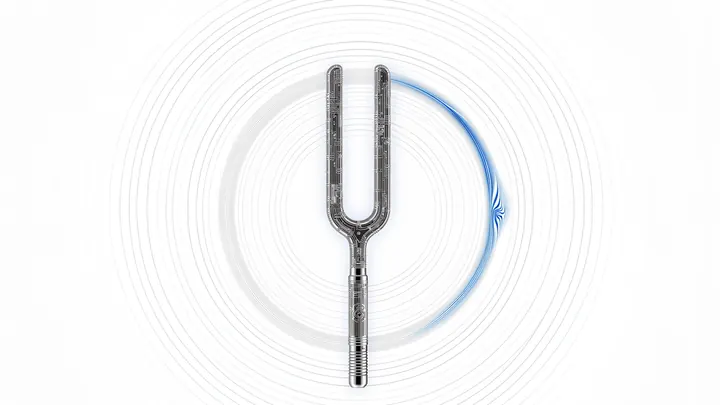
Back in the 1960s, physicist Joseph Weber tried to catch gravitational waves using aluminum cylinders: they were supposed to tremble like tuning forks from the ripples of spacetime.
Gravitational waves are ripples in the fabric of space, like circles on water from a thrown stone. On Earth, they are drowned out by traffic, tides, and earthquakes, like a storm beating on a lake, making it impossible to notice faint splashes. The LILA project moves the detector to the Moon, where windless silence reigns.
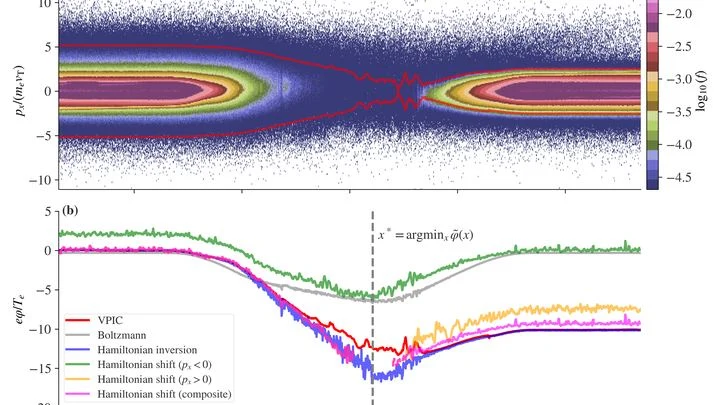
The Moon isn't just hanging in the sky: it leaves behind a long tail of disturbed solar wind. The stream of charged particles from the Sun flows around the rocky sphere, and behind it forms a zone where particles are almost absent. But this emptiness is not simple: electric fields arise in it that push apart the remaining electrons and ions.
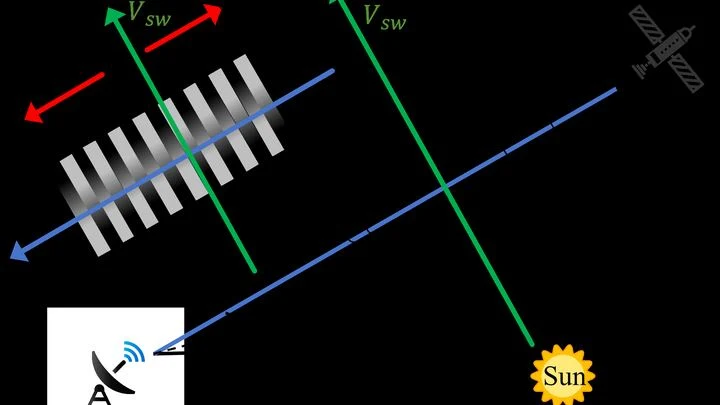
A radio signal travels from Mars to Earth, but on the way it has to push through the invisible "wind" of charged particles blowing from the Sun. This wind, like ripples on water, slightly distorts radio waves.
The light from a distant star is never steady. It shimmers like heat over hot asphalt. When astronomers pointed JWST at the star TOI 700, they saw this shimmer especially clearly: every 16 minutes, the brightness changed by a tiny fraction, just 46 parts per million.For comparison: if you placed a light bulb a kilometer away, this change would be…
A star like the Sun doesn't just shine: it hums quietly. Inside, plasma churns, and these motions make the surface rise and fall rhythmically. Catching such a tremor from Earth is nearly impossible: it gets lost in the noise of the atmosphere and the instrument itself. That's why astronomers listen to stars from space, where it's quieter.
At the bottom of lunar craters, where sunlight never reaches, an eternal cold reigns — about minus 240 degrees Celsius. In these icy pockets, known as permanently shadowed regions, plans are underway to install a mirror resonator made of monolithic silicon.
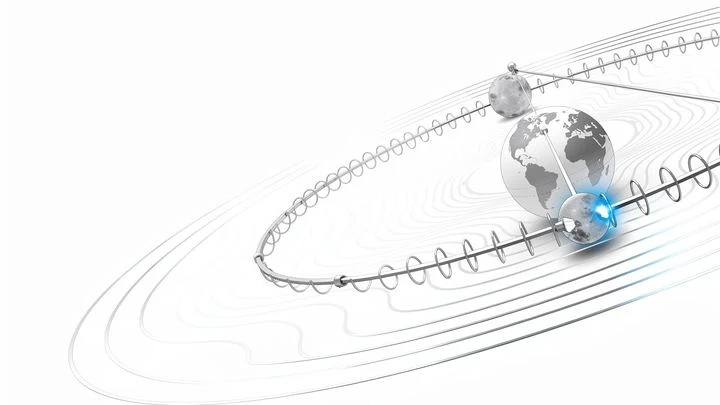
Gravitational waves are ripples in spacetime curvature that imperceptibly stretch and squeeze everything around. But the Moon, like a bell, catches these waves: as a gravitational wave passes through it, it makes our satellite vibrate.
Accurate measurements of gravity are needed by geologists and navigators alike. But conventional gravimeters are bulky instruments that take a long time to 'settle' after each measurement. What if you need to track rapid changes in gravity — say, while moving underground or in flight? That calls for a device that is small and responsive.
The Moon is not just a rocky sphere, but a giant bell. Passing through it, gravitational waves cause it to vibrate almost imperceptibly. This tremor was predicted by Einstein, and Weber was the first to try to hear it with Earth-based detectors.
The Moon is not just a satellite; it is a potential gravitational bell. When massive bodies collide, spacetime shudders, and that shudder, gravitational waves, makes everything in their path vibrate.