Quantum Mpemba Effect: Controlled Cooling express
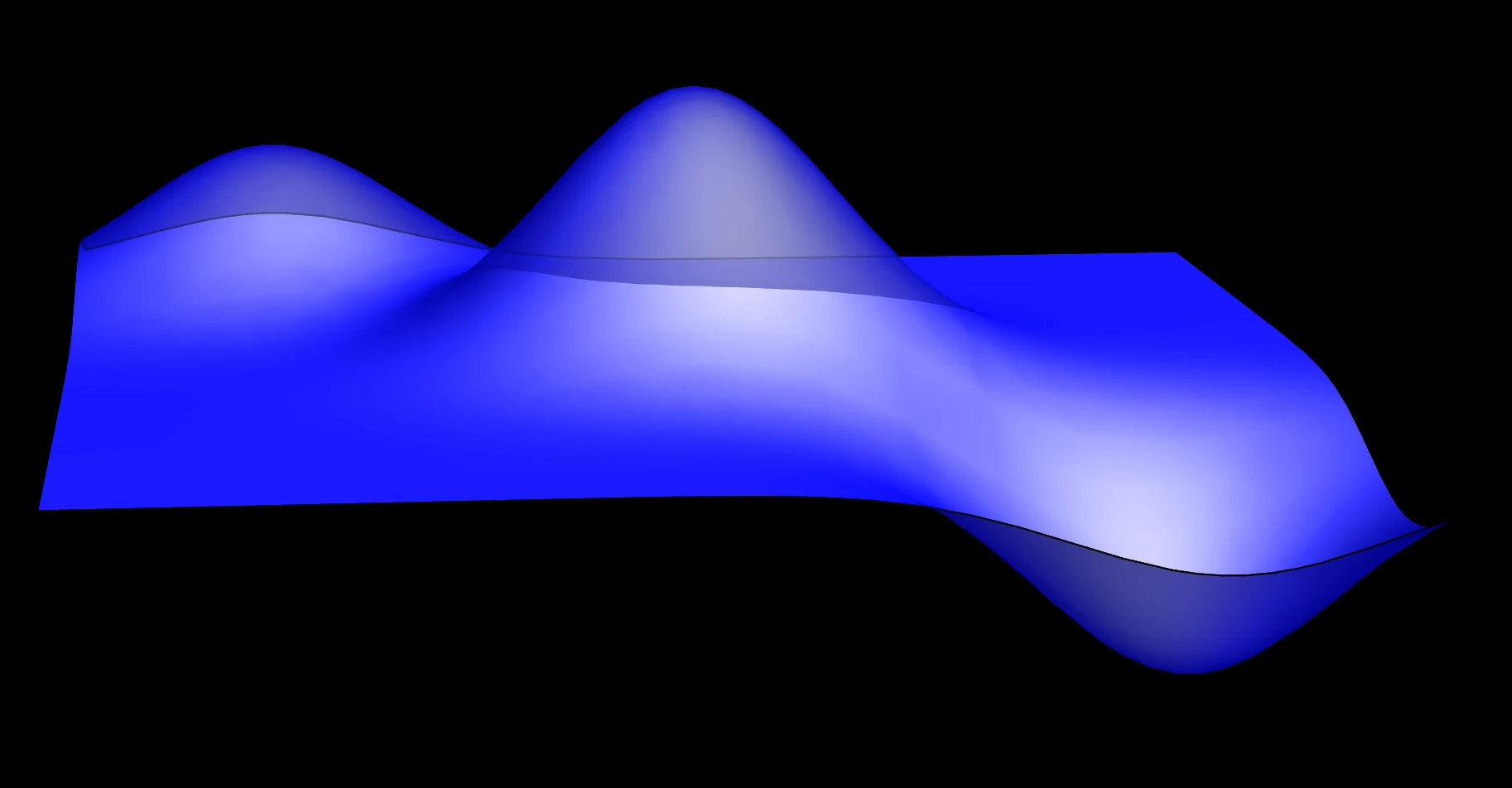
Everything tends toward equilibrium: tea cools, a pendulum swings to rest. The measure of this movement is entropy — growing disorder. But sometimes hot water freezes before warm. The Mpemba effect isn't just a curiosity: it shows up in the quantum world too. Scientists have devised a way to control this paradox.
Their method resembles playing with linked swings: to calm a wildly oscillating chain, you briefly 'loosen the springs' on the most frenzied ones, and the overall chaos subsides. In a quantum system, the 'swings' are particles, and 'loosening the springs' means temporarily increasing energy leakage in specific couplings.
This trick doesn't depend on initial conditions and works for any quantum objects — from cold helium atoms to computational qubits.
Fine-tuning the damping promises to speed up quantum computers, letting them reach a stable state more quickly. Ludwig Boltzmann taught that entropy grows relentlessly, but in open systems we can intervene in this process.
Original abstract
as written by the authors arXiv:2511.04354
The Mpemba effect, where a state farther from equilibrium relaxes faster than one closer to it, is a striking phenomenon in both classical and quantum systems. In open quantum systems, however, the quantum Mpemba effect (QME) typically occurs only for specifically chosen initial states, which limits its universality. Here we present a general and experimentally feasible strategy to realize both QME and anti-QME. By applying a temporary bond-dissipation quench, we selectively suppresses or enhances slow relaxation modes, thereby reshaping relaxation pathways independently of both the system and the initial state. We demonstrate this mechanism in systems with dephasing and boundary dissipation, and outline feasible cold-atom implementations. Our results establish controllable dissipation as a versatile tool for quantum control, accelerated relaxation, and efficient nonequilibrium protocols.
The Mpemba effect, discovered by a schoolboy in the 20th century, was described by Aristotle: in the 4th century BC, he noted that the people of Pontus heated water before freezing to make ice form faster.