Gravitational Atoms: The New Voice of Black Holes ✎ express
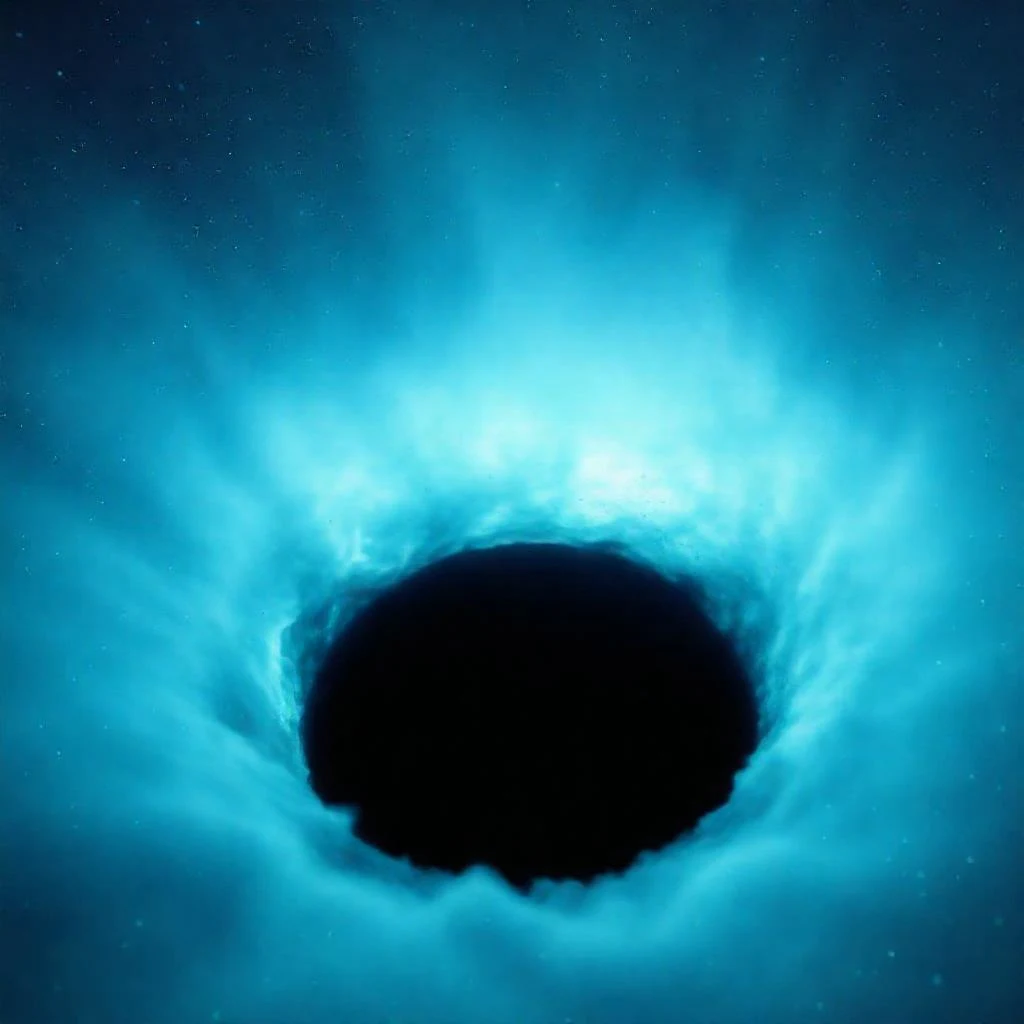
Black holes rarely live in emptiness. They are often shrouded in invisible clouds of dark matter particles — so light that they only feel gravity. When the cloud is dense, the system resembles a giant atom: a swarm of particles circles the hole like electrons around a nucleus. These objects are called gravitational atoms. A merger of two black holes gives birth to a new one, which rings with gravitational waves — a tremor of spacetime, like the fading chime of a bell. Physicists have calculated that the particle cloud changes this ring. The main tone shifts, and the denser the cloud, the more noticeable it is. The metaphor is simple: a bell ringing in thick fog changes its voice. But there's a twist: theoretically, such a cloud can not only muffle the sound but amplify it, drawing energy from the hole's rotation. Then the curved spacetime itself begins to hum — and we can hear it. The LIGO and Virgo detectors are already capable of picking up such shifts. This opens the way to "sound" exploration of dark matter: not catching light, but listening to the tremor of the vacuum.
Gravitational atoms can theoretically generate gravitational wave energy — just as ordinary atoms emit light when electrons transition.
In science fiction, clouds around black holes often serve as a source of mysterious signals or even consciousness. For example, in Peter Watts' novel Blindsight, an alien intelligence dwells precisely in such a radio cloud.