concept

quantum nature of gravity

The question of whether gravity is fundamentally a quantum force, tested here via entanglement experiments.
28 related articles

Description

A surprising fact is that if gravity is quantum, then the gravitational field itself can exist in a superposition, meaning that spacetime can be 'in two places at once'—a concept that challenges our classical intuition.

Related articles · 28

General Relativity2026-08-072 minarXiv:2608.06852express
The Universe Couldn't Have Been Expanding Forever
A spotlight beam fades into the darkness, but if you trace it backward, you hit the lamp. The history of the universe might be the same: tracing its expansion backward, we run into a beginning. Physicists took the simplest model — a universe that stretches equally in all directions, like a cube with all sides growing.

General Relativity2026-08-021 minarXiv:2608.01165express
How Quantum Chaos Gives Rise to Inflation
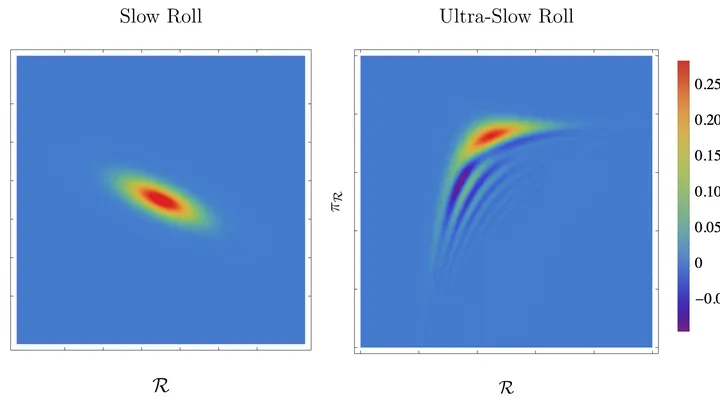
The early universe resembled an overheated cauldron, seething with quantum fluctuations (random bursts of energy). In this chaos, like steam over boiling water, a special field, the scalar field, condensed. It became the 'engine' that made space expand at an incredible rate. This process is called inflation.
Cosmology2026-07-282 minarXiv:2607.25317express
Current-Carrying Cosmic Strings and Their Gravitational Imprint
Right after the Big Bang, space cooled unevenly. In some places, folds could have formed — threads of energy as thin as a hair but incredibly dense. Physicists call them cosmic strings. They oscillate, collide, and emit gravitational waves — ripples in the fabric of space itself.
General Relativity2026-07-251 minarXiv:2607.23387express
Gravity Can Push
Two balls dropped from different heights fall to the ground with different accelerations. In space, things are more complicated: even emptiness makes bodies move differently.
General Relativity2026-07-222 minarXiv:2607.20107express
A Graviton's Quantum Conversation with a Detector
A massive aluminum cylinder weighing a ton hangs in a vacuum. A gravitational wave, a ripple in spacetime, passes through it, and the bar begins to tremble almost imperceptibly. That trembling can be heard as sound: gravitational waves turn into a phonon — a quantum of sound vibrations.
The Arrow of Time and the Taste of the Moment
In the grand orchestra of the universe, every instrument has its own rhythm. Electrons in an atom make quantum leaps in femtoseconds, neurons in the brain exchange signals in milliseconds, and a human needs tenths of a second to become aware of the 'now.' Physicists have long sought the conductor…
Dark Energy: Inevitability Born of Symmetry
The explosion of a distant supernova told us something hard to believe: the universe is expanding faster and faster. The engine of this acceleration is dark energy — nearly 70% of everything that exists.
HEP Theory2026-06-281 minarXiv:2606.29318express
Extra Dimensions for Quantum Gravity
The space we live in appears three-dimensional. But when physicists try to reconcile gravity with quantum mechanics, familiar dimensions start behaving strangely. In a new study, scientists showed that to describe a massive particle while accounting for quantum gravitational effects, it is natural to add two more dimensions.
Information — The Shadow of What Never Was
Erasing even a single bit means releasing heat. This discovery by Rolf Landauer hinted that information is neither material nor illusory. Imagine that every event casts a shadow: that is information, the collection of all unrealized possibilities.
General Relativity2026-06-051 minarXiv:2606.07781express
How to Weigh a Black Hole from the Inside
A black hole is like a bottomless well. You can measure how much water has flowed into it by watching the level from outside. But how do you find the mass of the water itself if you're standing inside the well? That's roughly the problem the authors of a new paper tackle.
General Relativity2026-06-021 minarXiv:2606.03671express
When a Quantum Particle Blurs Causality
Light cones are not about light; they are boundaries in spacetime that separate causes from effects. These cones are not rigid: a massive object curves them, like a heavy ball pressing into a stretched sheet.
Superconductivity2026-05-232 minarXiv:2605.24439express
Vacuum Turns an Ordinary Superconductor into an Extraordinary One
A superconductor carries current without resistance, like water running through a pipe without friction. The secret lies in electron pairs: two electrons stick together as one, even though they normally repel. In an ordinary superconductor, the spins of the electrons in a pair point in opposite directions: this is the singlet state.
HEP Theory2026-05-131 minarXiv:2605.13490express
The Universe as a Finite Book: Why a Unified Plot Is Unattainable
Picture the Universe as a book with a finite number of pages. Its accelerated expansion, driven by dark energy, a mysterious substance pushing space apart, acts like an invisible binding: distant pages are forever glued together, becoming inaccessible chapters.
HEP Theory2026-05-032 minarXiv:2605.01966express
How to Catch a Ghost That's Ruining Physics
Sometimes an unwelcome guest sneaks into the equations, like a creaky floorboard that unsettles the whole house. In gravity theories, if you add curvature-squared terms to the equations (which you need to describe very strong fields), a ghost particle appears — heavy but with negative energy.
Quantum Physics2026-05-012 minarXiv:2605.00967express
Gravity Entangles Without Free Fall
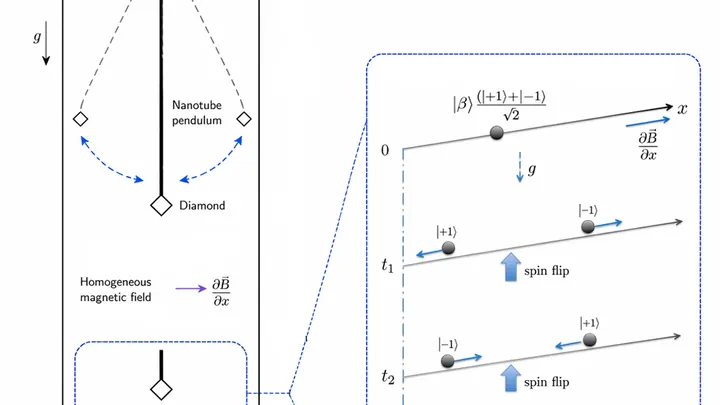
Two balls suspended on threads swing side by side. Each moves on its own, but between them is an invisible thread — the attraction of masses. If gravity is quantum, it could bind them into a single whole: nudge one, and the other responds, even without contact.
HEP Theory2026-04-241 minarXiv:2604.22418express
Gravitational Waves Without Distortion
In 2015, the LIGO detectors caught the first burst of gravitational waves — astronomers heard two black holes colliding far out in space. That ripple in spacetime reached us with its signal shape intact: like the sound of a bell traveling billions of years without distortion.
HEP Theory2026-04-221 minarXiv:2604.20767express
Quantum Gravity Trick: How Atom Clouds Harmonize Through Spacetime
Picture two choirs in soundproof rooms on a wobbly stage. They sing, but can't hear each other — the air doesn't carry the tune. Yet if the stage trembles, its vibrations link their songs. That's the idea behind a new test for quantum gravity.
Quantum Physics2026-04-211 minarXiv:2604.19696express
Ordinary Gravity Doesn't Entangle Particles
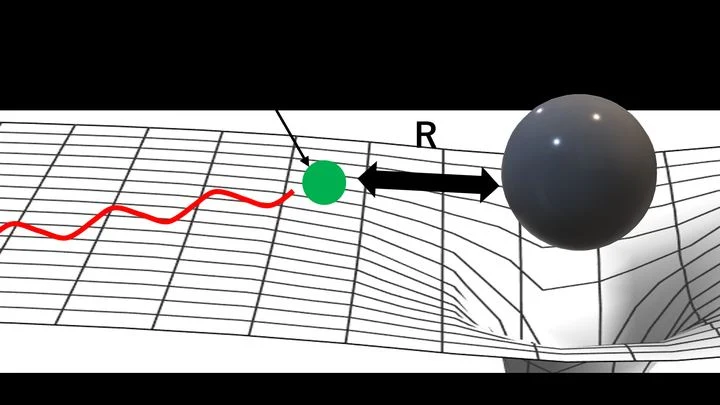
Gravity is like a stretched trampoline: massive bodies press into it, making other bodies roll toward them. This shared curvature of space, gravity, affects everyone, but it doesn't convey secret messages.
General Relativity2026-04-011 minarXiv:2604.01283express
Quantum Brushstrokes on the Canvas of the Cosmos
It all started with tiny quantum flickers on the primal canvas. Inflation — an avalanche-like expansion proposed by Alan Guth — stretched those brushstrokes to the scale of galaxies.
Quantum Physics2026-03-021 minarXiv:2603.01811express
Why can't large objects be in two places at once?
Schrödinger's cat, according to quantum rules, can be both alive and dead at once. But a table can't pull that off. When a massive object tries to be in two places, its mass curves spacetime so drastically that instead of two points, a single deep depression forms, and the object rolls into it.
Quantum Physics2026-02-261 minarXiv:2602.22715express
Can Gravity Repel? Quantum Superposition and Negative Weak Values
The familiar picture: gravity always attracts. But if a mass is in quantum superposition (that is, in two places at once, like an object in a double-exposure photograph) everything flips. Quantum theory allows a particle to be both here and there in a literal sense: its position is described by a wave function smeared across space.
Quantum Physics2026-02-222 minarXiv:2602.19306express
Gravitational Entanglement: A Quantum Dance That Ignores Mass
Picture heavy balls resting on a stretchy trampoline: each one sinks into the fabric, and their dents overlap, causing the balls to roll toward each other. This analogy helps explain how gravity — the curvature of spacetime — links massive particles. But what if you bring gravity and quantum mechanics together?
Quantum Physics2026-02-121 minarXiv:2602.12266express
Gravity Can Push Away — A Quantum Experiment
Gravity always pulls — an apple falls down, planets orbit in circles. But by placing a source of gravity in two places at once, you can get the opposite. Physicists have proposed an experiment: a massive body is put into a quantum state, smeared across space like a cloud. Then a tiny particle is shot into that cloud.
Quantum Physics2026-02-021 minarXiv:2602.01715express
Gravity Alters How Atoms Emit Light
An atom excited by light gives its energy back in an instant — it emits a photon. This process is like a tired runner dropping a heavy load. But if the runner is on a mountain slope, it's harder to pick up speed. Gravity acts on the atom similarly: near a massive body, time flows slower, and the atom emits differently.
General Relativity2025-11-172 minarXiv:2511.13848express
Gravitational Atoms: How Black Holes Give Dark Matter a Voice
Black holes are rarely alone in the cosmos. They are often shrouded in invisible clouds of hypothetical dark matter particles — so light that they feel only gravity, barely interacting with each other or ordinary matter.
Quantum Physics2025-10-221 minarXiv:2510.19969express
Only Quantum Gravity Can Entangle Masses
Two massive spheres in the cosmic void. Push one, and the second will feel the push only after a moment: gravitational influence travels, like an echo of a shout in the mountains, with inevitable delay. This is how curved space transmits signals locally, step by step — predicted by Einstein long ago.
Falling into a McVittie Black Hole: A Plunge into an Expanding Waterfall
A waterfall doesn't ask if you're ready to jump. Its flow accelerates, and at some point even light can't escape back. A McVittie black hole is such a waterfall, but not in an ordinary river; it's in an expanding universe: the water here is space itself, which continuously stretches, carrying galaxies apart from each other.
Two Horizons, One Thermometer: How Quantum Fields Erase Temperature Differences
Two vessels of water at different temperatures are separated by a thin partition. As long as the partition is intact, each vessel lives its own life: in one, the water is hot; in the other, it's icy. But once the partition is removed, the temperatures begin to equalize, and eventually both vessels reach the same state.