Invisible Black Holes: Planets or Something Else? express
A star dancing without a visible partner — that’s how astronomers perceive its wobble. Doppler shift usually reveals a planet, but sometimes the companion remains invisible. Then it could be a primordial black hole — a planetary-mass object born in the early Universe. Unlike ordinary planets, such a hole neither reflects light nor blocks the star (no transit).
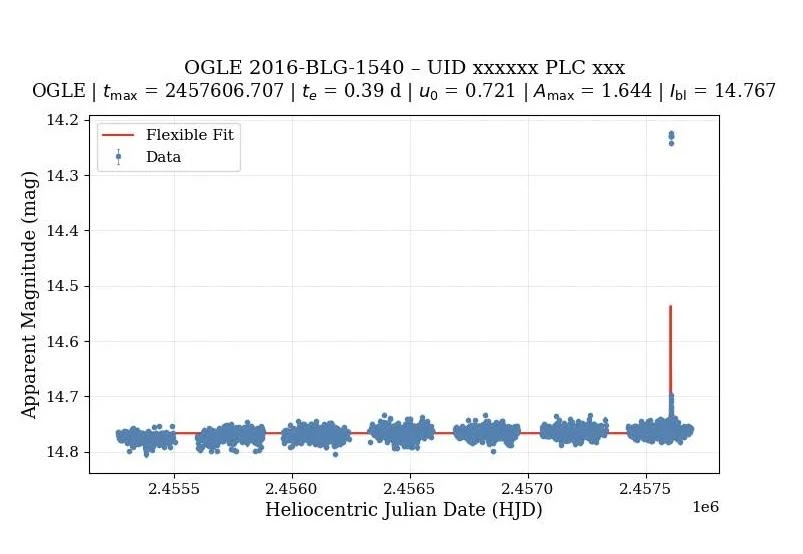
Sifting through data on thousands of exoplanet candidates, scientists identified six objects that reveal themselves only through gravity. Among them are companions of the stars Kepler-21, Gliese 686, and four others. Two cases of brief light bending from distant stars (microlensing) are also suspicious.
The gravitational dance gives away both a planet and a black hole equally. Telling them apart may rely on Hawking radiation: tiny holes evaporate faster and could emit a faint signal. If confirmed, these invisible partners would become the key to dark matter — the mysterious substance that perhaps makes up most of the Universe.
A primordial black hole with Earth’s mass would fit inside a grape — its diameter is just 9 millimeters.