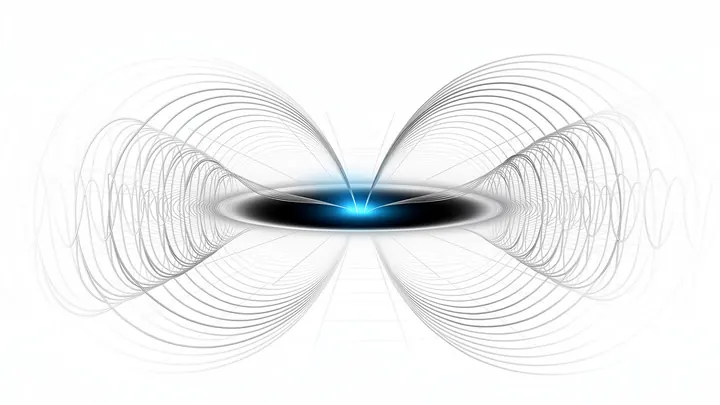
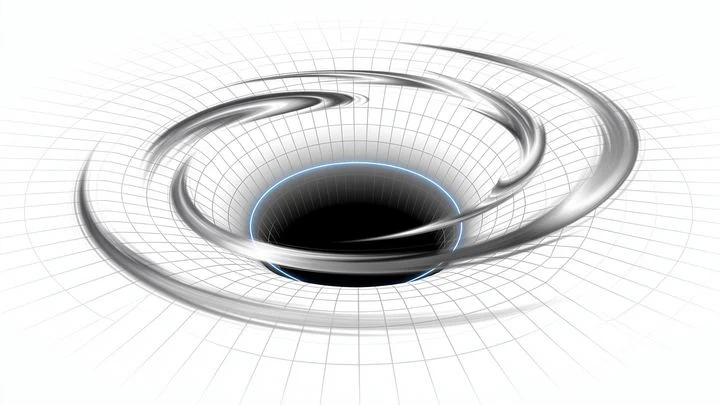
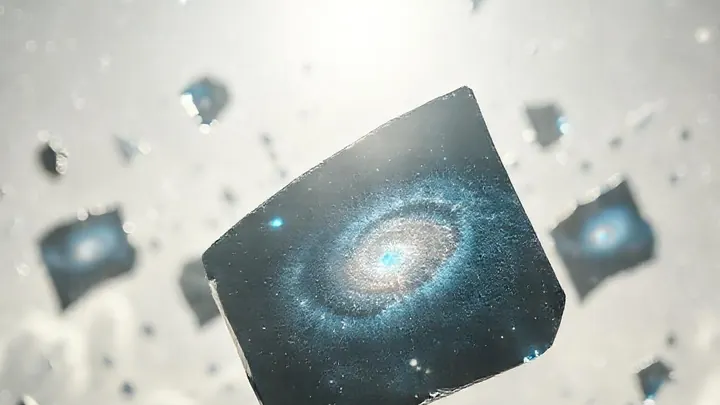
A white hole is a hypothetical celestial object that behaves as the exact time-reversal of a black hole. While a black hole has an event horizon from which nothing, not even light, can escape, a white hole has an event horizon that nothing can enter from the outside. Matter and radiation can only stream outward from a white hole, making it a kind of cosmic fountain that refuses to accept any incoming material.
History
The concept emerged from the mathematical exploration of the Schwarzschild solution in the early 20th century, but it was popularized in the 1960s when physicists like Roger Penrose and others studied the global structure of black hole spacetimes and noted the time-reversed solutions.
How it works
In general relativity, the equations that describe spacetime are time-symmetric. This means that for every solution representing a black hole, there is a corresponding solution where time runs backward, producing a white hole. The event horizon of a white hole acts as a one-way membrane in the opposite direction: any particle or light ray attempting to cross it from outside would be repelled, while anything inside is forced outward. In practice, white holes are thought to be unstable — any tiny perturbation would cause them to collapse into a black hole almost instantly.
In practice
White holes are primarily of theoretical interest, appearing in quantum gravity models and in speculative scenarios about the final state of black hole evaporation, where they might resolve the information paradox.
Fun fact
Some cyclic universe models propose that the Big Bang itself could have been a white hole — the time-reversed endpoint of a previous universe's collapse.
On November 23, 2023, LIGO detectors caught something strange. The gravitational wave signal from a black hole merger, designated GW231123, pointed to record masses—137 and 101 solar masses, and anomalously fast spin. That would be the most massive and fastest-spinning pair ever detected.
A star runs out of fuel and rapidly collapses under its own gravity. According to classical ideas, it collapses into a point of infinite density — a singularity. But what if nature abhors infinities? In models of regular black holes, instead of a singularity, a dense core of unknown matter forms at the center.
The merger of two black holes is not just a silent dance, but a grand act after which spacetime itself vibrates for a long time. These damped oscillations — quasi-normal modes — are like the ringing of a gigantic bell. But there is another echo: barely perceptible, almost ghostly.
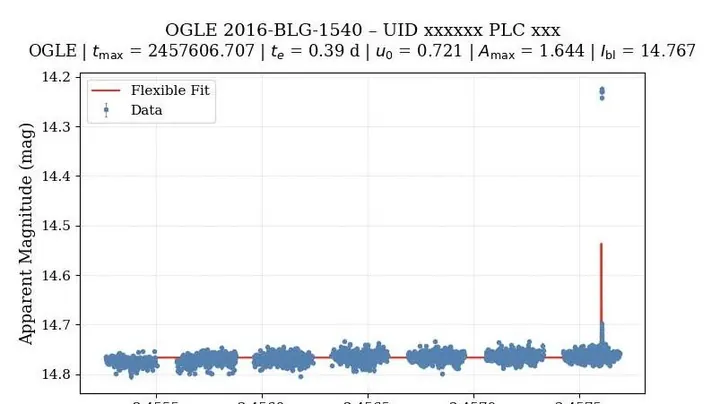
The light of a distant star briefly brightens when a massive invisible object passes between it and a telescope. This phenomenon, gravitational microlensing, acts as a natural telescope. Usually, the lens is a black hole, warping the spacetime around it.
The universe as painted in Einstein’s textbooks is a smooth four-dimensional canvas. But string theory adds a frame of extra dimensions — invisible, yet tangible to gravity. Imagine our universe as a membrane that trembles under the pressure of hidden layers.
It all began not with emptiness, but with a boiling ocean of plasma. In that primordial broth, sound waves raced through the fiery matter, colliding and compressing it. Sometimes a clump grew so dense that light could no longer escape, and right out of the scorching gas, a primordial black hole was born.
Erasing even a single bit means releasing heat. This discovery by Rolf Landauer hinted that information is neither material nor illusory. Imagine that every event casts a shadow: that is information, the collection of all unrealized possibilities.
At the center of attention is a black hole with two points of no return: the outer and inner horizons. Beyond the outer horizon, space and time swap roles, but the journey is not over. Further in, at the inner horizon, gravity has another surprise in store.
In the kitchen cupboard sits a jar of sugar. If you shake it, the grains will spread almost evenly — no need to place each one with tweezers. In much the same way, tiny black holes could have appeared in the first moments after the Big Bang. Their mass is like that of an asteroid, their size smaller than an atom.
In the microscopic world, the Pauli exclusion principle holds sway: fermions — particles with half-integer spin, such as electrons — cannot occupy the same quantum state. This fundamental rule of the Standard Model forces electrons in atoms to occupy different orbitals, giving matter its volume and structure.
Our Universe behaves like a stretched elastic sheet: massive bodies dent it, creating spacetime curvature — gravity. In brane-world theory, a hidden dimension is added, and this sheet becomes just a surface in a higher-dimensional space. The brane tension determines how much the sheet dents: the weaker the tension, the weaker the gravity.
An ordinary kettle: you heat it up — temperature rises, molecular chaos grows, and steam shoots out. But in the lab, they've created a peculiar "kettle"—an analog black hole made from superconducting circuits cooled to the extreme.
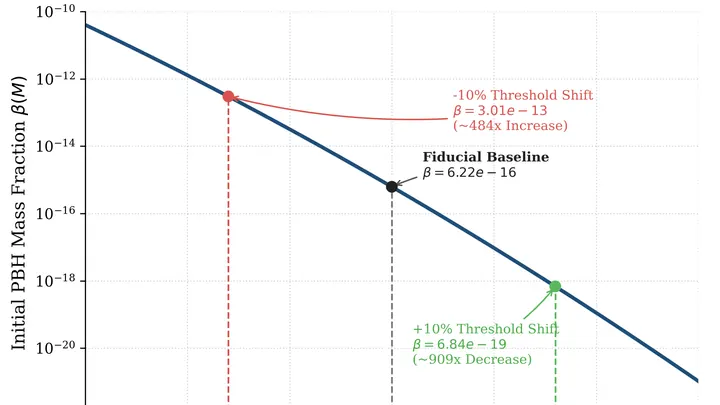
In the seething cauldron of the early universe, the vacuum, like a supercooled liquid, could boil with bubbles of a new phase. For a long time, physicists pinned their hopes on these bubbles as a source of primordial black holes (PBHs)—ideal candidates for dark matter.
Light usually behaves like a pedestrian on a two-way street: the path from a streetlamp to a camera matches the reverse path. But near a rotating black hole with broken spatial symmetry, this street becomes one-way. Swap the light source and observer, and the hole's shadow changes shape: from an oval resembling a rugby ball, it turns into a teardrop.
In the quantum world, electrons can behave like waves. If you create the right conditions for them, these waves start to feel something akin to gravity. In crystals known as Weyl semimetals, electrons move as if they were massless, and their energy depends on direction, like a tilted cone.
The universe wasn't born alone — alongside it came a mirror twin where everything is reversed: left and right are swapped and time flows from future to past. After the Big Bang, the world, according to Alan Guth's idea of superfast inflation, should have contained equal amounts of matter and antimatter.
Black holes are among the most mysterious objects in the universe. Their gravity is so strong that even light cannot escape their vicinity. But studying them directly is extremely difficult: the nearest black hole is thousands of light-years away, and mergers of two black holes take millions of years.
An ordinary door swings both ways, but the physicists rigged a one-way door for atoms — enter at will, but leaving is off-limits. The atoms were cooled nearly to absolute zero — in such deep cold, they merge into a single cloud. This cloud was placed in a neat lattice of laser beams, adding a tiny irregularity, like a step at the threshold.
The universe can behave like a spring: compressing to microscopic sizes and then expanding again. In this cycle of contraction and bounce, black holes and dark matter are born.
Road noise is a great informant. Rare cars sound as individual signals; dense traffic merges into a steady hum. Just the same, mergers of black holes produce either single bursts or a continuous background of gravitational waves.
Picture a star waltzing with an invisible partner: its rhythmic wobble, caused by the gravitational pull of a companion, is picked up by instruments, yet the partner itself eludes detection. Usually, such wobbles are the result of a Doppler shift, a change in the frequency of light due to the star's motion, that betrays the presence of a planet.
In the familiar world, we have three spatial dimensions. However, theoretical physics allows for additional, hidden directions — compactified, that is, curled up to microscopic sizes.
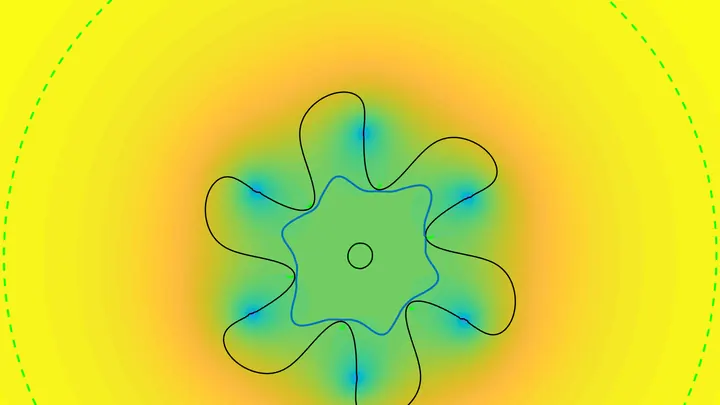
A homogeneous dust sphere begins to contract under its own gravity. Inside it, like a rescue bubble, a region of negative pressure inflates: the de Sitter bubble. It expands, slows down near the very edge of the fall, and freezes at the Schwarzschild radius.
Two vessels of water at different temperatures are separated by a thin partition. As long as the partition is intact, each vessel lives its own life: in one, the water is hot; in the other, it's icy. But once the partition is removed, the temperatures begin to equalize, and eventually both vessels reach the same state.