Planet-Mass Black Holes: Invisible Partners of Stars or the Key to Dark Matter? express
Picture a star waltzing with an invisible partner: its rhythmic wobble, caused by the gravitational pull of a companion, is picked up by instruments, yet the partner itself eludes detection. Usually, such wobbles are the result of a Doppler shift, a change in the frequency of light due to the star's motion, that betrays the presence of a planet. But what if the companion reflects no light and never crosses the star's disk, meaning it produces no transit — the characteristic dip in brightness during an eclipse? Then the spotlight turns to the hypothesis of a primordial black hole: an object of planetary mass compressed to microscopic size, which could have formed in the extreme conditions of the early universe, when matter was dense enough to collapse directly into black holes, bypassing the stellar stage.
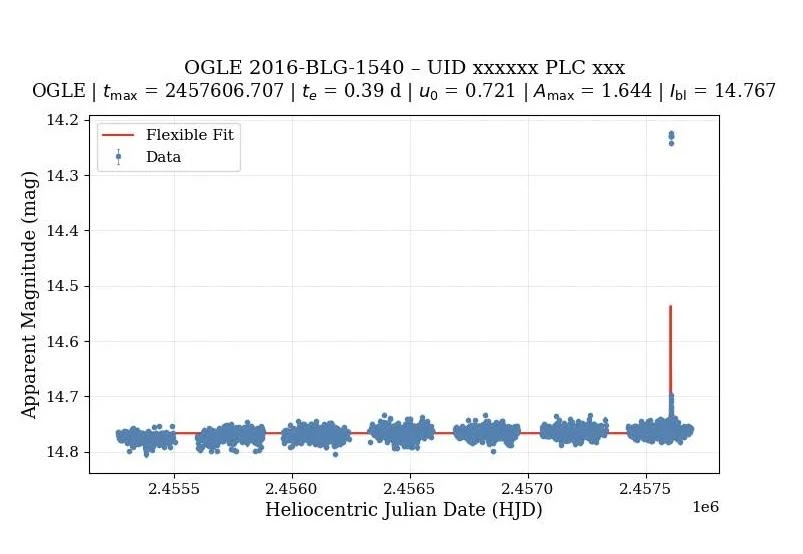
Sifting through data from thousands of exoplanet candidates, scientists applied a process of elimination: they looked for systems where the gravitational influence on the star was clear, but any attempt to detect light from the companion or its transit failed. This yielded six invisible objects orbiting the stars Kepler-21, Gliese 686, and four others. Adding fuel to the fire were two microlensing events — brief bending of light from distant stars by the gravity of a massive but unseen object passing between us and the source. In these events, the lens mass matched planetary proportions, yet no optical component was found.
The gravitational dance, the star's wobble around the common center of mass, betrays both a planet and a black hole equally, since both possess mass. However, Hawking predicted that black holes aren't entirely black: they emit radiation (Hawking radiation), whose intensity is inversely proportional to mass. For planet-mass primordial black holes, this radiation, though extremely faint, could be detected as an anomalous signal in the gamma-ray range, fundamentally distinguishing them from planets. If such signals are confirmed, these invisible stellar companions would turn out to be not just exotic objects, but possible carriers of dark matter — the mysterious substance that reveals itself only through gravity and, according to current understanding, makes up the vast majority of the universe's mass.
A primordial black hole with the mass of Earth would fit inside a grape: its diameter is just 9 millimeters.