Four Teenage Planets Around a Young Star express
350 light-years away, four planets orbit the star V1298 Tau. They are 5–10 times larger than Earth but lighter than they appear. For nine years, astronomers tracked their motion to understand what they are made of and how they lived in the past.
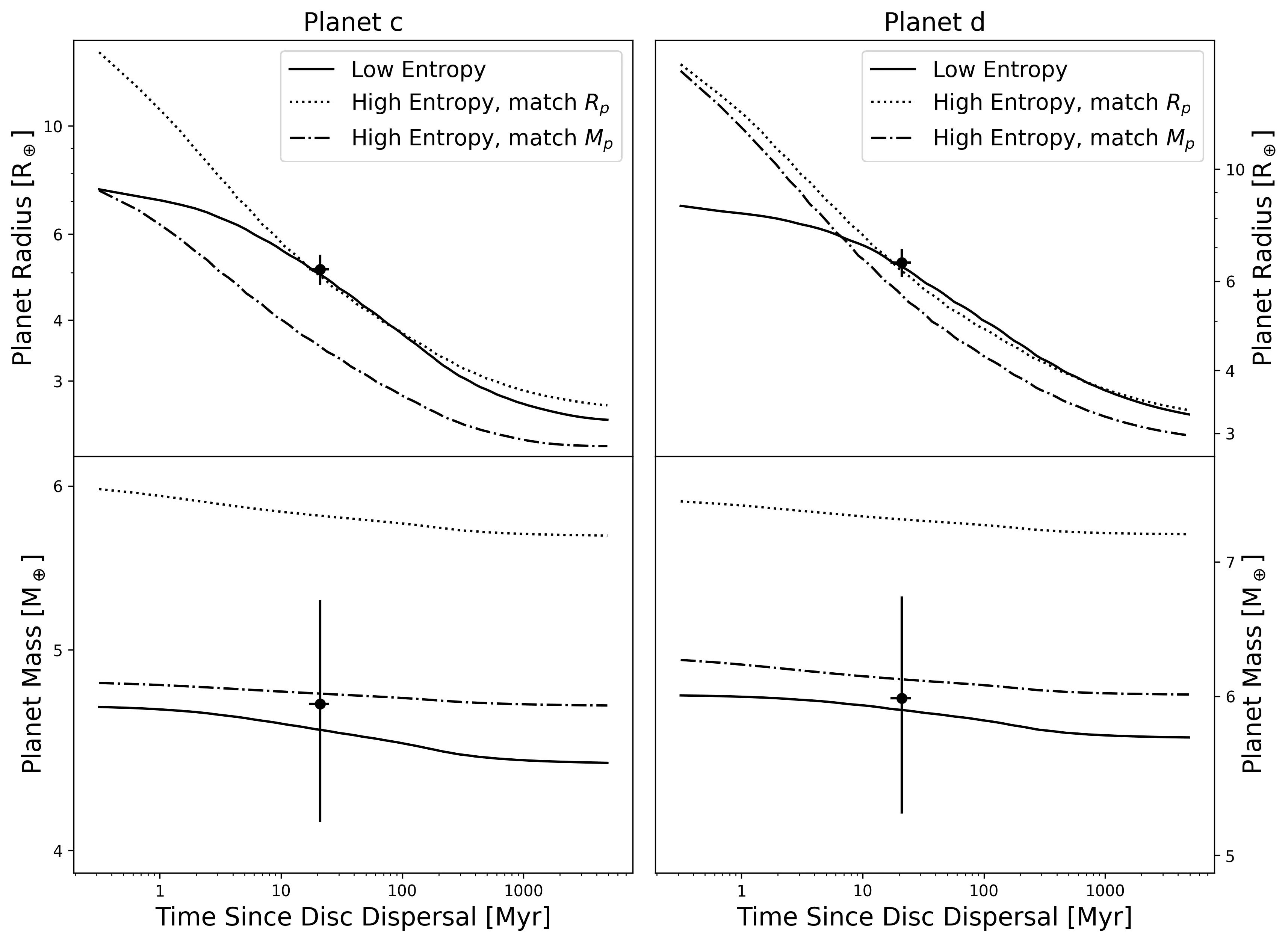
It turns out their orbits are almost circular — meaning there were no violent collisions or encounters with other bodies in the past. The planets grew calmly, like trees in a quiet forest. After the gas disk from which they were born dispersed, they cooled quickly. Now they are fluffy, like snowballs, but over time they will shrink to the size of super-Earths, the most common planets in the galaxy.
Original abstract
as written by the authors arXiv:2601.10598
The Galaxy's most common known planetary systems have several Earth-to-Neptune-size planets in compact orbits. At small orbital separations, larger planets are less common than their smaller counterparts by an order of magnitude. The young star V1298 Tau hosts one such compact planetary system, albeit with four planets that are uncommonly large (5 to 10 Earth radii). The planets form a chain of near-resonances that result in transit-timing variations of several hours. Here we present a multi-year campaign to characterize this system with transit-timing variations, a method insensitive to the intense magnetic activity of the star. Through targeted observations, we first resolved the previously unknown orbital period of the outermost planet. The full 9-year baseline from these and archival data then enabled robust determination of the masses and orbital parameters for all four planets. We find the planets have low, sub-Neptune masses and nearly circular orbits, implying a dynamically tranquil history. Their low masses and large radii indicate that the inner planets underwent a period of rapid cooling immediately after dispersal of the protoplanetary disk. Still, they are much less dense than mature planets of comparable size. We predict the planets will contract to 1.5-4.0 Earth radii and join the population of super-Earths and sub-Neptunes that nature produces in abundance.
If you placed these planets in water, they would float: their density is less than that of water.