Micrometers Decide the Fate of Superconductivity express
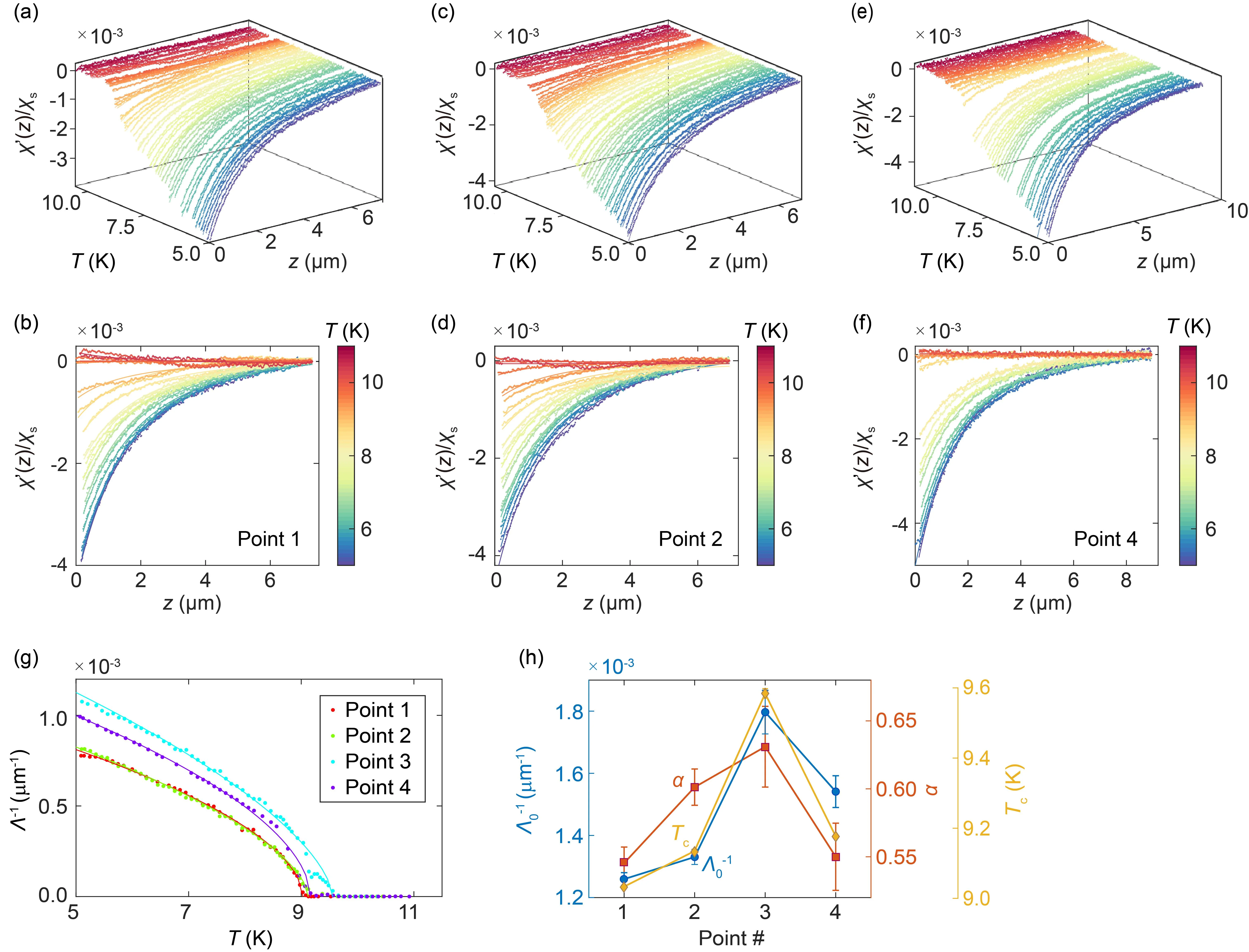
A superconductor is like a city where electrons stop jostling and start moving in pairs, like people strolling arm in arm. In neodymium-strontium nickelate (Nd₀.₈Sr₀.₂NiO₂), this 'parade' kicks in at around 10 kelvin (minus 263 degrees Celsius), but not uniformly. Researchers scanned the film micron by micron and saw: in some spots, pairs form readily; in others, they're lazier.
The key finding is a direct link between two quantities. The first is the 'superfluid density'—how many electron pairs are ready to carry current without resistance. The second is the transition temperature, at which the material becomes superconducting. Where there are more pairs, the transition happens at a higher temperature. Above 8 kelvin, the relationship is linear: double the pair density, and you double the transition temperature. Below 8 kelvin, the rise slows down.
The practical payoff lies in understanding inhomogeneity. The nickelate film isn't perfect: it has regions with varying amounts of charge carriers. Knowing the rule 'more pairs, higher temperature' allows targeted material improvement by evening out its composition or structure. That's a step toward superconductors that work at higher temperatures, which would make magnets for MRI machines, accelerators, and power grids cheaper.
The superconducting transition temperature of neodymium-strontium nickelate is about 10 kelvin — colder than the surface of Pluto, which sits at roughly 40 kelvin.
In Arthur C. Clarke's novel 'Childhood's End,' superconductors enable space elevators, but there they work at room temperature, a dream still out of reach.