Why Superluminal Signals Tangle Time express
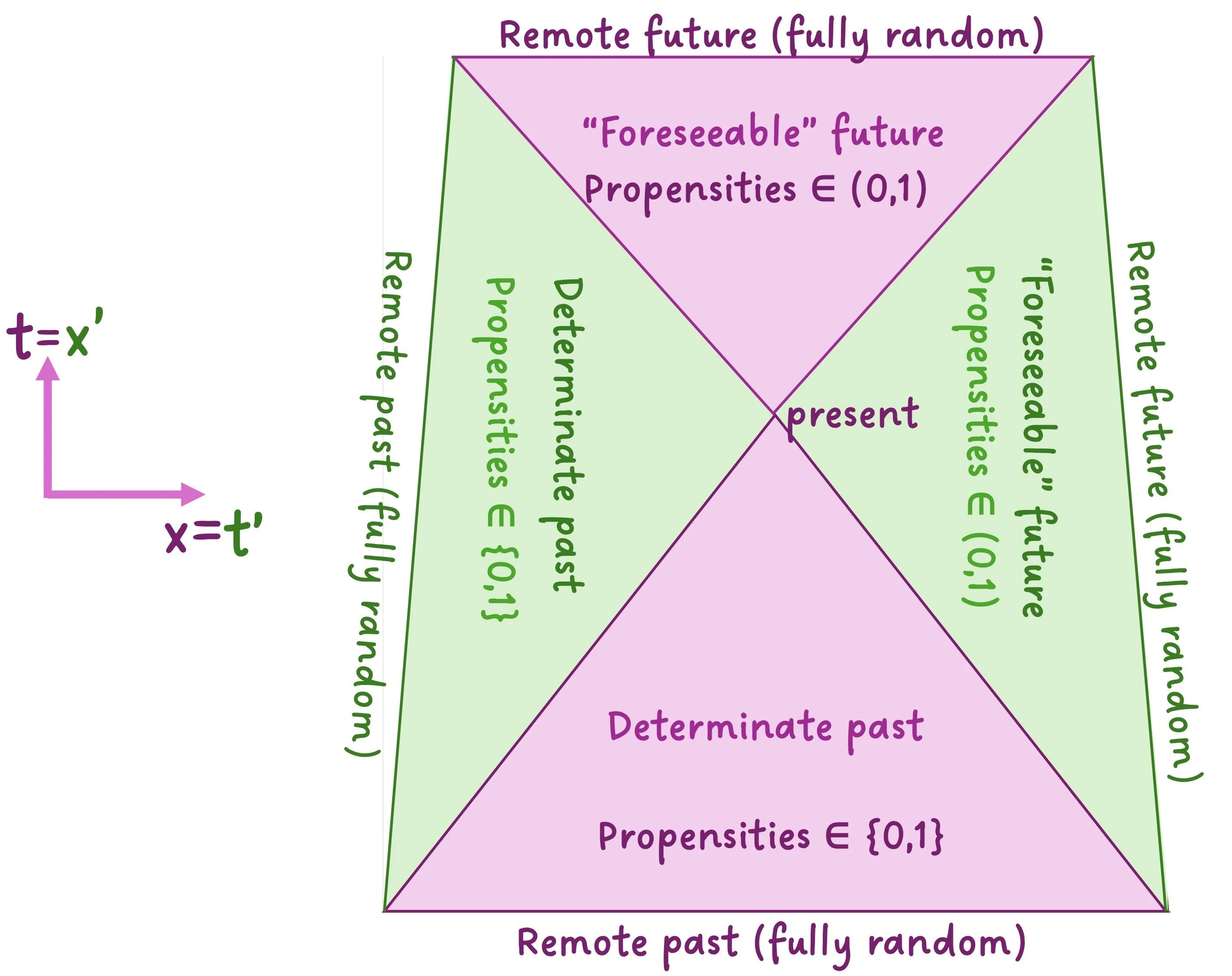
According to the laws of physics, nothing can outrun light, otherwise for some observers the effect would occur before the cause. Artur Ekert and Andrzej Dragan showed that this situation creates an uncertainty resembling quantum indeterminacy. Now it's proven: to preserve the order of events, any system with superluminal leaps must have a boundless amount of information, or lose its memory and a single chain of causes.
The world turns out to be like a recipe where, to keep the steps in the right order, you need to know every ingredient with infinite precision — otherwise the dish is ruined. That means, at the deepest level, reality stores an immeasurable volume of data, and quantum randomness is only an illusion. This idea was anticipated by Hendrik Lorentz. The most astonishing part: almost all numbers that would be needed for such a description cannot be written as a finite formula: they contain an endless, unpredictable noise of digits. So spacetime keeps serving up surprises.
Original abstract
as written by the authors arXiv:2601.15263
Quantum theory is widely regarded as fundamentally indeterministic, yet classical frameworks can also exhibit indeterminism once infinite information is abandoned. At the same time, relativity is usually taken to forbid superluminal signalling, although Lorentz symmetry formally admits superluminal transformations (SpTs). Dragan and Ekert have argued that SpTs entail a form of indeterminism analogous to that encountered in quantum theory. Here, we derive a theory-independent no-go theorem from a set of natural assumptions: any framework admitting non-order-preserving SpTs must either abandon finite information, relinquish time-symmetric informational content, deny that the past stores memory, or abandon the notion that time determines a preferred causal ordering. In particular, one possible implication is that any theory accommodating SpTs suggests an ontology with unbounded informational content, akin to deterministic classical theories formulated over the real numbers. Consequently, any ontic indeterminacy associated with superluminal transformations cannot originate from finite information.
Almost all real numbers cannot be written as a finite formula: they store an infinite amount of unpredictable digits, like a hidden ocean of information.
Stories about faster-than-light travel, from Wells's Time Machine to Star Trek episodes, play with the same puzzle about the order of events.