The no-cloning theorem was proved in 1982 independently by William Wootters and Wojciech Zurek, and also by Dennis Dieks. It immediately explained why in the quantum world, communication through entanglement does not allow faster-than-light information transfer: the received signal is an unknown state that cannot be copied for repeated verification. The prohibition turned out to be a fundamental limitation born from the linearity of quantum mechanics. Thanks to it, quantum information is fundamentally different from classical information.
History
In 1982, William Wootters and Wojciech Zurek in a short note in Nature showed that cloning an unknown quantum state contradicts linearity. In the same year, Dennis Dieks published a similar result. The formulation quickly became a cornerstone of quantum information theory. Subsequently, the theorem was generalized to mixed states and entangled systems, and also formed the basis for proving the security of quantum cryptography protocols such as BB84.
How it works
The theorem is actively applied in quantum computing and quantum communication. It guarantees that an eavesdropper cannot undetectably intercept quantum keys, since any attempt to copy photons will introduce errors. In quantum computing, it prevents error correction by simple copying, forcing the use of sophisticated codes. Limits of applicability: the theorem holds for closed systems with unitary evolution; in open systems one can only talk about approximate cloning.
In practice
Protects quantum communication channels from eavesdropping: any intrusion leaves inevitable traces, making quantum cryptography absolutely secure.
Fun fact
Although perfect cloning is forbidden, one can build 'quantum copying machines' that create imperfect copies with a certain accuracy. They have almost reached the theoretical limit, but will never reach 100%.
Coffee beans alone don't make a drink, but take two, and the cup fills. In the quantum world, there are similar states: from one copy, you can't extract pure entanglement, but from several, sometimes you can. For a long time, it wasn't known if such a thing existed at all.
Scientists took a family of states specifically designed as a testing ground for this question.
A quantum computer is like a fragile snowflake resting on a warm palm. The slightest breath of heat or a gentle vibration, and it turns into a droplet. To keep the snowflake alive, you constantly adjust it, restoring its original shape. That's quantum error correction.
Photographing hummingbird wings with an ordinary camera gives a blurry smudge. For a sharp picture, you take many rapid shots from different angles and piece them together: that's how a quantum 'snapshot' is made. In the lab, scientists 'feel' the vibrations of a tiny mirror with a laser beam.
The carbon nucleus was long imagined as a uniform ball of protons and neutrons, evenly mixed like dough. But physicist George Gamow suspected otherwise: particles inside might group into tiny, sturdy blocks — helium nuclei, or alpha particles.
Quantum entanglement often behaves like a synchronized dance visible from only one angle. Change the way you observe it, and the particles appear disconnected. This limits secure communications. Now physicists have created a pair of photons whose 'dance' is flawless from all perspectives.
In 1953, mathematician Alexander Grothendieck proved a theorem that became a cornerstone in the theory of tensor products. It states that for ordinary function spaces, two natural norms, the projective and the injective, are equivalent up to a universal constant. In other words, two ways of measuring the 'size' of combinations of vectors give similar results.
A billiard game would be strange if the balls had no mass. They wouldn't collide but would pass through each other, ignoring obstacles. That's roughly what it looks like to imagine light as a stream of classical particles — tiny elastic bodies flying in straight lines. A new proof puts an end to that picture.
Our universe isn't just expanding: it's doing so faster and faster. It's like raisin bread dough in the oven: the raisins move apart, and the farther they've already separated, the faster they continue to recede. The strange force pushing the cosmos apart is called dark energy. Most scientists think it's constant, like a permanent spring built into the very fabric of space.
The familiar metronomes placed on a movable platform eventually start to swing in sync. In the quantum world, this trick long eluded scientists. But now physicists have synchronized even the most exotic state — a Fock state, where the number of light particles is precisely defined, like in a counter.
Conventional neural networks learn from thousands of examples, burning hours and gigawatts. Physicists have found a quantum workaround. As early as Max Planck showed the discreteness of energy, today this allows generation without training.
In a football stadium, the crowd's emotions arise from the chatter of individual fans. If mood could be both joyful and sorrowful at once, you'd have a quantum superposition. But the murmur of thousands of voices instantly forces that blend into a single definite state.
Two entangled photons fly apart in opposite directions but continue to behave as a single whole: measuring one instantly determines the state of the other. That's quantum entanglement. But sometimes it resembles a seasoned spy — leaving no traces detectable by ordinary checks.
Since time immemorial, physicists have dreamed of tunnels piercing the cosmos — wormholes, capable of connecting far-flung corners of the Universe in an instant.
Imagine a tap that doesn't pour a stream but releases water strictly one drop at a time: that's the single-photon source the authors describe. In ordinary light, photons travel in a crowd, like water from an open tap.
A laser beam inside a special crystal spontaneously turns into a “Schrödinger’s cat”—a mixture of two states. Erwin Schrödinger dreamed up this paradox for an atom, but now physicists see it happen with an entire stream of photons.
Light is like a company of soldiers on a parade ground.
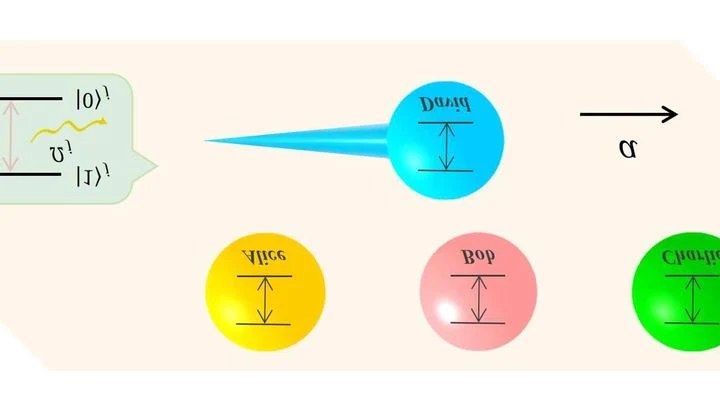
In the quantum world, you cannot create a copy of an unknown particle's state – this was established by William Wootters and Wojciech Zurek in 1982, and Charles Bennett turned this prohibition into a data protection tool.
A bread recipe written in disappearing ink: while you read, the original fades. That's how qubits behave — any measurement changes them irrevocably. Copying them is forbidden by the 1982 theorem (Вуттерс, Зурек): a qubit contains энтропия — unknown information that can't simply be doubled.
Ordinary messages can be intercepted without anyone noticing. Physicists have come up with a way to create a shared secret that instantly breaks if someone so much as glances at it. Instead of paper, they use single particles of light. This quantum communication exploits a rule: any measurement changes a quantum object.
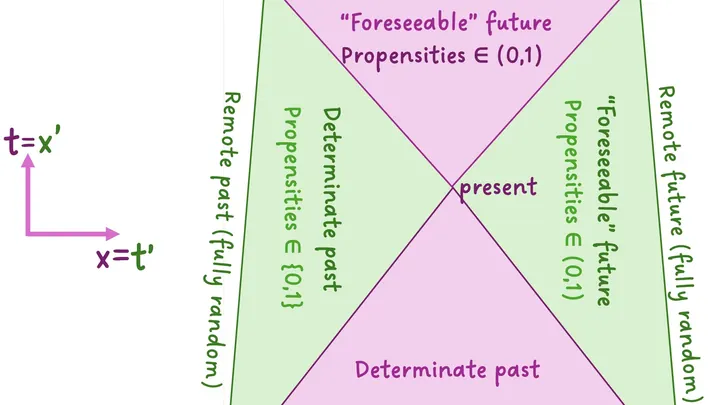
According to the laws of physics, nothing can outrun light, otherwise for some observers the effect would occur before the cause. Artur Ekert and Andrzej Dragan showed that this situation creates an uncertainty resembling quantum indeterminacy.
In every cell lives a tireless scribe — an enzyme that copies the long thread of DNA. It moves along it like a read head over a tape, building a new strand alongside. It picks letters by strict rule: opposite A it always places T, opposite G it places C. But sometimes, very rarely, its hand trembles, and a different letter slips in.
Quantum entanglement is a special connection between particles: they affect each other instantly, even across light-years. For a long time, it was believed that strong acceleration destroys this bond.
Usually, to understand a quantum state of light, you need to perform dozens of complex measurements, like trying all the keys on a keychain. The new AI model works differently: it's a universal key that, after a slight adjustment, opens many 'locks'—simple and the most tricky states.
A quantum particle, an inhabitant of the elementary particle world, resembles a coin spinning in the air: neither heads nor tails, but a blend of possibilities. Yet when it lands on the table, the outcome becomes definite. What serves as the table in a measurement?
Quantum computers use GKP states, dreamed up by Alexei Kitaev, John Preskill, and Daniel Gottesman. Their hallmark is built-in stabilizer checks that catch errors. For a long time, it was believed that a successful check guaranteed a nearly perfect state. Alas, it's an illusion.
The idea of quantum teleportation was proposed by Charles Bennett and realized by Anton Zeilinger. It uses entanglement — when two particles are in sync, like two sheets of paper that instantly copy the same drawing. But earlier, the "ink" would blur, ruining the blueprint.
There's always a risk that someone will peek at your ballot during an election. Physicists have come up with a solution: anonymous voting safeguarded not by people, but by the laws of nature.
Their 'magic ballot box' operates with light particles — photons.
Atoms, like strands in a braid, follow a strict rule: if one strand is 'charged', its neighbors must stay silent. This phenomenon, Rydberg blockade, allows stable quantum patterns to be woven.
In such patterns, topological order emerges: a structure where the overall weaving pattern matters more than individual loops.
Light consists of portions — photons. Max Planck was the first to understand that light is emitted in quanta. Today, we can guide single photons. When such a photon encounters a fast shutter, it cannot be sliced — half a photon doesn't exist. Instead, a quantum mixture of states with different photon numbers emerges: zero, one, two, three..
Intelligent action begins with a plan. Just as an architect needs blueprints to evaluate options, any agent with will needs to repeatedly copy data about reality.
Deep inside a superconductor, electrons pair up into Cooper pairs and glide without resistance. But if a vortex appears in this perfect order, a tiny region where superconductivity vanishes, special excitations emerge there: Bogoliubov quasiparticles.
In a chain of cold spins stretched along a single line, order and disorder can intertwine into a pattern that defies the usual rules. Two states of matter, two kinds of "order," are separated by a crossroads where the roads do not converge but diverge.
Quantum computing promises a revolution, but its real power will only unfold in a network. The best “brains” — superconducting qubits — communicate at microwave frequencies. The ideal “couriers” — optical photons — fly at hundreds of terahertz. A direct hookup is impossible.