Cosmic filaments pull in two directions express
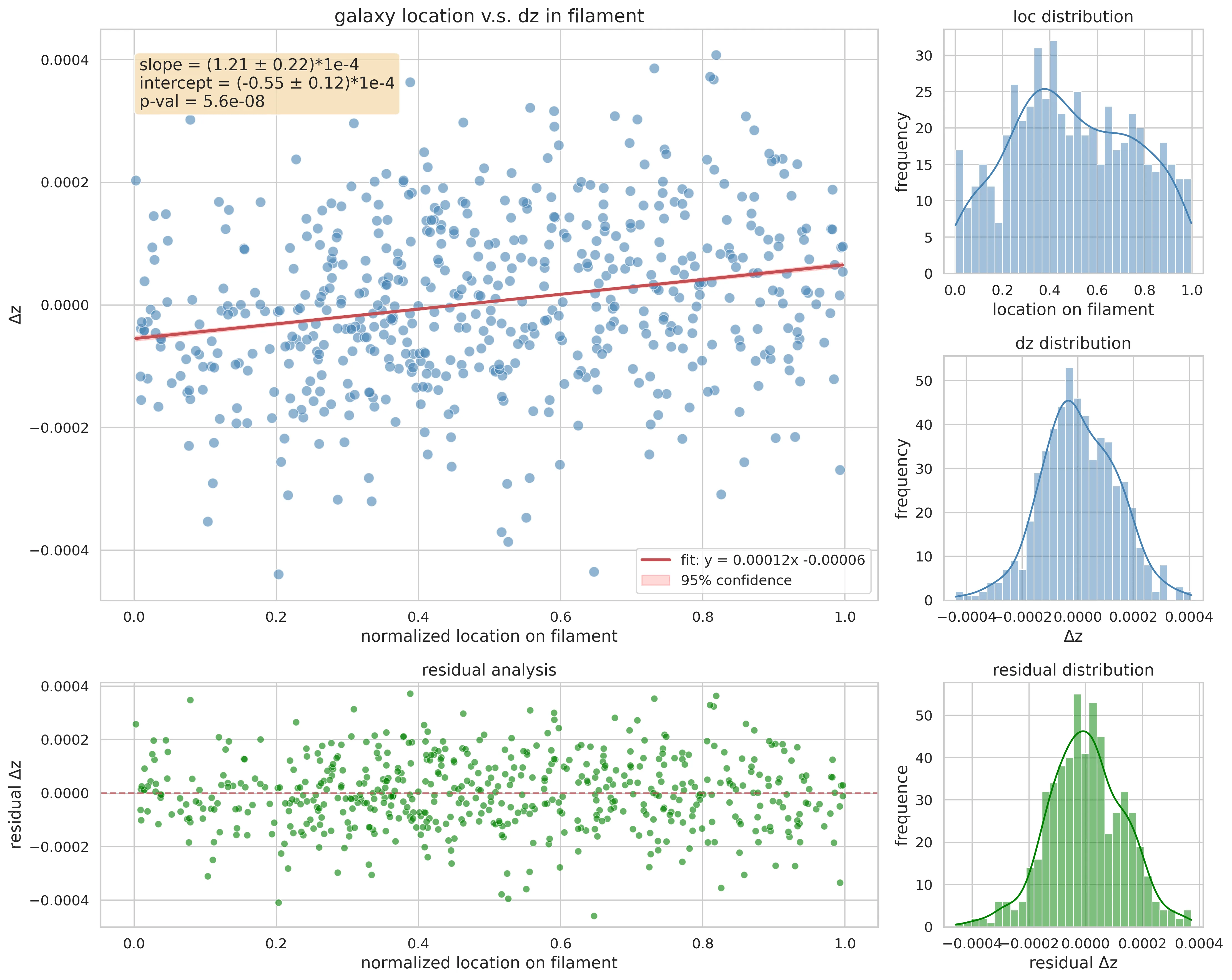
On large scales, the universe resembles a giant spiderweb: bright galaxy clusters are connected by long filaments of galaxies, gas, and dark matter. Previously, it was thought that matter flows along these filaments like water through pipes, heading toward the clusters. But new research shows that a filament between two clusters is not just a conduit: it's a tug-of-war arena.
Using data on thousands of galaxies from the Sloan Digital Sky Survey, scientists identified filaments connecting pairs of clusters. They noticed that galaxies within a filament move in opposite directions: those closer to one cluster fly toward it, while those closer to the other fly toward that one. In the middle of the filament, the velocity changes sign, as if a stretched rubber band were cut in half, with each half contracting toward its own end.
This result matters not only for understanding the cosmic web. By observing how galaxies in a filament fly apart, we can measure cluster masses more precisely, without relying on other, more complex methods. It also offers a new way to test whether our understanding of gravity on enormous scales is correct — because if filaments behave differently than theory predicts, it could point to new physics.
Galaxies in a filament move at about 30 kilometers per second — roughly 100 times faster than a bullet, but thousands of times slower than light.